

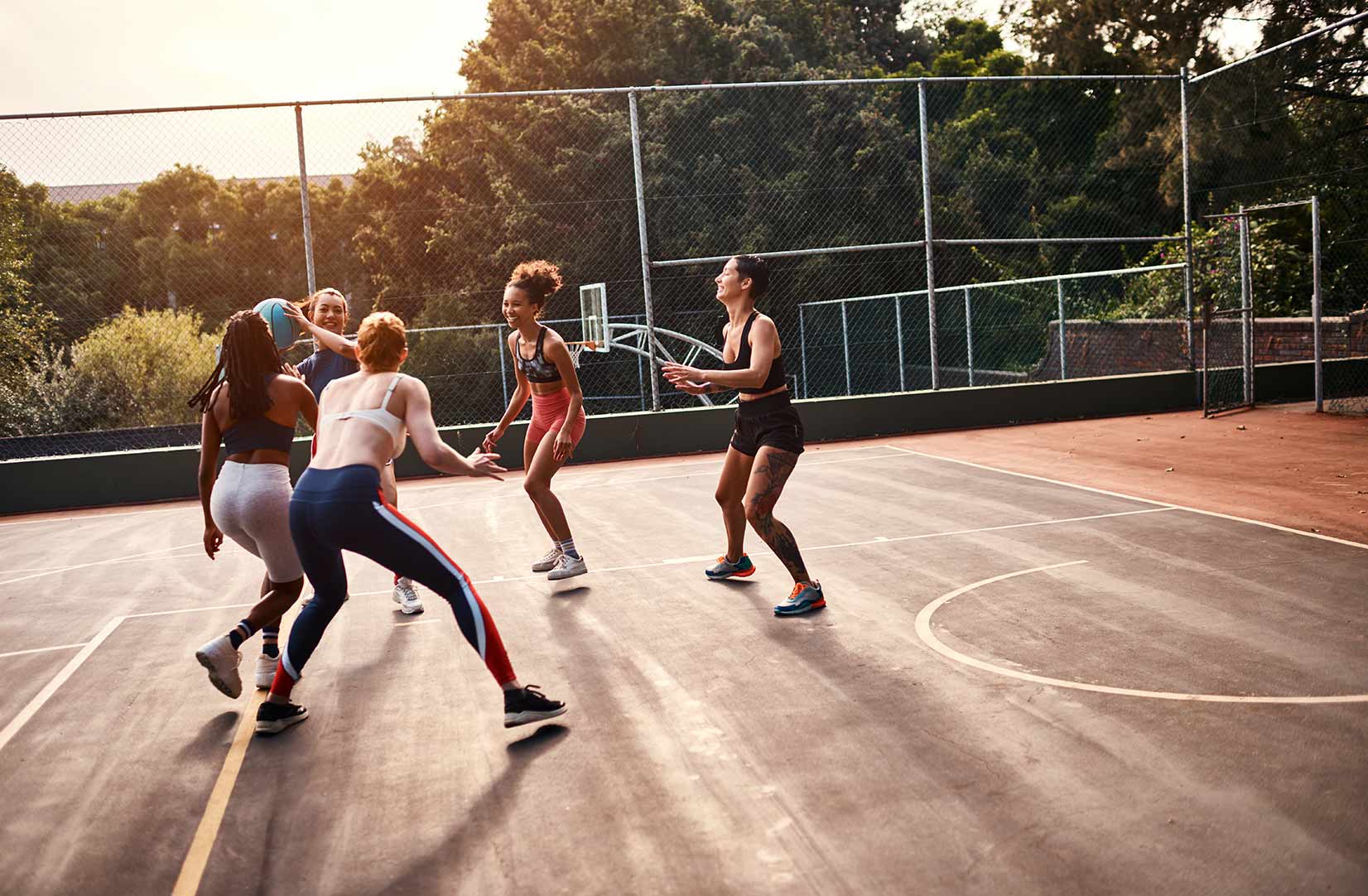
ACL Rehabilitation
Women's ACL Injury Risk: What The Evidence Now Shows
Women have sustained ACL injuries at substantially higher rates than men for as long as the injury has been systematically studied. The disparity has not narrowed over twenty-five years of focused research. Prevention programmes, surgical advances, and rehabilitation protocols have not closed the gap. What has changed - and changed significantly in the past five years - is how researchers understand why the gap exists. The picture that is emerging is considerably more complex than the biological model that dominated the previous two decades of research.
This page presents that evidence honestly. It covers what is well-established about biological risk factors, what the menstrual cycle research actually shows (as opposed to what is frequently claimed), what the paradigm-shifting work on gendered environments and measurement bias adds to the picture, and what the new wave of prevention initiatives is attempting to do about it. It is written for female athletes who want to understand their risk, for their families and coaches who want to help reduce it, and for clinicians who want the current state of the evidence.
The Risk Gap: What We Know and What We Do Not
The headline figure is consistent across the literature: women are approximately 3 to 6 times more likely to sustain an ACL injury than men in comparable sports. This figure comes primarily from studies comparing male and female athletes in the same sports - football, basketball, handball - and measuring injury rates against time spent in training and competition. The Parsons, Coen and Bekker paper (BJSM, 2021) that launched the gendered environmental approach cites the 3-6x figure as its starting point; it is the most widely cited range in the current literature.
What has become increasingly contested is whether this number accurately represents the biological risk differential - or whether it partly reflects measurement problems, structural inequalities, and research biases that have artificially inflated the apparent gap. A 2025 paper from the GenderSci Lab at Harvard, published in the British Journal of Sports Medicine, presents the most rigorous methodological challenge to the traditional figure to date. When the authors applied a more conservative estimate correcting for two specific measurement biases in the athlete-exposure metric, they arrived at a ratio closer to 1.7 times - substantially lower than the 3-6x figure. This does not mean the risk gap is imaginary. It means it may be smaller than commonly claimed, and that some of what has been attributed to female biology may in fact reflect the structural conditions in which women train and compete.
"The ACL injury rate disparity between women and men has not narrowed in over twenty years. The evidence now suggests that the research approach itself may be part of the reason."
The Biological Factors
The biological explanation for elevated ACL injury risk in women is well-established and should not be dismissed in the light of the newer research - rather, it should be understood as one part of a more complete picture. Several anatomical and biomechanical factors are consistently identified in the literature as genuine contributors to higher injury risk in female athletes:
Established Biological Risk Factors
Q-angle (quadriceps angle): Women have a wider pelvis relative to their height than men, producing a greater angle between the quadriceps and patellar tendon. A larger Q-angle increases the valgus stress at the knee during dynamic loading and is associated with the knee-in, toe-out landing position that characterises many non-contact ACL injuries.
Quadriceps dominance: Female athletes on average show greater reliance on quadriceps activation relative to hamstring co-activation during dynamic loading tasks. The hamstrings act as a key restraint to anterior tibial translation; reduced co-activation exposes the ACL to higher loads during deceleration and direction change.
Posterior tibial slope (PTS): A steeper posterior tibial slope increases the anterior tibial translation force during weight-bearing and is an established anatomical risk factor independent of sex - but studies suggest women show modestly higher average PTS values than men.
Intercondylar notch width: A narrower intercondylar notch (where the ACL passes through the knee) is associated with ACL impingement risk. This anatomical variation is more common in women than men, though the clinical significance remains debated.
Joint laxity: Female athletes generally demonstrate greater generalised joint laxity than males, which may contribute to reduced passive restraint of the knee under loading. This laxity is partially hormonally mediated and fluctuates across the menstrual cycle (see below).
Critically, none of these anatomical factors is static or unmodifiable through training. Neuromuscular training programmes specifically targeting hamstring activation, hip abductor strength, and landing mechanics have been shown to reduce ACL injury risk in female athletes - demonstrating that biological predisposition does not equate to inevitable injury.
The Menstrual Cycle: What the Evidence Actually Says
No area of women's ACL research attracts more media attention - or more frequent misrepresentation of the evidence - than the relationship between the menstrual cycle and injury risk. The clinical reality is more nuanced and more uncertain than either the "biology determines everything" narrative or the "hormones are irrelevant" counter-narrative allows.
The most comprehensive systematic review to date examining the effects of the menstrual cycle on ACL neuromuscular and biomechanical injury risk surrogates was published in PLOS ONE in 2023 by Dos'Santos and colleagues (Manchester Metropolitan University). Their conclusion requires quoting precisely: it is inconclusive whether a particular menstrual cycle phase predisposes women to greater non-contact ACL injury risk based on neuromuscular and biomechanical surrogates. Of seven studies reviewed, four found no significant differences in ACL injury risk surrogates between phases. Two showed evidence that the mid-luteal phase may predispose to greater risk. The overall evidence quality was rated low to very low. The authors specifically recommended that practitioners be cautious about manipulating training or screening practices based on current evidence.
What the evidence does support - with more consistency - is that oestrogen receptors are present in ligament tissue, that elevated oestrogen is associated with reduced collagen synthesis and increased ligament laxity at a tissue level, and that knee laxity does fluctuate measurably across the menstrual cycle in some studies. A 2023 systematic review (Birt and McCarthy, Cardiff University) confirmed that anterior knee laxity shows patterns corresponding to oestrogen concentration, with the most consistent laxity increases occurring around ovulation and the early luteal phase. The clinical significance of this laxity increase for actual injury risk under sport-specific loading conditions remains uncertain.
The Gendered Environment: Beyond Biology
The most significant conceptual development in this field in the past five years is the gendered environmental approach, introduced by Parsons, Coen and Bekker in the British Journal of Sports Medicine in 2021. The paper argued that twenty-five years of research focused almost entirely on biology had failed to close the injury gap, and that gendered social and structural factors - operating throughout an athlete's developmental trajectory from childhood to elite competition - deserve to be investigated as contributors to the disparity.
The framework identifies how gender operates as an environmental factor at multiple stages of the injury cycle: in the pre-sport environment (gendered expectations about physical capability, unequal access to quality training, "throw like a girl" cultural messages that shape early movement patterns), in the training environment (inequitable access to weight training facilities, smaller squads, less medical staff, inferior pitches and facilities in women's sport), in the competition environment (different footwear and equipment standards, turf conditions, and scheduling patterns in women's sport), and in the post-injury environment (differences in access to rehabilitation resources and the quality of post-injury care).
The gendered environmental model does not argue that biology is irrelevant. It argues that the entanglement of biological sex and gender - the social structures through which biological bodies are trained, equipped, and resourced - means that what looks like a purely biological phenomenon may in part reflect the consequences of environmental disadvantage. A female athlete who has had less access to high-quality strength and conditioning throughout her development arrives at elite competition with different physical preparation than her male counterpart, and that difference is not biological.
The Athlete-Exposure Problem: How the Numbers May Be Skewed
The GenderSci Lab study published in the British Journal of Sports Medicine in 2025 (Danielsen, Gompers et al.) provides the most technically detailed challenge to the traditional risk ratio. The paper examines the "athlete-exposure" (AE) construct - the denominator used in all sports injury rate calculations - through a gender equity lens. An athlete-exposure is defined as one athlete participating in one practice session or competition.
The GenderSci Lab identified two structural factors that systematically distort AE-based injury rate comparisons between women and men. First, women's teams have historically had smaller rosters and fewer rotation options, meaning individual female athletes accumulate a higher proportion of their total AEs in match play - the highest-injury-risk context - compared to male athletes from larger squads with more substitution depth. Second, women's athletes have historically had fewer training sessions relative to matches, for resource and scheduling reasons, again increasing the match-to-training ratio in their AE denominator. Both of these factors produce a denominator that is not only smaller for women but also disproportionately weighted toward high-risk exposures. The result: female injury rates calculated using AEs are systematically higher relative to male rates than the underlying injury risk difference would produce.
When the GenderSci Lab team applied corrections for these two factors to available data, the estimated ACL injury rate ratio fell from the commonly cited 2-10x range to approximately 1.7x. This is still a meaningful disparity - and the study authors are careful to state that the true ratio remains uncertain and further research is needed. But the methodological point is significant: the numbers that have driven two decades of research and public narrative may be substantially inflated by measurement artefacts rooted in structural inequality.
The Research Bias Problem
Behind the statistical issues lies a deeper problem: sports medicine research has been built primarily on male data. The norms, baselines, and protocols that govern how athletes are assessed, trained, and rehabilitated were developed from cohorts that were predominantly or exclusively male. Applying these norms to female athletes means measuring women against a standard that was never derived from their population.
Rehabilitation Outcomes: The Sex Difference That Is Not Being Addressed
Even setting aside the causes of initial injury, female athletes face documented disadvantages in rehabilitation outcomes after ACL reconstruction. The Nwachukwu and colleagues systematic review published in Arthroscopy (2022) on sex-based differences in adult ACL reconstruction outcomes identified that men return to sport faster and at higher rates than women across most measures. Marx activity scores - which measure post-operative activity level - show the most consistent sex-based differences, with female athletes scoring worse at 2, 6, and 10-year follow-up in all six studies that examined this outcome. The conclusion was direct: female patients are not being returned to the same level of activity as their male counterparts after reconstruction.
The mechanisms driving this difference remain incompletely understood and are likely multifactorial. Psychological readiness scores (ACL-RSI) are consistently lower in women than men at all post-operative time points - reflecting sex differences in fear of reinjury, confidence in performance, and risk appraisal that are not adequately addressed in standard rehabilitation protocols. Hamstring graft diameter is smaller on average in female athletes, contributing to higher failure rates in this graft type in the female population. Access to high-quality rehabilitation, including strength testing equipment and specialised ACL physiotherapy, is not equally distributed, particularly at the non-elite level.
The rehabilitation programme itself may compound these disparities if it is not adapted to female-specific considerations. A programme designed around male norms for strength testing, neuromuscular control patterns, and psychological recovery is not a neutral starting point for a female athlete - it is a male-calibrated programme applied to a different population.
Prevention Initiatives: What Is Being Done
Two major international initiatives are directly addressing the gaps in evidence and practice for female athletes, and both represent significant institutional commitment to changing the landscape.
FAIR Consensus 2025 - IOC International Olympic Committee
The Female, woman and/or girl Athlete Injury pRevention (FAIR) Consensus was convened by the International Olympic Committee in Lausanne in March-April 2025, bringing together leading researchers in sports medicine, biomechanics, epidemiology, and gender studies. Published in the British Journal of Sports Medicine in December 2025, the FAIR Consensus produced practical recommendations spanning the whole sports system - from injury prevention strategies and modifiable risk factors to implementation guidance and environmental considerations.
The FAIR framework explicitly integrates both biological mechanisms and gendered contextual factors - the first major international consensus document to do so. Its recommendations are structured at three confidence levels: SHOULD (strong evidence and expert alignment), COULD (moderate confidence), and MAY (weak evidence but expert support).
The FAIR Consensus represents the most important recent development in this field for clinical practice. Atherapy will incorporate its recommendations into the women's ACL rehabilitation framework as the guidance is disseminated.
PFA/FIFPro ACL Prevention Study
A joint initiative backed by the Professional Footballers' Association (PFA), FIFPro, and Nike is conducting a multi-year investigation into the environmental factors contributing to ACL injury in professional female footballers. The study examines travel fatigue, squad size, pitch surface quality, scheduling density, and footwear design - the structural conditions that the GenderSci Lab and gendered environmental research have identified as potential contributors to inflated injury rates.
This is the most directly actionable research in the current pipeline - focused not on why women's biology makes them vulnerable, but on what changes to the sporting environment could reduce injury rates regardless of biology. Preliminary findings from this initiative are expected to inform governing body policy on squad sizes, scheduling, and pitch standards for women's football over the coming years.
What Women's ACL Risk Means at Atherapy
At Atherapy, rehabilitation programmes for female athletes are not male protocols with minor adjustments. They are built from an understanding that female athletes present with different biomechanical profiles, different psychological readiness trajectories, different graft diameter considerations, and a different relationship to the sport system that has not always been designed with them in mind.
Specifically: ACL-RSI assessment is incorporated at multiple points throughout rehabilitation and interpreted with reference to the sex-specific ACL-RSI literature, which consistently shows lower scores in women at all time points. Strength testing is interpreted against female-specific norms where available, with explicit attention to hamstring-to-quadriceps ratios that reflect female neuromuscular recruitment patterns. For female footballers and other female athletes in high-demand pivoting sports, the graft choice discussion with the surgical team specifically addresses the graft diameter implications of hamstring autograft in smaller-bodied patients.
The environmental and structural factors are beyond what any individual physiotherapy clinic can change - better pitches, bigger squads, and female-designed footwear are systemic issues. What Atherapy can address is ensuring that the rehabilitation programme a female patient receives is calibrated to her specific risk profile, her specific neuromuscular characteristics, and the current best evidence on female athlete outcomes after ACL reconstruction.
Related Pages in the ACL Rehabilitation Series
→ Reinjury Risk After ACL Surgery
→ Psychological Recovery After ACL Injury
→ Gym-Based ACL Rehabilitation
→ ACL Prehabilitation Before Surgery
ACL Rehabilitation for Female Athletes - Atherapy
If you are a female athlete preparing for or recovering from ACL surgery, your rehabilitation programme should reflect the specific evidence on female athlete outcomes - not a male-calibrated protocol applied without adjustment. At Atherapy, rehabilitation for female athletes is built around female-specific strength norms, sex-specific psychological readiness assessment, and the current best evidence on post-operative outcomes in women. Bring your operative notes and your questions to your first appointment.
References
- Parsons JL, Coen SE, Bekker S. Anterior cruciate ligament injury: towards a gendered environmental approach. British Journal of Sports Medicine. 2021;55(17):984-990. doi:10.1136/bjsports-2020-103173.
- Danielsen AC, Gompers A, Tabb LP, Richardson SS, Bekker S. Gender inequities in sporting environment and resources may distort estimates of sex differences in ACL injury rates: a narrative review. British Journal of Sports Medicine. 2025. doi:10.1136/bjsports-2023-107754.
- Crossley KM, Whittaker JL, Patterson B, et al. Female, woman and/or girl Athlete Injury pRevention (FAIR) practical recommendations: International Olympic Committee (IOC) consensus meeting held in Lausanne, Switzerland, 2025. British Journal of Sports Medicine. 2025;59(22):1546-1559. doi:10.1136/bjsports-2025-110889.
- Dos'Santos T, Stebbings GK, Morse C, Shashidharan M, Daniels KAJ, Sanderson A. Effects of the menstrual cycle phase on anterior cruciate ligament neuromuscular and biomechanical injury risk surrogates in eumenorrheic women: a systematic review. PLOS ONE. 2023;18(1):e0280800. doi:10.1371/journal.pone.0280800.
- Birt KM, McCarthy HE. The effect of estrogen on anterior cruciate ligament structure and function: a systematic review. Journal of Musculoskeletal Disorders and Treatment. 2023;9:127. doi:10.23937/2572-3243.1510127.
- Mancino F, Kayani B, Gabr A, et al. Anterior cruciate ligament injuries in female athletes. Bone and Joint Open. 2024;5(2):109-117. doi:10.1302/2633-1462.52.BJO-2023-0166.
- Whittaker JL, Raisanen AM, Martin C, et al. Modifiable risk factors for lower extremity injury: a systematic review and meta-analysis for the Female, woman and/or girl Athlete Injury pRevention (FAIR) consensus. British Journal of Sports Medicine. 2025;59:1499-1513. doi:10.1136/bjsports-2025-109902.
- Nwachukwu BU, Patel BH, Lu Y, Allen AA, Williams RJ 3rd. Sex-based differences in adult ACL reconstruction outcomes: a systematic review. Arthroscopy. 2022;38(12):3246-3261. doi:10.1016/j.arthro.2022.05.020.
- Snaebjornsson T, Hamrin-Senorski E, Svantesson E, et al. Graft diameter and graft type as predictors of anterior cruciate ligament revision: a cohort study of 18,425 patients from the Swedish and Norwegian National Knee Ligament Registries. Journal of Bone and Joint Surgery Am. 2017;99(7):566-574.
- Kotsifaki R, Korakakis V, King E, et al. Aspetar clinical practice guideline on rehabilitation after anterior cruciate ligament reconstruction. British Journal of Sports Medicine. 2023;57(9):500-514.
London Physiotherapy Team
Welcome to the Atherapy expert clinical team. We are a dedicated group of qualified physiotherapists and sports medicine specialists committed to delivering innovative, evidence-based rehabilitation. Our practice is built on a holistic approach to physical health, firmly believing that injury prevention is just as vital as the cure. From treating acute sports injuries to designing custom performance optimization programs, our clinicians work collaboratively to help you safely reach your goals.
Meet our resident experts below and find the right specialist for your recovery journey.

- With 25+ years of Premier League and Championship experience, Andrew has led Medical, Science, and Performance departments for Hull City, Nottingham Forest, Derby County, and Preston North End, following earlier work at the Manchester United Academy
- Specialist in lower limb rehabilitation
- Post-operative rehabilitation
- Back pain and complex spinal presentations
- Elite athlete management including manual therapy, gym rehabilitation and acupuncture
- Specialises in complex cases and second opinion rehabilitation planning including return to play
- Limited clinical availability due to wider clinical leadership and operational responsibilities
Andrew Balderston
Based at Moorgate
- Specialist in exercise-based rehabilitation, manual therapy and injury prevention
- Experienced in post-operative rehabilitation and progressive return to activity
- Clinical interests include sports injuries, cervical spine and low back dysfunction, shoulder, knee, foot and ankle rehabilitation
- Combines hands-on treatment with targeted strength and rehabilitation programming
- Focused on structured rehabilitation to help patients rebuild strength, movement confidence and function
- Specialist interest in women’s health support including manual lymphatic drainage during pregnancy and pre/post-natal care
- Over 15 years of clinical experience across private practice, sports rehabilitation and women’s health settings
- Fluent in English, Portuguese and Italian
Fernanda Saldanha
Based at Chiswick
- Extensive experience working within elite professional football and private practice
- Former Tottenham Hotspur Academy physiotherapist specialising in performance rehabilitation and return-to-play management
- Specialist interest in post-operative rehabilitation and upper and lower limb injury management
- Experienced in managing complex and recurrent injuries through structured, evidence-based rehabilitation planning
- Clinical approach combines manual therapy, gym-based rehabilitation, movement analysis and acupuncture
- Focused on restoring movement quality, strength under load and long-term performance outcomes
- Fluent in English and Greek
Dimitrios Michtatidis
Based at Chiswick and Strand

- Level 4 Strength & Conditioning Coach
- Medical Acupuncture & Dry Needling Qualified
- Combines detailed clinical assessment with progressive rehabilitation and strength & conditioning principles
- Specialist interest in gym-based rehabilitation and return-to-sport management
- Clinical interests include acute sporting injuries, post-operative orthopaedic rehabilitation (including ligament reconstructions, meniscal and labral repairs) and hip/groin pain in active populations
- Experience managing both active general population and performance-focused clients
- Adjunct treatment techniques include dry needling and shockwave therapy
Claire Cuffe
Based at Moorgate and Strand

- Over 5 years experience treating orthopaedic injuries, chronic pain and post operative care
- Advanced certifications in dry needling for hands, face, feet, lower limb, upper limb and lumbopelvic region
- Certified pelvic floor physio for both men and women with an interest in treating clients pre and post natal
- Special interest in strength and conditioning programming for clients training for half/full marathons