
ACL Rehabilitation
What Force Plate Testing Reveals That Other ACL Assessments Miss
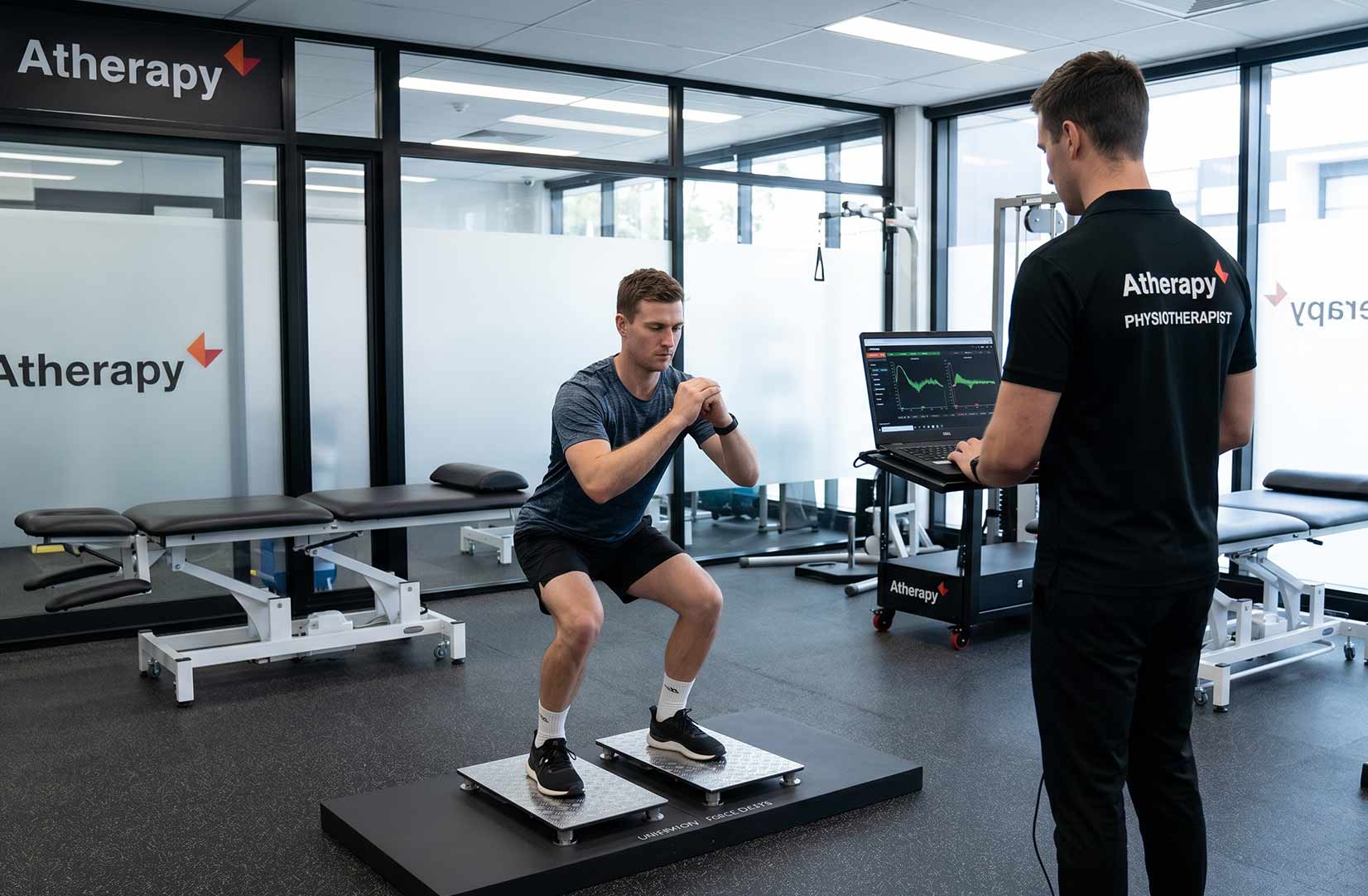
There is a persistent tension inACL rehabilitation between what a patient feels ready to do and what their body is objectively capable of. Hop tests offer part of the answer. Strength assessments offer another part. But neither fully captures how a person actually loads their limb during dynamic movement — which is, ultimately, what sport demands. Force plate technology fills that gap. By measuring the forces that the ground exerts on the body during jumping, landing, and change of direction tasks, force plates reveal patterns of loading, compensation, and neuromuscular control that cannot be seen with the naked eye and cannot be inferred from a limb symmetry index alone.
The VALD ForceDecks system — a portable dual force plate platform operating at 1000Hz — has become the most widely used clinical and high-performance force plate globally, with concurrent validity and test-retest reliability confirmed against laboratory-grade platforms by Collings and colleagues in 2024. The research groups at Aspetar Orthopaedic and Sports Medicine Hospital in Doha, Sports Surgery Clinic Santry in Dublin, and the Melbourne ACL Rehabilitation programme led by Mick Hughes have collectively produced the most influential evidence base for how force plates should be used in ACL return-to-sport decisions. At Atherapy, force plate assessment using VALD ForceDecks forms part of a comprehensive return-to-sport testing framework, reflecting the same objective standards applied in those elite environments.
Why Horizontal Hop Tests Are No Longer Sufficient
The single-leg hop for distance, triple hop, crossover hop, and timed six-metre hop tests are well-validated tools with decades of clinical use. A limb symmetry index of 90% or above across these tests, combined with equivalent strength symmetry, has long been used as a benchmark for readiness. But a body of evidence — much of it produced by the Aspetar group — has fundamentally challenged whether horizontal hop symmetry tells us what we think it tells us.
Kotsifaki and colleagues demonstrated in a 2022 BJSM paper that the single-leg hop for distance produces symmetrical scores in athletes who have measurable knee biomechanical deficits during vertical jump tasks. Their 2023 BJSM follow-up (Kotsifaki, Sideris, King et al.) confirmed that vertical jump tests assessed using force plates were substantially more sensitive at identifying asymmetries than horizontal hop tests. Put simply: a patient can hop symmetrically and still be loading asymmetrically. Force plates expose what hop tests conceal.
The SSC Santry research group reached the same conclusion through a different route. King, Richter, Franklyn-Miller and colleagues published two landmark studies in 2018 and 2019 showing that biomechanical asymmetries persisted nine months after ACL reconstruction during jump tasks and change-of-direction testing, even in athletes who had met all conventional performance discharge criteria. A later paper by King and colleagues (2021, AJSM) went further — demonstrating that athletes who subsequently sustained a second ACL injury could be differentiated from those who did not by their biomechanical profiles at return-to-sport testing. Strength and performance scores alone did not differentiate them. Movement mechanics did.
"A patient can hop symmetrically and still be loading asymmetrically. Force plates make the invisible visible."
What a Force Plate Measures
A force plate is a rigid platform embedded with sensors that measure the forces applied to its surface in three dimensions: vertical (how hard you push down), anterior-posterior (how much force travels forwards and backwards), and mediolateral (side to side). Together, these three axes capture the ground reaction force — the force the ground exerts on the body in response to movement. Newton's third law in clinical application.
The VALD ForceDecks system used at Atherapy samples at 1000Hz and provides automated analysis of each jump task, outputting the full range of clinically relevant metrics without requiring manual calculation. This makes high-level force plate assessment practically feasible within a clinical session, with real-time visual feedback available for patient education and clinical interpretation.
The Aspetar Evidence Base: What the Research Actually Shows
The rehabilitation team at Aspetar Orthopaedic and Sports Medicine Hospital in Doha — led by Roula Kotsifaki, Enda King, Vasileios Korakakis, and Rod Whiteley — has produced the most comprehensive force plate research programme in ACL rehabilitation. Their 2023 clinical practice guideline, published in BJSM, is currently the most widely referenced evidence-based framework for ACL rehabilitation internationally, explicitly prioritising functional recovery and objective measurement over time-based progression.
Their research has established several findings of direct clinical relevance. The 2022 BJSM paper showed that athletes cleared to return to sport using conventional criteria had significant deficits during vertical jump tasks — specifically in hamstring versus quadriceps contribution ratios, soleus contribution, and RSI. The 2023 BJSM follow-up (Kotsifaki, Sideris, King et al.) confirmed that vertical jump metrics were substantially more sensitive to residual asymmetries than horizontal hop tests, with both jump height and RSI showing significant between-group differences at return-to-sport stage. A further Aspetar analysis identified eccentric impulse asymmetry during single-leg drop jumps as particularly discriminating — the metric that most consistently revealed loading differences that other outputs masked.
The Aspetar guideline explicitly recommends vertical jump force plate testing within return-to-sport frameworks. Enda King — who also leads the SSC Santry research programme — bridges both institutions, and his involvement in both bodies of work means the Aspetar recommendations and the SSC evidence base are closely aligned.
The SSC Santry Research Programme — Key Findings
Sports Surgery Clinic Santry (SSC), led by Enda King, Chris Richter, Andy Franklyn-Miller, and Ray Moran, has produced a body of biomechanics research that has fundamentally shaped how ACL return-to-sport decisions are made.
Asymmetries persist at 9 months: King et al. (2019, AJSM) showed biomechanical variables during jump and change-of-direction testing remained more asymmetrical than normal nine months post-reconstruction in athletes who had passed all conventional performance criteria.
Reinjury risk is biomechanically identifiable: King et al. (2021, AJSM) demonstrated athletes who sustained a second ACL injury were differentiable by their biomechanical profiles at return-to-sport testing. Strength and performance scores did not discriminate. Movement mechanics did.
Graft type influences loading asymmetry: Miles, King et al. (2019) showed patellar and hamstring autografts produce different patterns of jump task loading asymmetry, with implications for how force plate results are interpreted depending on graft choice.
The SSC now runs a dedicated Lab Review Service incorporating 3D biomechanics, force plates, and isokinetic dynamometry throughout rehabilitation — testing over 1,000 ACL reconstruction patients per year and tracking outcomes longitudinally.
The Mick Hughes and VALD Protocol:
A Clinical Translation Framework
Mick Hughes — co-author of the Melbourne ACL Rehabilitation Guide and one of the most widely followed ACL rehabilitation clinicians internationally — has worked closely with VALD to translate force plate research into practical clinical protocols. His approach, documented through the VALD Hub and updated in 2025, bridges elite sport assessment methods and clinical physiotherapy environments.
Hughes uses the full VALD assessment stack: VALD DynaMo — a handheld dynamometer that delivers isokinetic-equivalent quadriceps and hamstring strength data within a clinical setting without requiring fixed dynamometry equipment — alongside VALD NordBord for eccentric hamstring assessment and VALD ForceDecks for jump-based testing. His return-to-sport criteria include quadriceps strength symmetry, single-leg hop for distance, and single-leg vertical jump height — the latter specifically because ForceDecks measures it with precision impossible from a hop test alone.
A critical feature of the Hughes protocol, now endorsed in the Aspetar guideline, is pre-operative force plate benchmarking. Before surgery, the healthy limb is tested on both DynaMo and ForceDecks to establish the patient's true baseline — their personal normal for strength and power. Using the contralateral limb as a reference post-operatively understates the true deficit, because that limb is also deconditioned during the injury and recovery period. Knowing what the patient's own healthy-limb capacity was before surgery produces a far more sensitive and honest assessment of how much has been recovered by return-to-sport stage. At Atherapy, pre-operative testing is offered as part of the prehabilitation assessment for patients presenting before their reconstruction date.
"ForceDecks has been a game-changer. I can now clearly identify problems during jumping, landing and hopping that traditional hop tests simply cannot reveal."
— Mick Hughes, VALD Hub, 2023
Five Metrics That Track ACL Recovery Comprehensively
Dutaillis and colleagues (2025, Knee Surgery, Sports Traumatology, Arthroscopy) used VALD ForceDecks to track vertical jump metrics longitudinally at 3, 6, 9, and 12 months post-reconstruction. Their analysis identified five metrics that together provide a comprehensive picture of recovery across the first year: single-leg CMJ jump height, single-leg CMJ RSI, double-leg drop vertical jump height, single-leg drop vertical jump RSI, and eccentric impulse during single-leg drop vertical jump. Each captures a distinct dimension of neuromuscular recovery — unilateral power output, reactive strength capacity, and eccentric loading tolerance — that the others do not fully replicate.
This multi-metric approach is clinically important because different deficits resolve at different rates. Bilateral power deficits emerge earliest and improve most quickly; reactive strength and eccentric impulse deficits persist longest. Dutaillis et al. (2025) confirmed that while jump height and RSI improved significantly across the first year post-surgery, reconstructed limbs displayed persistent deficits in most vertical jump and strength measures compared to the uninjured side, with between-limb asymmetry decreasing in only 70% of variables by twelve months. A patient who looks recovered by jump height alone may have unresolved eccentric loading asymmetry — the variable most directly relevant to the injury mechanism itself.
How Force Plate Testing Fits Into Return-to-Sport Decisions
At Atherapy, force plate assessment is not positioned as a standalone discharge test. It is used as part of a comprehensive return-to-sport testing framework that includes quadriceps and hamstring strength testing using VALD DynaMo, the four standard hop tests, psychological readiness assessment using the ACL-RSI scale, and clinical examination of movement quality under fatigue. Force plate data adds the objective neuromuscular loading picture that the other components do not provide.
Specifically, force plate outputs identify three categories of problem. First, load avoidance — where the patient protects the reconstructed limb during dynamic tasks in ways that will not be sustained in competitive sport. Second, eccentric loading deficit — where the involved limb absorbs less force during the landing phase, creating asymmetrical tissue stress under sport-specific demands. Third, rate-of-force development deficit — where peak force appears adequate but the speed of neuromuscular response is slow, indicating residual inhibition. Each finding has a specific rehabilitation implication.
The Aspetar guideline and SSC Santry research both support the view that force plate testing is a necessary addition to — not replacement of — the full return-to-sport battery. Losciale and colleagues (2022) confirmed in their systematic review and meta-analysis that no single testing modality reliably discriminates between athletes who will and will not sustain subsequent injury. The answer is not a single better test; it is a comprehensive multi-modal battery in which force plate data plays a defined, understood role.
Critically, biomechanical readiness and psychological readiness are largely independent of each other. A patient may demonstrate full force plate symmetry and adequate strength symmetry while scoring poorly on the ACL-RSI — indicating fear of reinjury, reduced confidence in performance, or risk appraisal that will limit their ability to function unreservedly in sport. The converse is equally possible: high ACL-RSI scores in a patient whose force plate data still shows significant eccentric loading deficit. Both scenarios represent incomplete readiness, and both require different interventions. The Aspetar guideline treats these as parallel, non-interchangeable domains; so does the full Atherapy assessment battery.
Force Plate Protocol at Atherapy (VALD ForceDecks) — Aligned with Aspetar 2023 Guideline
Task battery, progressing low to high intensity (as per Kotsifaki et al., 2023 protocol):
- Double-Leg Countermovement Jump — bilateral power baseline, eccentric and concentric phase symmetry. Used from 3 months post-operatively at each assessment.
- Single-Leg Countermovement Jump — primary test for limb-specific jump height, RFD, and peak concentric force. The most direct measure of unilateral power capacity.
- Double-Leg Drop Vertical Jump — bilateral landing mechanics and eccentric loading under reactive conditions. Each limb lands on a separate force plate for direct comparison.
- Single-Leg Drop Vertical Jump — highest-demand test. Assesses eccentric impulse, RSI, and contact time unilaterally. The metric most sensitive to residual deficits at return-to-sport stage in the Aspetar research.
- Force plate outputs are reviewed alongside VALD DynaMo quad/hamstring symmetry, hop test results, ACL-RSI score, and clinical movement quality observation before any return-to-sport recommendation is made.
Force Plate Testing at Atherapy
Atherapy's London clinics at Moorgate, Strand, and Chiswick offer VALD ForceDecks assessment as part of the ACL return-to-sport testing pathway. This brings an assessment standard previously accessible only in elite sport environments — Premier League clubs, the SSC Santry laboratory, and Aspetar — into a private physiotherapy setting in central London. Andrew Balderston's experience using force plate technology in professional football at Hull City FC, where objective testing was embedded throughout the rehabilitation process, underpins both the clinical protocol and the interpretation framework used at Atherapy.
Patients approaching the return-to-sport stage can book a comprehensive testing session with Andrew or a senior Atherapy physiotherapist. The session incorporates the full VALD assessment battery described above, with results interpreted in a post-session consultation and presented in a written report suitable for sharing with a surgeon, sports medicine physician, or club medical team. For patients not yet ready for clearance, the session concludes with a specific remediation plan addressing the deficits identified — whether these relate to eccentric loading, reactive strength, power asymmetry, or psychological readiness.
For post-operative patients managing swelling and recovery at home, Atherapy's Game Ready hire service offers cold-compression therapy to support early-phase tissue management and reduce analgesic dependency between clinical sessions.
Related Pages in the ACL Rehabilitation Series
→ Quadriceps Weakness After ACL Injury
→ Reinjury Risk After ACL Surgery
→ Post-Operative ACL Rehabilitation
→ ACL Rehabilitation Timelines
→ Football-Specific ACL Rehabilitation
Book a Force Plate Assessment at Atherapy
If you are approaching the return-to-sport stage following ACL reconstruction and want objective evidence of readiness — not just a symmetry score — book a comprehensive return-to-sport testing session at Atherapy. Our assessment battery includes force plate analysis, hop testing, strength assessment, and psychological readiness evaluation, with results interpreted by Andrew Balderston, Clinical Director, in a dedicated post-session consultation.
References
- Kotsifaki A, Van Rossom S, Whiteley R, Korakakis V, BahrR, Sideris V, Jonkers I. Single leg vertical jump performance identifies kneefunction deficits at return to sport after ACL reconstruction in male athletes.British Journal of Sports Medicine. 2022;56(9):490–498.
- Kotsifaki R, Sideris V, King E, Bahr R, Whiteley R.Performance and symmetry measures during vertical jump testing at return tosport after ACL reconstruction. British Journal of Sports Medicine.2023;57(20):1304–1310.
- Kotsifaki R, Korakakis V, King E, Barbosa O, Maree D,Pantouveris M, Bjerregaard A, Luomajoki J, Wilhelmsen J, Whiteley R. Aspetarclinical practice guideline on rehabilitation after anterior cruciate ligamentreconstruction. British Journal of Sports Medicine. 2023;57(9):500–514.
- King E, Richter C, Franklyn-Miller A, Wadey R, Moran R,Strike S. Back to normal symmetry? Biomechanical variables remain moreasymmetrical than normal during jump and change-of-direction testing 9 monthsafter anterior cruciate ligament reconstruction. American Journal of SportsMedicine. 2019;47(5):1175–1185.
- King E, Richter C, Daniels KAJ, Franklyn-Miller A, FalveyE, Myer GD, Jackson M, Moran R, Strike S. Biomechanical but not strength orperformance measures differentiate male athletes who experience ACL reinjury onreturn to level 1 sports. American Journal of Sports Medicine.2021;49(4):918–927.
- Cabarkapa D, Cabarkapa DV, Fry AC, Song Y, Gisladottir T,Petrovic M. Comparison of vertical jump force-time metrics between ACL-injuredand healthy semi-professional male and female soccer players. Sports.2024;12(12):339. [VALD ForceDecks Max]
- Dutaillis B, Collings T, Bellinger P, Timmins RG,Williams MD, Bourne MN. Time-course changes in lower limb strength, verticaljump metrics and their relationship with patient reported outcomes followinganterior cruciate ligament reconstruction. Knee Surgery, Sports Traumatology,Arthroscopy. 2025. doi:10.1002/ksa.12694. [VALD ForceDecks — longitudinalcohort 3, 6, 9, 12 months post-ACLR; five-metric framework and ACL-RSIassociations]
- Collings TJ, Lima YL, Dutaillis B, Bourne MN. Concurrentvalidity and test-retest reliability of VALD ForceDecks strength, balance, andmovement assessment tests. Journal of Science and Medicine in Sport.2024;27:572–580.
- Losciale JM, Zdeb RM, Ledbetter L, et al. The associationbetween passing return-to-sport criteria and second anterior cruciate ligamentinjury risk: a systematic review with meta-analysis. Journal of Orthopaedic andSports Physical Therapy. 2022;52(9):567–582.
- Grindem H, Snyder-Mackler L, Moksnes H, et al. Simpledecision rules can reduce reinjury risk by 84% after ACL reconstruction: theDelaware-Oslo ACL cohort study. British Journal of Sports Medicine.2016;50(13):804–808.
London Physiotherapy Team
Welcome to the Atherapy expert clinical team. We are a dedicated group of qualified physiotherapists and sports medicine specialists committed to delivering innovative, evidence-based rehabilitation. Our practice is built on a holistic approach to physical health, firmly believing that injury prevention is just as vital as the cure. From treating acute sports injuries to designing custom performance optimization programs, our clinicians work collaboratively to help you safely reach your goals.
Meet our resident experts below and find the right specialist for your recovery journey.

- With 25+ years of Premier League and Championship experience, Andrew has led Medical, Science, and Performance departments for Hull City, Nottingham Forest, Derby County, and Preston North End, following earlier work at the Manchester United Academy
- Specialist in lower limb rehabilitation
- Post-operative rehabilitation
- Back pain and complex spinal presentations
- Elite athlete management including manual therapy, gym rehabilitation and acupuncture
- Specialises in complex cases and second opinion rehabilitation planning including return to play
- Limited clinical availability due to wider clinical leadership and operational responsibilities
Andrew Balderston
Based at Moorgate
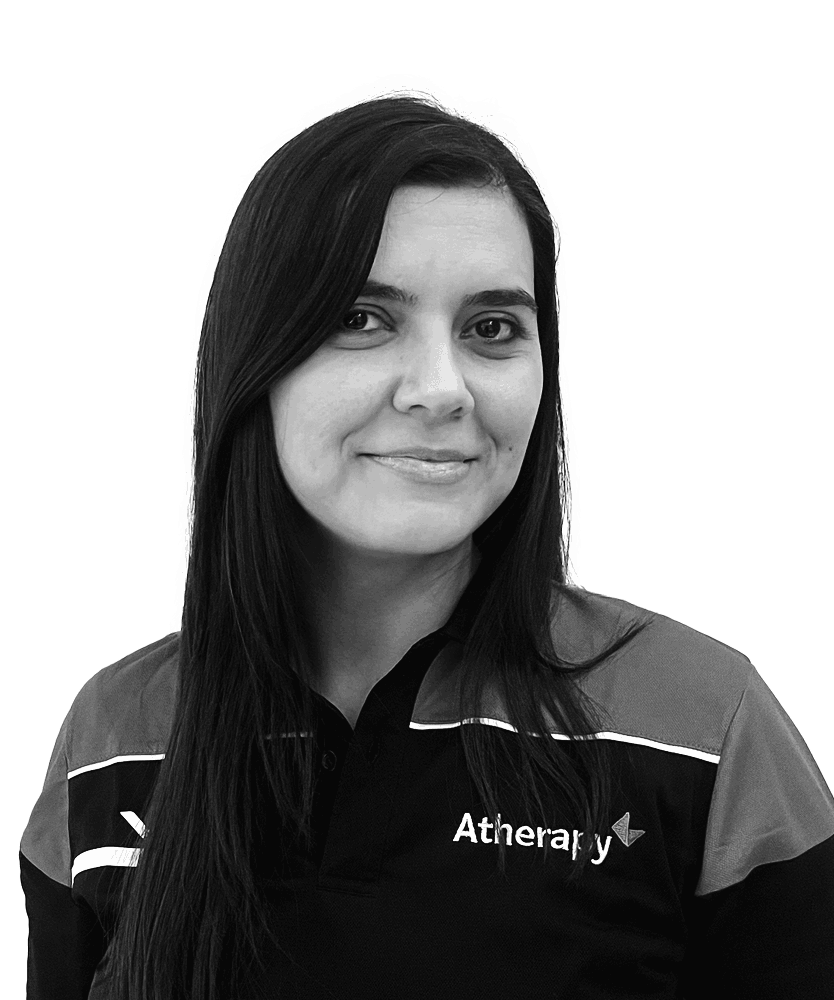
- Specialist in exercise-based rehabilitation, manual therapy and injury prevention
- Experienced in post-operative rehabilitation and progressive return to activity
- Clinical interests include sports injuries, cervical spine and low back dysfunction, shoulder, knee, foot and ankle rehabilitation
- Combines hands-on treatment with targeted strength and rehabilitation programming
- Focused on structured rehabilitation to help patients rebuild strength, movement confidence and function
- Specialist interest in women’s health support including manual lymphatic drainage during pregnancy and pre/post-natal care
- Over 15 years of clinical experience across private practice, sports rehabilitation and women’s health settings
- Fluent in English, Portuguese and Italian
Fernanda Saldanha
Based at Chiswick
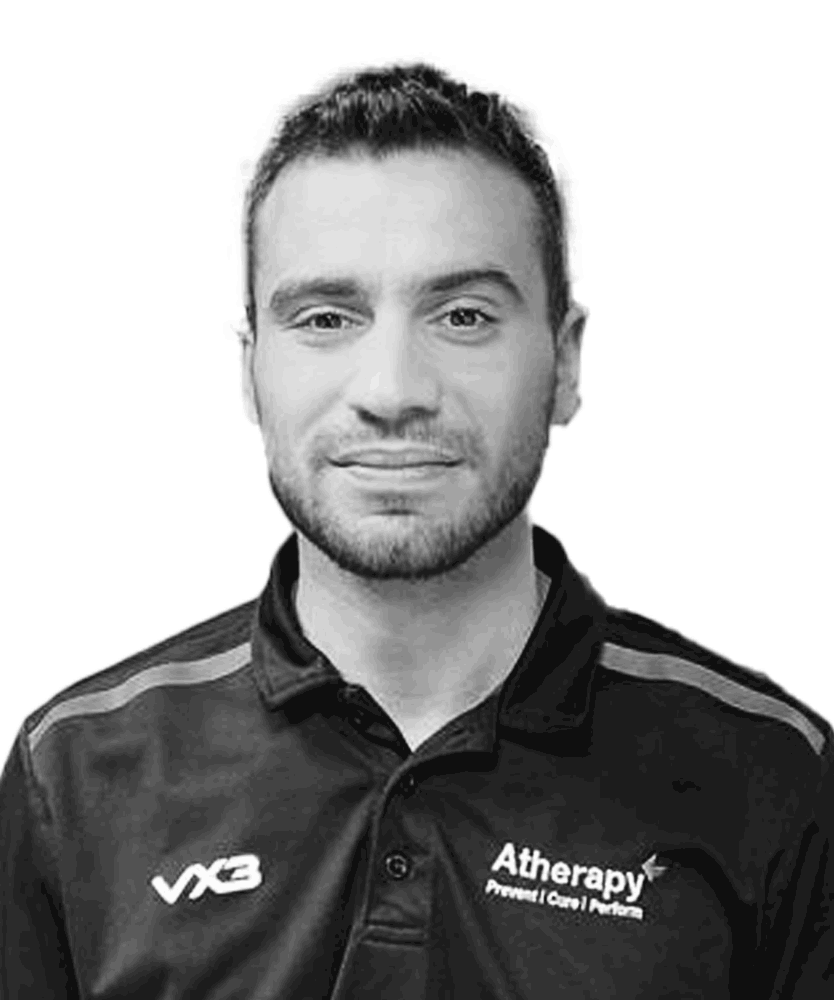
- Extensive experience working within elite professional football and private practice
- Former Tottenham Hotspur Academy physiotherapist specialising in performance rehabilitation and return-to-play management
- Specialist interest in post-operative rehabilitation and upper and lower limb injury management
- Experienced in managing complex and recurrent injuries through structured, evidence-based rehabilitation planning
- Clinical approach combines manual therapy, gym-based rehabilitation, movement analysis and acupuncture
- Focused on restoring movement quality, strength under load and long-term performance outcomes
- Fluent in English and Greek
Dimitrios Michtatidis
Based at Chiswick and Strand

- Level 4 Strength & Conditioning Coach
- Medical Acupuncture & Dry Needling Qualified
- Combines detailed clinical assessment with progressive rehabilitation and strength & conditioning principles
- Specialist interest in gym-based rehabilitation and return-to-sport management
- Clinical interests include acute sporting injuries, post-operative orthopaedic rehabilitation (including ligament reconstructions, meniscal and labral repairs) and hip/groin pain in active populations
- Experience managing both active general population and performance-focused clients
- Adjunct treatment techniques include dry needling and shockwave therapy
Claire Cuffe
Based at Moorgate and Strand

- Over 5 years experience treating orthopaedic injuries, chronic pain and post operative care
- Advanced certifications in dry needling for hands, face, feet, lower limb, upper limb and lumbopelvic region
- Certified pelvic floor physio for both men and women with an interest in treating clients pre and post natal
- Special interest in strength and conditioning programming for clients training for half/full marathons