
ACL Rehabilitation
ACL Graft Choice: Getting the Right Graft to the Right Patient
Most patients arrive for their first post-operative physiotherapy appointment knowing which graft they had but not why. The surgeon chose it, it happened, and now they want to get better. What they are often not prepared for is that the graft choice has direct, specific consequences for how rehabilitation should be structured - consequences that a generic protocol cannot address. Understanding those consequences, and understanding why their surgeon made the choice they did, is one of the most useful things a patient can know.
Atherapy works with a number of specialist orthopaedic surgeons who each bring particular expertise and evidence-based preferences to graft selection. Some colleagues favour hamstring tendon autograft for the right patient profile. Others increasingly prefer quadriceps tendon autograft. Still others remain committed to patellar tendon reconstruction for high-demand athletes. These are not arbitrary preferences - they reflect genuine differences in how individual surgeons interpret a complex evidence base and apply it to specific patient characteristics. This page explains the evidence behind each option, the patient factors that drive good graft selection, the rehabilitation implications of each choice, and why lateral extra-articular tenodesis has become a standard addition for professional footballers and other high-risk patients.
Why Graft Choice Is Not One-Size-Fits-All
The headline finding from the most current meta-analytic evidence is that all three major autograft options - patellar tendon, hamstring tendon, and quadriceps tendon - produce broadly similar clinical outcomes across general patient populations (White et al., 2025, KSSTA; Raj et al., 2024). That headline is true. It is also incomplete. The differences that matter clinically are not in average outcomes across all patients but in how specific grafts perform in specific patient subgroups under specific demands.
Yang and colleagues published the largest registry-based comparison to date in the American Journal of Sports Medicine in 2024, analysing 21,973 primary ACLR procedures across 53 US hospitals. Their key finding: no significant difference in 4-year revision or reopperation risk between QT and BPTB, but a 1.5-fold higher revision risk for hamstring tendon compared to BPTB. That finding does not mean hamstring autograft is the wrong choice - it means it is the right choice for the right patient and the wrong choice for the wrong patient. The same principle applies to every graft.
Marasli and Boe (Video Journal of Sports Medicine, 2025) reviewed graft selection by age and sport, confirming that revision rate was 1.8 times higher for hamstring than for BPTB in patients under 18 - supporting patellar or quadriceps tendon in skeletally mature young athletes in high-demand sports. Above 40, graft type differences largely disappear. In female athletes, the evidence consistently shows higher hamstring failure rates in high-risk pivoting sports, driving many surgeons toward BPTB or QT in that population.
"There is no universally correct graft. There is a correct graft for this patient, this sport, this anatomy, and this surgeon."
The Key Factors That Drive Graft Selection
Experienced ACL surgeons weigh multiple patient-specific factors simultaneously when selecting a graft. Understanding what those factors are helps a patient make sense of their choice and helps a physiotherapist understand what risk profile they are managing.
Patellar Tendon (BPTB) Autograft
Bone-patellar tendon-bone remains the most studied ACL graft in history and the gold standard against which all alternatives are measured. The central third of the patellar tendon is harvested with a bone plug at each end - from the patella superiorly and the tibial tubercle inferiorly. This bone-to-bone fixation on both sides allows rapid biological incorporation and provides the highest initial mechanical stability of any autograft option. It remains the dominant choice at elite sport level for exactly this reason.
The trade-off is clearly characterised. Phelps and colleagues, in a 2024 systematic review of level I RCT data, found anterior knee pain following BPTB ranging from 5.4% to 48.4% and kneeling pain from 4.0% to 75.6%. The Norwegian Knee Ligament Register five-year data confirms that hamstring patients report significantly fewer kneeling difficulties. These are not trivial outcomes for patients in occupations requiring kneeling, or for athletes whose sport positions demand it. They belong in the pre-operative consent discussion.
The 2025 UEFA Elite Club Injury Study data from Della Villa and colleagues adds a further BPTB-specific consideration that is unique to the football context: players with BPTB autograft had a 3.5-fold higher quadriceps muscle injury incidence within two years of returning to competitive play, compared to their own pre-injury rate. Hamstring graft players showed no equivalent increase. This does not make BPTB the wrong choice for footballers - it makes quadriceps conditioning a post-return priority that extends well beyond the standard rehabilitation endpoint.
Hamstring Tendon (HT) Autograft
Hamstring tendon autograft - using the semitendinosus and gracilis, quadrupled into a multi-strand construct - has been the most commonly performed ACL reconstruction globally for two decades. It offers a soft tissue graft with no bone plug harvest, preserving the extensor mechanism and producing substantially lower rates of anterior knee pain and kneeling morbidity than BPTB. The harvest scar is smaller and operative time is generally shorter.
The specific rehabilitation challenge is the knee flexor deficit at harvest. Studies consistently document flexion strength losses approaching 50% at four weeks post-operatively - precisely when mid-stage rehabilitation begins. This deficit matters because hamstring function is a primary restraint to anterior tibial translation, and its compromise affects the mechanical environment in which the graft is maturing. A rehabilitation programme that does not actively and progressively address this deficit from early in the programme is inadequate for hamstring graft patients. The harvested tendons do regenerate over 12 to 18 months but functional recovery is incomplete.
The population-specific failure data requires honest discussion. Yang et al. (AJSM, 2024) found a 1.5-fold higher revision risk for HT versus BPTB across nearly 22,000 patients. In young female athletes in pivoting sports this differential is more pronounced. Marasli and Boe (2025) showed revision rates 1.8 times higher for HT versus BPTB in patients under 18. These findings do not disqualify hamstring autograft - they define the patient profile where it is the right choice: older athletes, those where kneeling matters, those in lower-demand or non-pivoting sports, patients where extensor mechanism integrity is a priority, and patients with adequate graft diameter. Where those conditions are met, hamstring autograft is an excellent procedure.
Quadriceps Tendon (QT) Autograft
Quadriceps tendon autograft has become the fastest-growing option in ACL reconstruction over the past decade: 260 of the 405 PubMed papers on QT ACL reconstruction were published between 2018 and 2023 alone. It is now the second most frequently used graft among NFL team surgeons and is increasingly preferred for adolescent patients where bone plug options carry physical risk.
The QT is harvested from the thick tendon immediately superior to the patella - typically the central third, with or without a patellar bone plug. It produces the largest autograft cross-sectional area of any of the three options, generating a thicker and more consistent graft than hamstring (where diameter varies with anatomy). Harvest leaves the extensor mechanism intact below the patella, so anterior knee pain is lower than BPTB and there is no bone defect. Tendon regrowth imaging shows substantial regeneration at 12 months post-operatively.
The 2024 AJSM registry study by Yang and colleagues is the most important large-scale outcome data for QT to date. Across 21,973 patients, QT showed no significant difference in 4-year revision or reoperation risk compared to either BPTB or hamstring autograft. This is the largest and most methodologically robust evidence confirming QT as a legitimate equivalent to the established options. However, one specific finding in the literature warrants attention in rehabilitation: Holmgren and colleagues (AJSM, 2024) demonstrated weaker quadriceps muscle strength with QT grafts compared to patellar or hamstring at 7 months post-surgery. Harvest of the extensor mechanism tendon creates an additional inhibitory effect on quadriceps activation beyond that seen with BPTB or HT. This makes early, targeted quadriceps strengthening particularly important in QT patients.
Graft Choice at a Glance
The table below summarises key clinical and rehabilitation differences. All three autograft types produce comparable overall outcomes across most populations - the clinically meaningful distinctions lie in specific risk profiles, donor site consequences, and post-return vulnerability.
Lateral Extra-Articular Tenodesis: When One Graft Is Not Enough
Lateral extra-articular tenodesis (LET) is an augmentation procedure performed alongside primary ACL reconstruction to provide supplementary rotational stability. It uses the iliotibial band to reinforce the anterolateral soft tissue structures of the knee. It is not a graft in itself - it is an addition to the intra-articular reconstruction that addresses persistent anterolateral rotatory instability that the ACL graft alone cannot fully resolve.
The evidence base for LET has strengthened considerably over the past five years. The landmark STABILITY trial - a multicentre, prospective randomised clinical trial led by Getgood and colleagues - compared hamstring autograft ACL reconstruction with and without LET in patients under 25 meeting two of three high-risk criteria: grade 2 or higher pivot shift, goal to return to pivoting sports, or generalised ligamentous laxity. The trial demonstrated a 0.67 relative risk reduction in graft rupture in the LET group over two years - equivalent to approximately halving the re-rupture rate. This is currently the highest-quality evidence available for any ACL reconstruction augmentation strategy.
The Arthroscopy journal meta-analysis by Bosco and colleagues (AJSM, 2024) synthesised randomised controlled trial data on anterolateral complex procedures combined with ACL reconstruction. Their finding was consistent: adding LET reduces graft reinjury rate and improves clinical outcomes without increasing complication rates. A further meta-analysis by Arthroscopy returned similar conclusions. The evidence now points clearly to LET as a standard consideration for defined higher-risk patient profiles rather than an unusual or experimental intervention.
Current indications where LET is strongly supported by the evidence include age under 25, grade 2 or higher pivot shift, participation in high-demand pivoting sports, generalised ligamentous laxity, high posterior tibial slope (typically above 12 degrees), and previous ACL failure. In patients meeting multiple criteria, the case for LET is compelling regardless of graft choice.
LET and the Professional Footballer
For professional footballers, the case for LET is now sufficiently strong that it should be a standard part of the pre-operative discussion for any player under the age of 25 returning to elite pivoting sport. The UEFA Elite Club Injury Study data demonstrates that second ACL injury rates in male professional footballers remain around 15 to 17 percent within two years of return despite advances in surgical technique and rehabilitation protocols. That figure has not meaningfully improved over the past two decades. LET is the most evidence-supported intervention currently available to reduce it.
The football-specific evidence directly supports this position. Guzzini and colleagues demonstrated improved stability outcomes with combined ACL reconstruction and extra-articular tenodesis in elite female football players. The Arthroscopy editorial by List (2025) specifically addressed graft choice and LET for female soccer players, confirming that LET with BPTB or QT represents current best practice for high-risk profiles. Shanthini and colleagues (2025) showed LET combined with ACL reconstruction significantly enhanced knee stability and improved return-to-sport outcomes in young footballers.
The rehabilitation implication of LET is important and non-negotiable: LET introduces a second surgical site - the IT band harvest - with its own post-operative management requirements. Early range of motion and loading progressions following LET-augmented reconstruction are typically more conservative than for primary reconstruction alone, and the surgeon-specified protocol must be followed precisely. Andrew has managed numerous LET-augmented reconstructions in professional football settings and incorporates this into the Atherapy rehabilitation framework as standard for any patient presenting with augmented reconstruction.
"For a professional footballer under 25 with a grade 2 pivot shift returning to elite competition, the evidence now supports adding LET as standard rather than exception."
What Graft Choice Means for Rehabilitation in Practice
The practical message is clear: rehabilitation should be adapted to the specific graft, not delivered from a generic ACL protocol. The exercises prioritised in each phase, the strength deficit patterns to address, the donor site management approach, the presence or absence of LET augmentation, and the post-return conditioning priorities all differ meaningfully between BPTB, HT, and QT reconstruction.
At Atherapy, every post-operative ACL patient begins with a detailed review of operative notes and surgical discharge summary before a single exercise is prescribed. Graft type, any concurrent procedures including LET or meniscal repair, fixation method, and surgeon-specified restrictions are all established before rehabilitation begins. For patients whose surgery was performed by surgeons known to favour specific graft approaches, this includes understanding the clinical reasoning behind their preference and ensuring the rehabilitation programme reflects it fully.
The longer-term implication - discussed in depth on the Reinjury Risk page - is that graft choice continues to matter beyond return to sport. BPTB patients face a 3.5-fold increase in quadriceps muscle injury risk within two years of returning to competitive play (Della Villa et al., 2025, AJSM). This is a post-return conditioning priority that belongs in the rehabilitation plan before surgery, not only at the point of sport return clearance.
Related Pages in the ACL Rehabilitation Series
→ Post-Operative ACL Rehabilitation
→ Quadriceps Weakness After ACL Injury
→ Reinjury Risk After ACL Surgery
→ Football-Specific ACL Rehabilitation
→ Swelling After ACL Reconstruction
Starting Rehabilitation After ACL Reconstruction - Atherapy
Whether you have had patellar tendon, hamstring, or quadriceps tendon reconstruction - with or without lateral tenodesis - your rehabilitation should be built around your specific procedure. At Atherapy, every post-operative patient receives a graft-adapted rehabilitation plan that addresses donor site management, strength deficit patterns, and reinjury risk from the first session onwards. We work closely with referring surgeons to ensure the programme reflects their clinical intentions as well as the evidence.
References
- Yang JS, Prentice HA, Reyes CE, Lehman CR, Maletis GB. Risk of revision and reoperation after quadriceps tendon autograft ACL reconstruction compared with patellar tendon and hamstring autografts in a US cohort of 21,973 patients. American Journal of Sports Medicine. 2024;52(3):670-681.
- Holmgren D, Noory S, Moström E, Grindem H, Stålman A, Worner T. Weaker quadriceps muscle strength with a quadriceps tendon graft compared with a patellar or hamstring tendon graft at 7 months after anterior cruciate ligament reconstruction. American Journal of Sports Medicine. 2024;52(1):69-76.
- Bosco F, Giustra F, Masoni V, et al. Combining an anterolateral complex procedure with anterior cruciate ligament reconstruction reduces the graft reinjury rate and improves clinical outcomes: a systematic review and meta-analysis of randomised controlled trials. American Journal of Sports Medicine. 2024;52(8):2129-2147.
- White T, Castro M, Antonio L, Hing W, Tudor F, Sattler L. Quadriceps, hamstring and patella tendon autografts for primary anterior cruciate ligament reconstruction demonstrate similar clinical outcomes: a systematic review with meta-analysis of RCTs. Knee Surgery, Sports Traumatology, Arthroscopy. 2025. doi:10.1002/ksa.12755.
- Della Villa F, Bengtsson H, Hagglund M, Seil R, Hamrin Senorski E, Ekstrand J, Walden M. A higher thigh muscle injury incidence in professional male soccer players returning to play after anterior cruciate ligament reconstruction: analysis of 110 cases from the UEFA Elite Club Injury Study. American Journal of Sports Medicine. 2025;53(10):2440-2446.
- Getgood AMJ, Bryant DM, Litchfield R, et al. Lateral extra-articular tenodesis reduces failure of hamstring tendon autograft anterior cruciate ligament reconstruction: 2-year outcomes from the STABILITY study randomised clinical trial. American Journal of Sports Medicine. 2020;48(2):285-297.
- Phelps BM, Li ZI, Hurley ET, Jazrawi LM, Campbell KA. Following anterior cruciate ligament reconstruction with BPTB autograft, the incidence of anterior knee pain ranges from 5.4% to 48.4% and kneeling pain from 4.0% to 75.6%: a systematic review of level I studies. Orthopaedic Journal of Sports Medicine. 2024;12(4).
- Marasli MK, Boe B. ACL graft selection based on age and sport. Video Journal of Sports Medicine. 2025;5(2):26350254241308584.
- Hazzard S, Bacevich B, Lustig M, et al. Preferences including graft choice, lateral augmentation, and rehabilitation after anterior cruciate ligament reconstruction among National Football League team orthopaedic surgeons. Arthroscopy, Sports Medicine, and Rehabilitation. 2025.
- Raj S, Ridha A, Searle HKC, Khatri C, Ahmed I, Metcalfe A. Quadriceps tendon versus hamstring tendon graft for primary ACL reconstruction: a systematic review and meta-analysis of randomised trials. Knee. 2024;49:226-240.
- Leung C, et al. Postoperative considerations based on graft type after anterior cruciate ligament reconstruction: a narrative review. Annals of Joint. 2023. doi:10.21037/aoj-22-47.
- Kotsifaki R, Korakakis V, King E, et al. Aspetar clinical practice guideline on rehabilitation after anterior cruciate ligament reconstruction. British Journal of Sports Medicine. 2023;57(9):500-514.
London Physiotherapy Team
Welcome to the Atherapy expert clinical team. We are a dedicated group of qualified physiotherapists and sports medicine specialists committed to delivering innovative, evidence-based rehabilitation. Our practice is built on a holistic approach to physical health, firmly believing that injury prevention is just as vital as the cure. From treating acute sports injuries to designing custom performance optimization programs, our clinicians work collaboratively to help you safely reach your goals.
Meet our resident experts below and find the right specialist for your recovery journey.

- With 25+ years of Premier League and Championship experience, Andrew has led Medical, Science, and Performance departments for Hull City, Nottingham Forest, Derby County, and Preston North End, following earlier work at the Manchester United Academy
- Specialist in lower limb rehabilitation
- Post-operative rehabilitation
- Back pain and complex spinal presentations
- Elite athlete management including manual therapy, gym rehabilitation and acupuncture
- Specialises in complex cases and second opinion rehabilitation planning including return to play
- Limited clinical availability due to wider clinical leadership and operational responsibilities
Andrew Balderston
Based at Moorgate
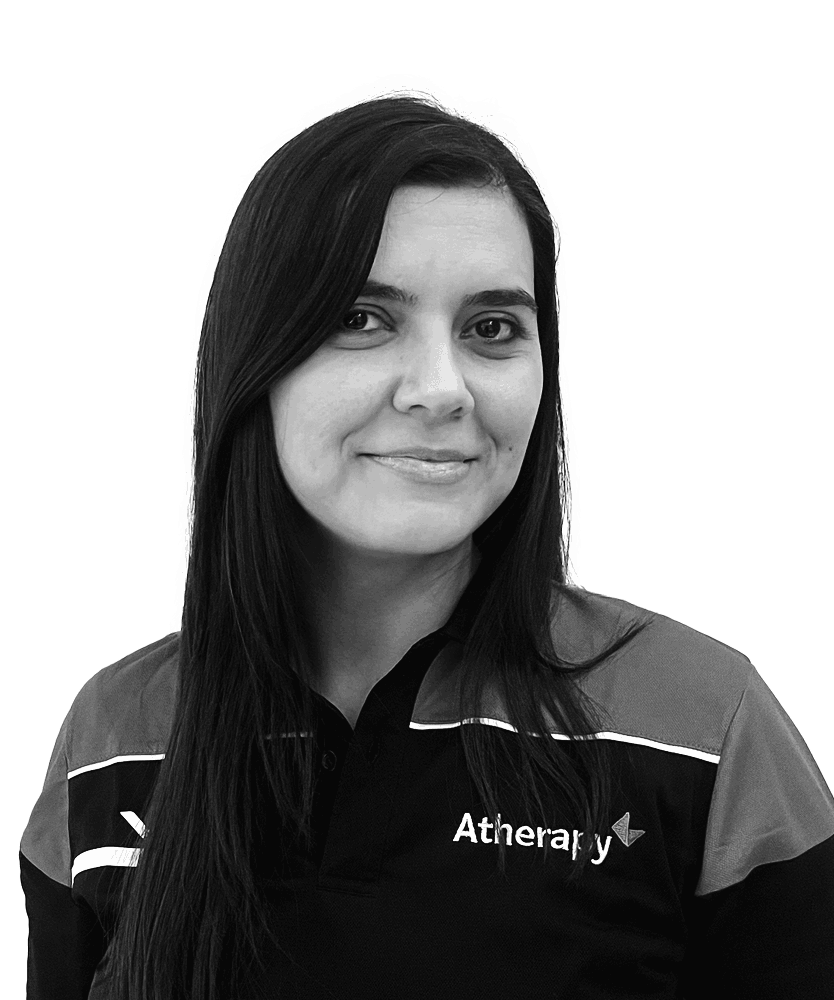
- Specialist in exercise-based rehabilitation, manual therapy and injury prevention
- Experienced in post-operative rehabilitation and progressive return to activity
- Clinical interests include sports injuries, cervical spine and low back dysfunction, shoulder, knee, foot and ankle rehabilitation
- Combines hands-on treatment with targeted strength and rehabilitation programming
- Focused on structured rehabilitation to help patients rebuild strength, movement confidence and function
- Specialist interest in women’s health support including manual lymphatic drainage during pregnancy and pre/post-natal care
- Over 15 years of clinical experience across private practice, sports rehabilitation and women’s health settings
- Fluent in English, Portuguese and Italian
Fernanda Saldanha
Based at Chiswick
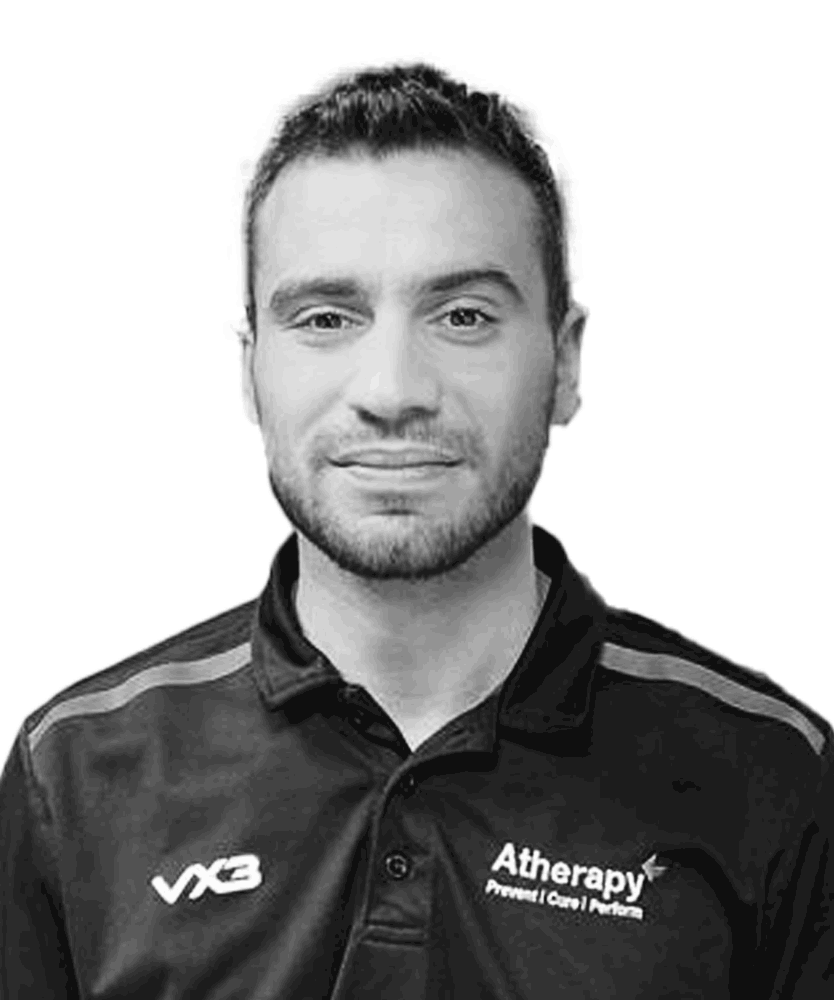
- Extensive experience working within elite professional football and private practice
- Former Tottenham Hotspur Academy physiotherapist specialising in performance rehabilitation and return-to-play management
- Specialist interest in post-operative rehabilitation and upper and lower limb injury management
- Experienced in managing complex and recurrent injuries through structured, evidence-based rehabilitation planning
- Clinical approach combines manual therapy, gym-based rehabilitation, movement analysis and acupuncture
- Focused on restoring movement quality, strength under load and long-term performance outcomes
- Fluent in English and Greek
Dimitrios Michtatidis
Based at Chiswick and Strand

- Level 4 Strength & Conditioning Coach
- Medical Acupuncture & Dry Needling Qualified
- Combines detailed clinical assessment with progressive rehabilitation and strength & conditioning principles
- Specialist interest in gym-based rehabilitation and return-to-sport management
- Clinical interests include acute sporting injuries, post-operative orthopaedic rehabilitation (including ligament reconstructions, meniscal and labral repairs) and hip/groin pain in active populations
- Experience managing both active general population and performance-focused clients
- Adjunct treatment techniques include dry needling and shockwave therapy
Claire Cuffe
Based at Moorgate and Strand
- Over 5 years experience treating orthopaedic injuries, chronic pain and post operative care
- Advanced certifications in dry needling for hands, face, feet, lower limb, upper limb and lumbopelvic region
- Certified pelvic floor physio for both men and women with an interest in treating clients pre and post natal
- Special interest in strength and conditioning programming for clients training for half/full marathons