
ACL Rehabilitation
Swelling After ACL Reconstruction: What It Means, Why It Matters, And How To Manage It
More Than A Symptom
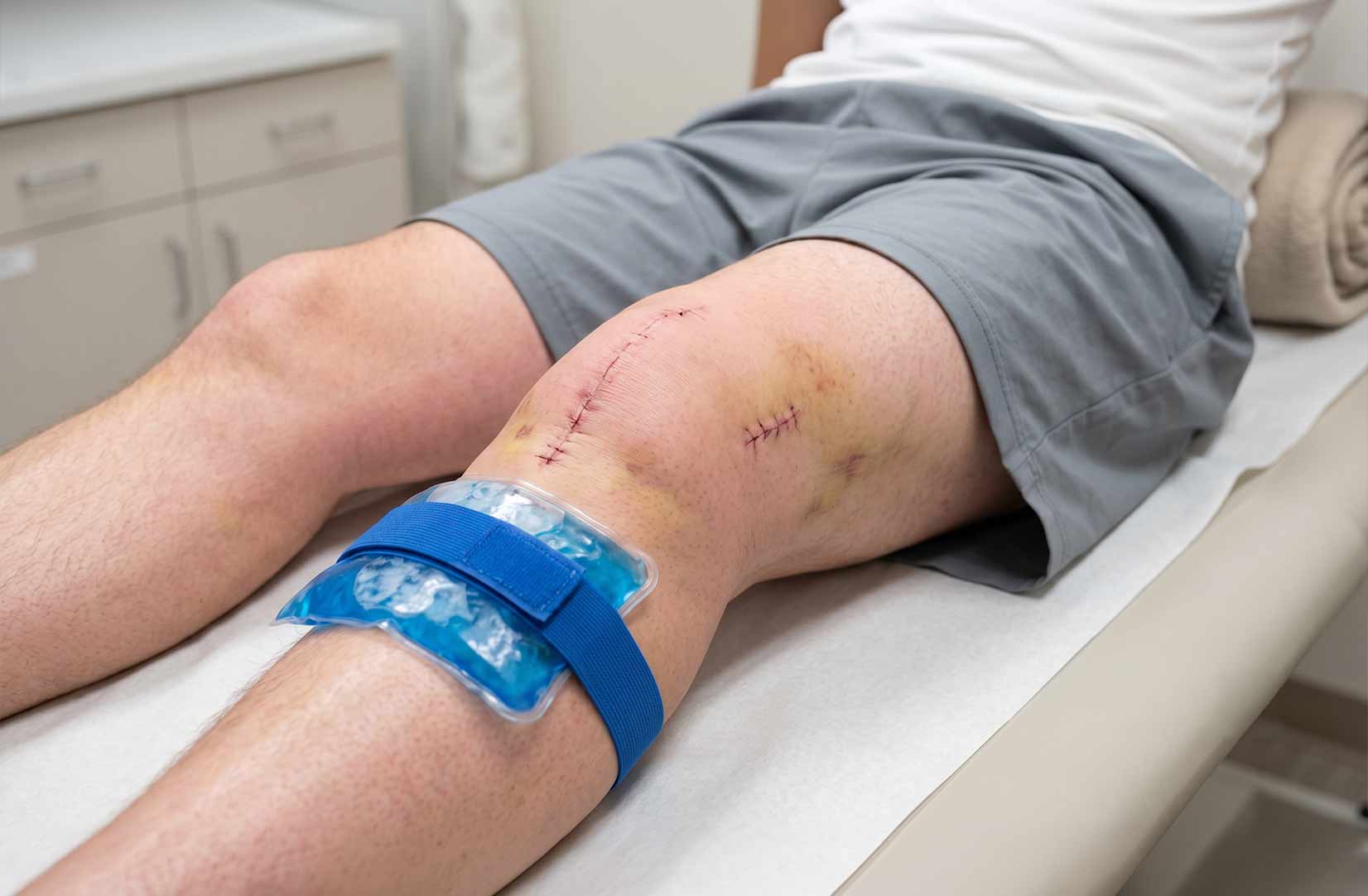
Swelling after ACL reconstruction is one of the most consistent features of the early post-operative period — and one of the most consistently misunderstood. Most patients are told to expect it, told to apply ice, and told it will settle in time. What they are rarely told is why it matters clinically, what it is actually communicating, and why how it is managed in the first weeks after surgery can meaningfully shape the entire rehabilitation trajectory that follows.
Post-operative knee effusion is not simply an uncomfortable side effect of surgery to be waited out. It is an active physiological process with direct consequences for muscle function, rehabilitation tolerance, and long-term recovery quality. Understanding it properly changes how it is approached — and changes what is possible during recovery.
Why The Knee Swells After ACL Reconstruction
Post-operative knee effusion following ACL reconstruction has multiple contributing sources. Surgical trauma to the joint capsule, synovial membrane, and surrounding soft tissues triggers an acute inflammatory response — an entirely normal and biologically necessary phase of tissue healing. The synovial membrane increases its production of synovial fluid in response to surgical intervention. Haemarthrosis — blood within the joint from surgical bleeding — contributes to early post-operative effusion. And the combination of these factors, alongside immobility, gravity, and reduced vascular return, means that fluid accumulates within and around the joint in the days and weeks following surgery.
Dye (2005), in a highly influential paper in Clinical Orthopaedics and Related Research introducing the concept of tissue homeostasis, described the joint as a structure with a finite envelope of function — a range of loading and biological demand within which it can maintain homeostasis without generating an inflammatory response. ACL reconstruction significantly reduces this envelope in the early post-operative period. Any demand that exceeds the current capacity of the healing tissue — whether from rehabilitation loading, prolonged standing, or even excessive active movement — can push the joint beyond this envelope and provoke reactive effusion. This framework is one of the most clinically useful tools for interpreting swelling across the entire ACL rehabilitation continuum.
The Effusion-Inhibition Cycle
The most clinically important consequence of post-operative knee effusion is not pain or stiffness. It is the direct inhibition of quadriceps muscle activation — and the self-reinforcing cycle that this creates.
Rice and McNair (2014) demonstrated that volumes of intra-articular fluid as low as 20 to 30 millilitres are sufficient to significantly reduce voluntary quadriceps activation through neurological inhibition of the motor neurone pool. Hart et al. (2014), writing in the Journal of Orthopaedic Research, confirmed that this inhibitory effect responds to the presence of fluid in the joint itself, regardless of whether it causes significant pain.
Swelling inhibits quadriceps activation. Reduced activation leads to atrophy and decruitment. A weakened quadriceps provides less protection during loading. The knee is more easily irritated by demand it would otherwise tolerate, producing further reactive swelling. The cycle reinforces itself unless actively interrupted.
Swelling As Clinical Information
One of the most important shifts in contemporary ACL rehabilitation is the move from treating swelling as a problem to suppress, toward treating it as information to interpret. These orientations lead to fundamentally different rehabilitation decisions.
A knee that remains persistently swollen despite rest and management is communicating that the demand placed on it is exceeding its current capacity. A knee that swells in response to a specific rehabilitation session is communicating that the load, volume, or intensity of that session exceeded what the joint could tolerate at that stage of healing. The swelling is the signal, not the problem.
Game Ready Cold-Compression Therapy: The Clinical Case
The standard instruction following ACL surgery — apply ice, rest, elevate — reflects the RICE principle that has guided acute injury management for decades. It is not wrong. But for patients following major knee reconstruction, it represents a significantly lower standard of care than is now available.
The critical insight of contemporary cryotherapy research is not simply that cold reduces swelling and pain — it is that the combination of cold and active intermittent compression is meaningfully more effective than cold alone. This distinction matters clinically, particularly in the early post-operative period when swelling management most directly determines rehabilitation quality.
Why intermittent compression changes the clinical picture
A 2023 randomised controlled trial confirmed that adding intermittent compression to cryotherapy produced significantly accelerated swelling reduction, improved knee flexion range, and better functional outcomes at multiple follow-up points compared to cold therapy alone — providing the most recent and robust evidence that the combination is clinically superior to cryotherapy in isolation. This aligns with the mechanistic understanding: compression actively mobilises fluid from the joint and surrounding tissues through its effect on lymphatic microcirculation and venous return, while cold simultaneously reduces local metabolic rate, vasoconstricts superficial vessels, reduces inflammatory mediator activity, and provides analgesic effect through sensory nerve modulation.
Standard ice — even applied with a static compression bandage — provides cold with passive compression. It does not provide the active, intermittent pneumatic compression that drives fluid out of the limb during treatment. For patients in the early post-operative period or managing reactive swelling during rehabilitation progression, the addition of active compression represents a meaningful clinical upgrade.
Game Ready in ACL rehabilitation specifically
Murgier and Cassard, in an ACL-specific study comparing Game Ready against standard cryotherapy with static compression, found that patients in the Game Ready group required significantly fewer analgesics post-operatively and demonstrated improved knee range of motion compared to the control group. While the overall evidence base for Game Ready versus other cold-compression devices remains an active area of research, the system is widely adopted across elite sport rehabilitation environments, used by thousands of orthopaedic surgeons internationally, and is the cold-compression system of choice within Atherapy’s clinical rehabilitation programme.
The practical advantages of Game Ready in a home rehabilitation context are also clinically meaningful. The circumferential, anatomically fitted wraps provide consistent contact with the joint surface. The programmable control unit allows independent, repeatable treatment sessions at home without clinical supervision after initial set-up. And the combination of cold and compression can be applied consistently — not simply during clinical sessions, but during the extended hours of daily recovery that ultimately determine post-operative swelling trajectory.
A Complete Swelling Management Strategy
Game Ready cold-compression therapy is the most effective single modality for post-operative swelling management. It is most effective as part of a broader, consistent daily strategy applied across all waking hours — not simply during formal treatment sessions.
Compression
Consistent compression of the knee and lower limb throughout the day improves venous and lymphatic return, reduces fluid accumulation, and provides proprioceptive feedback that supports more confident movement. Graded compression hosiery or sleeves provide more consistent graduated pressure than simple bandaging for sustained daily use.
Elevation
Elevating the limb above the level of the heart during rest significantly reduces dependent oedema. Many patients underestimate how much time needs to be spent at true elevation — lying with the leg supported above chest level, not simply a foot on a footrest. The difference in fluid accumulation across a full day is clinically meaningful, particularly in the first two weeks.
Controlled Movement
Complete immobility is counterproductive to swelling management. Gentle, controlled movement — ankle pumps, quadriceps activation, controlled range of motion work — stimulates the muscular pumping action that drives lymphatic and venous return. The goal is low-load, rhythmic muscle activity rather than rest. At the same time, activities that provoke reactive swelling should be carefully managed in the early post-operative period.
Loading Modification
When swelling escalates in response to a rehabilitation session, the default clinical response should be to adjust load, volume, or intensity — not simply treat the swelling and continue at the same level. Responding to the knee’s swelling signals with targeted load modification is one of the most important and most underused management tools in ACL rehabilitation. It is not a sign of rehabilitation failure — it is clinical intelligence applied to a physiological signal.
Passive BFR: Protecting Muscle During The Swollen Period
The early post-operative swelling period creates a difficult clinical trade-off. The most effective tools for maintaining quadriceps muscle mass — progressive resistance exercise — are precisely the activities most likely to provoke reactive effusion when swelling is still significant. Passive blood flow restriction therapy partially bridges this gap.
Wearing graduated compression BFR garments at rest — during elevation periods, overnight, during travel — creates a mild hypoxic environment within the muscle that stimulates protein synthesis pathways and attenuates the rate of disuse atrophy, without requiring active loading of the joint. It does not reduce swelling directly, but it addresses swelling’s most significant consequence during the most loading-restricted phase of recovery.
The 24-Hour Response Rule
The clinical significance of a rehabilitation session is not fully apparent during the session itself — it becomes apparent in the 12 to 24 hours that follow. A knee that becomes significantly more swollen, stiff, or painful in the evening or the following morning is communicating that the session exceeded its current tolerance. A knee that responds with mild, transient awareness that fully settles within 24 hours is responding within normal adaptive parameters.
Teaching patients to monitor and report their 24-hour response accurately shifts appropriate clinical responsibility to the patient, empowers informed decisions about daily activity between sessions, and provides the clinician with far richer information about rehabilitation tolerance than a weekly appointment alone can capture. It is one of the simplest and most practically useful tools in ACL rehabilitation.
Related ACL Rehabilitation Resources
This page forms part of Atherapy’s interconnected ACL rehabilitation content ecosystem. Each resource covers a distinct aspect of the rehabilitation journey.
→ ACL Prehabilitation Before Surgery
→ Post-Operative ACL Rehabilitation
→ Quadriceps Weakness After ACL Injury
→ Return to Running After ACL Surgery
→ Return to Sport Testing After ACL Surgery
→ Game Ready Cold-Compression Therapy Hire at Atherapy
→ Force Plate Testing in ACL Rehabilitation
→ Gym-Based ACL Rehabilitation
→ Reinjury Risk After ACL Surgery
→ Psychological Recovery After ACL Injury
→ ACL Rehabilitation Timelines
→ Return-to-Performance Principles
Speak To A Clinician About Your ACL Prehabilitation Programme
If you have recently sustained an ACL injury, are awaiting surgical opinion, or want expert guidance on preparing for reconstruction, our clinical team will design a structured programme tailored to your injury, sport, surgical pathway, and long-term performance goals.
Evidence & Research References
This page reflects current evidence-based practice in post-operative swelling management following ACL reconstruction. Key research informing the content includes:
- Dye SF (2005). The knee as a biologic transmission with an envelope of function. Clinical Orthopaedics and Related Research.
- Rice DA, McNair PJ (2014). Quadriceps arthrogenic muscle inhibition: neural mechanisms and treatment perspectives. Seminars in Arthritis and Rheumatism.
- Hart JM et al. (2014). Quadriceps inhibition following knee injury: an updated review. Journal of Orthopaedic Research.
- Bleakley CM et al. (2012). The use of ice in the treatment of acute soft-tissue injury: a systematic review. Cochrane Database of Systematic Reviews.
- Murgier J, Cassard X. Cryotherapy with dynamic intermittent compression for analgesia after anterior cruciate ligament reconstruction. Orthopaedics & Traumatology: Surgery & Research.
- Uzun S, Kizilkaya Yilmaz B, Boya H. Cold pack therapy versus combination of cold pack and intermittent pneumatic compression in acute knee effusion: a prospective randomised controlled trial. Orthopaedics & Traumatology: Surgery & Research. 2023;109(8):103682. doi:10.1016/j.otsr.2023.103682.
- Van den Bekerom MPJ et al. (2012). Evidence for RICE therapy in soft tissue injury. Journal of Athletic Training.
- Buckthorpe M et al. (2021). Recommendations for assessment and progressive return to sport after lower limb injury. Sports Medicine.
- Ramsey P et al. (2021). Blood flow restriction training in ACL rehabilitation. Physical Therapy in Sport.
Melbourne ACL Rehabilitation Guide and Aspetar Return-to-Sport Guidelines also inform this content. Rehabilitation should always remain individualised — frameworks inform clinical reasoning, they do not replace it.
London Physiotherapy Team
Welcome to the Atherapy expert clinical team. We are a dedicated group of qualified physiotherapists and sports medicine specialists committed to delivering innovative, evidence-based rehabilitation. Our practice is built on a holistic approach to physical health, firmly believing that injury prevention is just as vital as the cure. From treating acute sports injuries to designing custom performance optimization programs, our clinicians work collaboratively to help you safely reach your goals.
Meet our resident experts below and find the right specialist for your recovery journey.

- With 25+ years of Premier League and Championship experience, Andrew has led Medical, Science, and Performance departments for Hull City, Nottingham Forest, Derby County, and Preston North End, following earlier work at the Manchester United Academy
- Specialist in lower limb rehabilitation
- Post-operative rehabilitation
- Back pain and complex spinal presentations
- Elite athlete management including manual therapy, gym rehabilitation and acupuncture
- Specialises in complex cases and second opinion rehabilitation planning including return to play
- Limited clinical availability due to wider clinical leadership and operational responsibilities
Andrew Balderston
Based at Moorgate
- Specialist in exercise-based rehabilitation, manual therapy and injury prevention
- Experienced in post-operative rehabilitation and progressive return to activity
- Clinical interests include sports injuries, cervical spine and low back dysfunction, shoulder, knee, foot and ankle rehabilitation
- Combines hands-on treatment with targeted strength and rehabilitation programming
- Focused on structured rehabilitation to help patients rebuild strength, movement confidence and function
- Specialist interest in women’s health support including manual lymphatic drainage during pregnancy and pre/post-natal care
- Over 15 years of clinical experience across private practice, sports rehabilitation and women’s health settings
- Fluent in English, Portuguese and Italian
Fernanda Saldanha
Based at Chiswick
- Extensive experience working within elite professional football and private practice
- Former Tottenham Hotspur Academy physiotherapist specialising in performance rehabilitation and return-to-play management
- Specialist interest in post-operative rehabilitation and upper and lower limb injury management
- Experienced in managing complex and recurrent injuries through structured, evidence-based rehabilitation planning
- Clinical approach combines manual therapy, gym-based rehabilitation, movement analysis and acupuncture
- Focused on restoring movement quality, strength under load and long-term performance outcomes
- Fluent in English and Greek
Dimitrios Michtatidis
Based at Chiswick and Strand

- Level 4 Strength & Conditioning Coach
- Medical Acupuncture & Dry Needling Qualified
- Combines detailed clinical assessment with progressive rehabilitation and strength & conditioning principles
- Specialist interest in gym-based rehabilitation and return-to-sport management
- Clinical interests include acute sporting injuries, post-operative orthopaedic rehabilitation (including ligament reconstructions, meniscal and labral repairs) and hip/groin pain in active populations
- Experience managing both active general population and performance-focused clients
- Adjunct treatment techniques include dry needling and shockwave therapy
Claire Cuffe
Based at Moorgate and Strand

- Over 5 years experience treating orthopaedic injuries, chronic pain and post operative care
- Advanced certifications in dry needling for hands, face, feet, lower limb, upper limb and lumbopelvic region
- Certified pelvic floor physio for both men and women with an interest in treating clients pre and post natal
- Special interest in strength and conditioning programming for clients training for half/full marathons