

ACL Rehabilitation
Return To Running After ACL Surgery: Criteria, Progression and Confidence
More Than A Milestone
Returning to running after ACL surgery is one of the biggest physical and psychological moments in the entire rehabilitation journey.
For many people, the first run represents far more than exercise. It represents progress. Normality. The return of an identity that injury temporarily took away. Many patients describe the first run back as the moment they stopped feeling like someone recovering from surgery and started feeling like themselves again.
That emotional significance is real, and it matters. But so does the clinical reality: returning before the knee has demonstrated the physical capacity to manage repetitive loading can increase irritation, provoke swelling, and set recovery back meaningfully. The goal at Atherapy is not simply to get patients running. It is to get them running well — with confidence, efficiency, and the physical foundations to sustain it.
Why Running Is More Demanding Than Most People Expect
Running places substantial, repetitive mechanical load through the knee with every stride. The body must absorb and distribute ground reaction forces, control landing mechanics, stabilise the pelvis and trunk, tolerate rotational stress, and repeatedly manage these demands efficiently across the entire duration of a run. These requirements are fundamentally different from the demands of walking, gym-based exercise, or daily activity.
Following ACL reconstruction, the neuromuscular systems that govern these demands are frequently impaired in ways that are not always obvious to the patient. Many people feel ready to run because swelling has reduced, walking feels comfortable, gym exercises feel manageable, and daily life has returned to something close to normal. None of this, however, reflects the additional demands that running creates. The gap between feeling ready and being physically prepared is one of the most consistent clinical challenges across ACL rehabilitation.
Dingenen and Gokeler (2017), writing in Sports Medicine, highlighted this gap directly — emphasising that running readiness should be determined through objective physical assessment rather than symptomatic recovery alone, and that the absence of pain or swelling at rest is an insufficient indicator of tissue tolerance to repetitive impact loading.
The goal is not simply to get patients running. It is to get them running well — with confidence, efficiency, and the physical foundations to sustain it.
Time Alone Is Not Enough: The Case For Criteria-Based Progression
Historically, many rehabilitation protocols positioned return to running at approximately twelve weeks post-operatively as a default milestone. Modern ACL rehabilitation has moved decisively away from this model.
Two patients at identical points in their post-operative timeline may be in entirely different physical states. One may demonstrate excellent quadriceps strength, controlled landing mechanics, minimal swelling, and good single-leg stability. The other may still have significant strength deficits, poor force absorption, ongoing joint irritability, and compensatory movement patterns. Presenting at the same time point does not mean the same readiness. A protocol that treats both patients identically — based on weeks rather than capacity — is failing one of them.
Daniels et al. (2022), in a systematic review published in the British Journal of Sports Medicine, identified a set of objective physical criteria that, when met prior to running initiation, were associated with significantly reduced rates of adverse response and setback. The evidence supports a criteria-first approach: return to running should be earned through demonstrated physical capacity, movement quality, and tissue tolerance — not granted based on the calendar.
Return To Running Criteria
Before introducing running, a comprehensive assessment evaluates multiple physical domains simultaneously. The aim is not simply to confirm that individual metrics have been achieved in isolation, but to establish that the knee functions as an integrated system capable of tolerating repetitive loading demands.
Key criteria typically include full or near-full knee extension, satisfactory flexion range, minimal or no resting swelling, a normal walking pattern without gait deviation, adequate single-leg control during squat and step-down tasks, sufficient quadriceps and calf strength, controlled hop mechanics and landing strategy, and appropriate pelvic and trunk stability during single-leg tasks.
Importantly, assessment also considers how the knee responds over the 24 hours following a loading session. A knee that becomes progressively more swollen, stiff, or painful after higher-demand exercise is signalling that its current capacity has been exceeded — regardless of how well it performed during the session itself. Wellsandt et al. (2017), writing in the Journal of Orthopaedic & Sports Physical Therapy, demonstrated that monitoring post-exercise response is a critical component of safe progression decision-making, and that reactive swelling is one of the most reliable indicators that loading has moved beyond the tissue’s current tolerance.
Quadriceps Strength: The Foundation Everything Else Builds On
Quadriceps strength is one of the most consistently documented predictors of successful return to running following ACL reconstruction — and one of the most persistently underestimated deficits.
Following surgery, quadriceps inhibition and atrophy can persist for many months despite patients engaging consistently with rehabilitation. The result is often a pattern of reduced shock absorption during running, stiffened landing mechanics with inadequate knee flexion, compensatory hip-dominant movement strategies, reduced running efficiency, and asymmetrical loading that places disproportionate stress on the contralateral limb. These adaptations may not be consciously apparent to the patient, but they are clinically significant — both for injury risk and for running economy.
Grindem et al. (2016) demonstrated that a quadriceps limb symmetry index below 90% at return to sport was associated with dramatically elevated reinjury risk. More recently, Buckthorpe et al. (2019), in a framework paper published in Sports Medicine, outlined a neuromuscular progressive plyometric programme specifically designed to bridge the gap between isolated gym-based strength work and the dynamic demands of running — highlighting that strength alone is insufficient if it cannot be expressed under the higher speed, higher load conditions that running creates.
For this reason, rehabilitation must systematically bridge isolated strength gains into movement-based expression. Heavy slow resistance work, split squat progressions, step-down loading, plyometric preparation, and landing control drills all form part of a comprehensive preparation process before running exposure begins.
Force Absorption and Landing Control
Running is not simply about producing force. It is equally about controlling and dissipating force efficiently with every ground contact. This aspect of running preparation is one of the most consistently overlooked in ACL rehabilitation.
Many patients following ACL reconstruction demonstrate impaired eccentric quadriceps loading, reduced deceleration control, and compromised dynamic knee stability during single-leg landing tasks — deficits that are not always apparent during gym-based strengthening but become visible during hop testing, landing drills, and running assessment. Left unaddressed, these impairments create compensatory movement patterns that reduce running efficiency and elevate reinjury risk.
Buckthorpe et al. (2021), writing in Sports Medicine, emphasised that plyometric progression and landing control work should form an integral part of ACL rehabilitation in the period preceding running initiation — not as an optional addition, but as a clinical prerequisite for safe and efficient running mechanics. The ability to absorb landing forces with controlled knee flexion, stable trunk, and symmetrical loading strategy should be demonstrable before progressive running exposure begins.
The Five Stages Of Running Progression
Running is introduced gradually, following a staged progression that builds load, complexity, and confidence systematically. Progression between stages is determined by physical criteria and symptom response — not by time. Some individuals will move through stages quickly; others will spend extended periods within a particular stage depending on how the knee responds. Both are entirely normal.
STAGE 1
Foundations
Pre-running preparation: strength, conditioning, and landing control
Before running begins, the rehabilitation programme focuses on establishing the physical foundations that running will demand. This includes progressive lower limb strengthening to restore quadriceps and posterior chain capacity, cardiovascular conditioning through cycling and other low-impact modalities, single-leg control development through squat and step-down progressions, and early plyometric preparation including two-leg landing drills and controlled low-level impact work. The objective of this stage is not simply to accumulate strength — it is to prepare the neuromuscular system for the dynamic, higher-speed demands that running will introduce.
STAGE 2
Plyometric Readiness
Force absorption, hop preparation, and deceleration control
As strength and single-leg control improve, rehabilitation progressively introduces more demanding force absorption tasks. This includes two-leg and single-leg landing drills, hop preparation work, controlled deceleration exercises, and dynamic balance challenges at higher speeds. This stage bridges the gap between gym-based loading and the impact demands of running — preparing the knee, and the neuromuscular system, for the repetitive stress that even slow jogging creates.
STAGE 3
Initial Running Exposure
Walk-jog intervals, treadmill introduction, and monitoring response
The first running exposure is deliberately conservative. Walk-to-jog intervals on a treadmill allow controlled introduction to impact loading while enabling close monitoring of symptom response during and after the session. A typical early protocol might begin with one-minute jog and two-minute walk intervals, with gradual increases in jogging proportion as the knee demonstrates consistent tolerance. The 24-hour post-session response is assessed carefully before progressing — mild awareness is expected, but significant swelling, stiffness, or pain escalation signals that the current exposure level needs adjusting.
STAGE 4
Building Running Capacity
Continuous running, outdoor progression, and speed development
As tolerance to running is established on the treadmill, progression moves toward continuous running, outdoor surfaces, and gradual increases in both speed and volume. Outdoor running introduces greater variability in surface, impact characteristics, and braking demands than treadmill running — which is why the transition is staged rather than immediate. Running volume is increased before speed, and both are managed carefully to avoid the reactive swelling and setback that commonly follow aggressive progressions.
STAGE 5
Athletic Running Preparation
Acceleration, deceleration, directional change, and sport-specific demands
The final stage of running progression introduces the more complex, sport-specific demands that straightforward running does not prepare the knee for. Acceleration mechanics, deceleration drills, reactive directional changes, and eventually sport-specific running patterns are progressively incorporated as the athlete’s capacity and confidence develop. For athletes returning to pivoting or cutting sports, this stage forms the bridge between return to running and return to sport — a transition that requires its own careful management and objective assessment before competition is considered.
RECOGNISING OVERLOAD DURING RUNNING PROGRESSION
Temporary symptom responses — mild knee awareness during a run, some stiffness the morning after a harder session — are a normal part of progressive loading. However, persistent or escalating swelling, pain that worsens during a run rather than settling, loss of extension, or a significant reduction in confidence loading the knee are signals that current running exposure is exceeding the knee’s capacity. These responses are clinical information. They should prompt a temporary reduction in load and reassessment before progression continues, not simply be pushed through.
From Treadmill To Track: Managing The Transition
The transition from treadmill to outdoor running is one of the most important — and most commonly mismanaged — steps in running progression. Treadmill running offers a controlled environment with consistent surface, reduced impact variability, and the ability to easily reduce speed or stop without the social pressure of being on a track or road. These features make it an appropriate first environment for running re-exposure.
Outdoor running introduces greater impact force variability, uneven surface demands, natural braking patterns, and the psychological exposure of running in a public environment — all of which demand more from the knee and the nervous system. Progression is structured from treadmill through flat outdoor surfaces to inclines, higher speeds, and eventually the directional changes and reactive demands of athletic training. Rushing this transition is one of the most common causes of setback during the return to running phase.
Running Analysis and Movement Quality
A major part of high-quality return to running assessment involves understanding not simply whether the knee can complete a run, but how it completes it. Many patients are able to ‘get through’ a run while simultaneously demonstrating movement strategies that are inefficient, asymmetrical, and potentially harmful to long-term knee health.
Running analysis can identify reduced knee flexion angle during the loading phase, hip drop and contralateral pelvic tilt indicating weakness, trunk compensation patterns, asymmetrical propulsion, and stiffened landing strategies that concentrate rather than dissipate force. These patterns do not always cause immediate pain — but they reduce running economy, create compensatory stress at adjacent joints, and elevate the risk of both graft re-injury and secondary injury elsewhere in the kinetic chain.
The goal of running analysis is not to create mechanical perfection. It is to identify meaningful deviations from efficient, symmetrical movement that warrant targeted rehabilitation before running load is increased further.
Return To Running Is Not Return To Sport
One of the most important distinctions in ACL rehabilitation — and one of the most consistently misunderstood — is the difference between returning to running and returning to sport.
Straight-line running places significantly lower rotational, reactive, and deceleration demands on the knee than competitive sport. Cutting, pivoting, sudden deceleration, contact, and reactive directional change under fatigue all create mechanical loading profiles that controlled running does not replicate. A patient who is running well at five months post-surgery may still be six months away from safely returning to full competitive activity in a pivoting sport. These timelines are not interchangeable, and treating return to running as the final milestone of ACL rehabilitation consistently underestimates the demands that competitive sport creates.
The Psychological Dimension of Return To Running
For many patients, the psychological challenge of return to running is as significant as the physical one. Fear of reinjury following ACL reconstruction is extremely common — particularly during the first run back, on the first outdoor run, and when speed or direction changes are introduced. This fear can manifest as protective movement strategies, reduced speed exposure, over-cautious landing mechanics, and avoidance of the more demanding movement challenges that running progression requires.
Sonesson et al. (2021), in the American Journal of Sports Medicine, found that psychological readiness was an independent predictor of return to running success and long-term outcomes — with athletes reporting lower psychological readiness demonstrating more frequent setbacks, more conservative progression, and higher rates of functional limitation at follow-up. This is why building confidence through structured, progressive exposure is a clinical priority, not simply an adjunct to physical rehabilitation.
The aim is not to push patients through fear, but to progressively reduce it through graduated challenge. Each successful run at a slightly higher demand builds neurological confidence in the knee — teaching the nervous system, as much as the tissue, that the knee is safe under load.
Related ACL Rehabilitation Resources
This page forms part of Atherapy’s interconnected ACL rehabilitation content ecosystem. Each resource covers a distinct aspect of the rehabilitation journey.
→ ACL Prehabilitation Before Surgery
→ Post-Operative ACL Rehabilitation
→ Swelling After ACL Reconstruction
→ Quadriceps Weakness After ACL Injury
→ Force Plate Testing in ACL Rehabilitation
→ Football-Specific ACL Rehabilitation
→ Gym-Based ACL Rehabilitation
→ Reinjury Risk After ACL Surgery
→ Psychological Recovery After ACL Injury
→ ACL Rehabilitation Timelines
→ Return-to-Performance Principles
Speak To A Clinician About Your ACL Prehabilitation Programme
If you have recently sustained an ACL injury, are awaiting surgical opinion, or want expert guidance on preparing for reconstruction, our clinical team will design a structured programme tailored to your injury, sport, surgical pathway, and long-term performance goals.
Book at your nearest clinic: Moorgate | Strand | Chiswick
Evidence & Research References
This page reflects current evidence-based practice in ACL return to running rehabilitation. Key research informing the content includes:
- Dingenen B, Gokeler A (2017). Optimization of the return-to-sport paradigm after anterior cruciate ligament reconstruction: a critical step back to move forward. Sports Medicine.
- Daniels KAJ et al. (2022). Criteria for return to running after ACL reconstruction: a scoping review.British Journal of Sports Medicine.
- Grindem H et al. (2016). Simple decision rules can reduce reinjury risk by 84% after ACL reconstruction: theDelaware-Oslo ACL cohort study. British Journal of Sports Medicine.
- Wellsandt E et al. (2017). Limb symmetry indexes can over estimate knee function after ACL injury. Journal of Orthopaedic & Sports Physical Therapy.
- Buckthorpe M et al. (2019). Assessing and treating gluteus maximus weakness — a clinical commentary. International Journal of Sports Physical Therapy.
- Buckthorpe M et al. (2021). Recommendations for assessment and progressive return to sport after lower limb muscle injury. Sports Medicine.
- Losciale JM et al. (2022). The association between passing return-to-sport criteria and second ACL injury risk. British Journal of Sports Medicine.
- Sonesson S et al. (2021).Psychological readiness to return to sport is associated with outcome two years after ACL reconstruction. American Journal of Sports Medicine.
- Melbourne ACL RehabilitationGuide — contemporary evidence-based rehabilitation principles.
- Aspetar Return-to-SportGuidelines — criterion-based return-to-performance frameworks.
Our rehabilitation approach is further informed by the clinical work of Enda King, Mick Hughes, Claire Robertson, Phil Glasgow, Adam Culvenor, Tim Gabbett, Seth O’Neill, and Ebonie Rio. Rehabilitation should always remain individualised — frameworks inform clinical reasoning, they do not replace it.
London Physiotherapy Team
Welcome to the Atherapy expert clinical team. We are a dedicated group of qualified physiotherapists and sports medicine specialists committed to delivering innovative, evidence-based rehabilitation. Our practice is built on a holistic approach to physical health, firmly believing that injury prevention is just as vital as the cure. From treating acute sports injuries to designing custom performance optimization programs, our clinicians work collaboratively to help you safely reach your goals.
Meet our resident experts below and find the right specialist for your recovery journey.

- With 25+ years of Premier League and Championship experience, Andrew has led Medical, Science, and Performance departments for Hull City, Nottingham Forest, Derby County, and Preston North End, following earlier work at the Manchester United Academy
- Specialist in lower limb rehabilitation
- Post-operative rehabilitation
- Back pain and complex spinal presentations
- Elite athlete management including manual therapy, gym rehabilitation and acupuncture
- Specialises in complex cases and second opinion rehabilitation planning including return to play
- Limited clinical availability due to wider clinical leadership and operational responsibilities
Andrew Balderston
Based at Moorgate
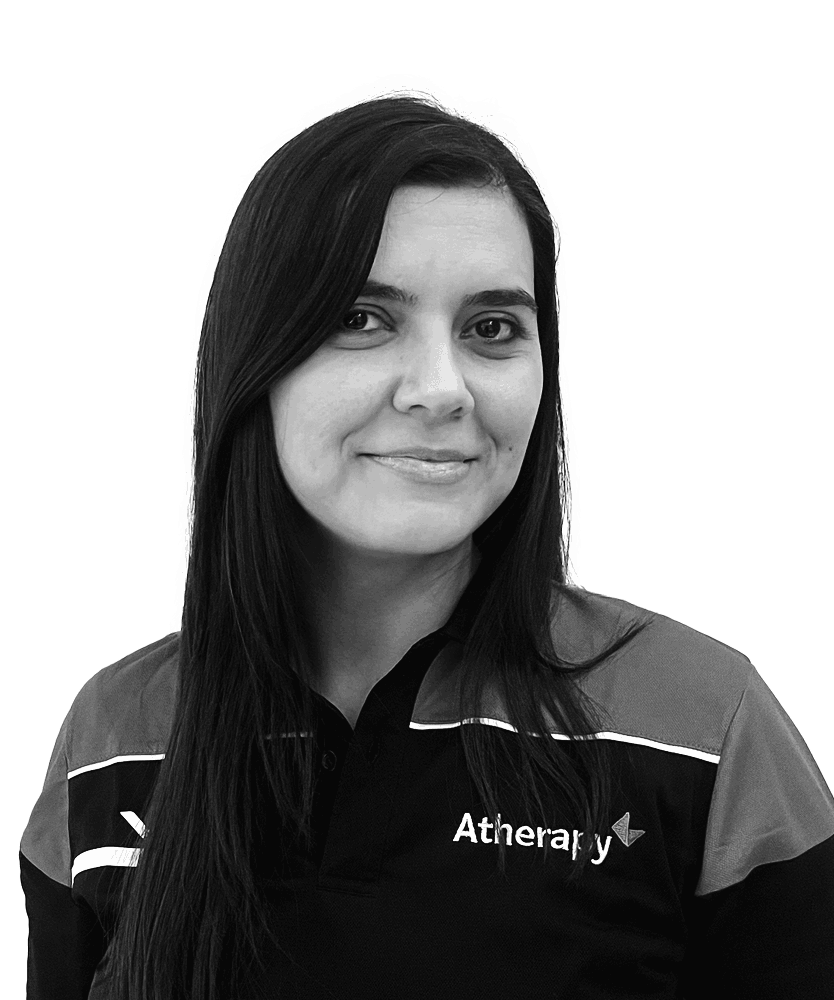
- Specialist in exercise-based rehabilitation, manual therapy and injury prevention
- Experienced in post-operative rehabilitation and progressive return to activity
- Clinical interests include sports injuries, cervical spine and low back dysfunction, shoulder, knee, foot and ankle rehabilitation
- Combines hands-on treatment with targeted strength and rehabilitation programming
- Focused on structured rehabilitation to help patients rebuild strength, movement confidence and function
- Specialist interest in women’s health support including manual lymphatic drainage during pregnancy and pre/post-natal care
- Over 15 years of clinical experience across private practice, sports rehabilitation and women’s health settings
- Fluent in English, Portuguese and Italian
Fernanda Saldanha
Based at Chiswick
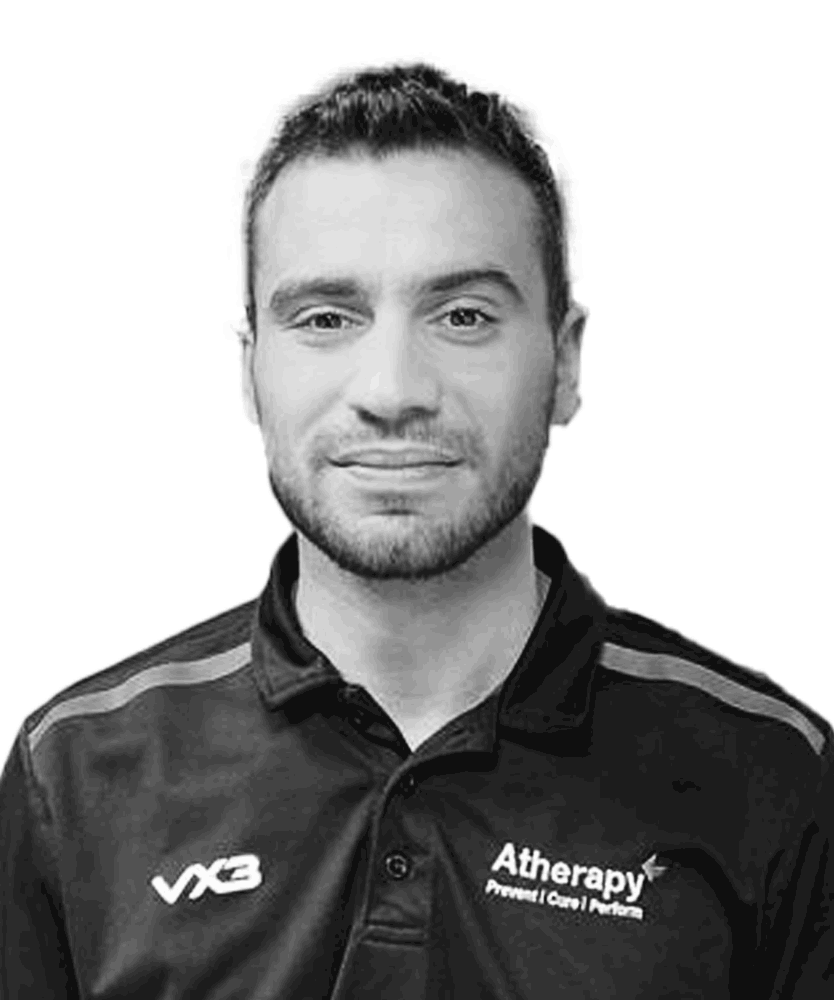
- Extensive experience working within elite professional football and private practice
- Former Tottenham Hotspur Academy physiotherapist specialising in performance rehabilitation and return-to-play management
- Specialist interest in post-operative rehabilitation and upper and lower limb injury management
- Experienced in managing complex and recurrent injuries through structured, evidence-based rehabilitation planning
- Clinical approach combines manual therapy, gym-based rehabilitation, movement analysis and acupuncture
- Focused on restoring movement quality, strength under load and long-term performance outcomes
- Fluent in English and Greek
Dimitrios Michtatidis
Based at Chiswick and Strand

- Level 4 Strength & Conditioning Coach
- Medical Acupuncture & Dry Needling Qualified
- Combines detailed clinical assessment with progressive rehabilitation and strength & conditioning principles
- Specialist interest in gym-based rehabilitation and return-to-sport management
- Clinical interests include acute sporting injuries, post-operative orthopaedic rehabilitation (including ligament reconstructions, meniscal and labral repairs) and hip/groin pain in active populations
- Experience managing both active general population and performance-focused clients
- Adjunct treatment techniques include dry needling and shockwave therapy
Claire Cuffe
Based at Moorgate and Strand

- Over 5 years experience treating orthopaedic injuries, chronic pain and post operative care
- Advanced certifications in dry needling for hands, face, feet, lower limb, upper limb and lumbopelvic region
- Certified pelvic floor physio for both men and women with an interest in treating clients pre and post natal
- Special interest in strength and conditioning programming for clients training for half/full marathons