
ACL Rehabilitation
ACL Rehabilitation for Footballers: What the Sport Actually Demands
An ACL injury in a footballer is not just a knee injury. It is a career event — one that will determine whether a player returns to their previous level of performance, drops to a lower level, or fails to return at all. The data from professional football is sobering: the UEFA Elite Club Injury Study has consistently demonstrated that only around 65% of male professional footballers are still playing at the top level three years after ACL rupture (Waldén et al., 2016), and that second ACL injury rates following reconstruction remain unacceptably high — particularly in the first two years after return to competitive play (Della Villa et al.,2021). These are not outcomes that generic rehabilitation protocols can adequately address.
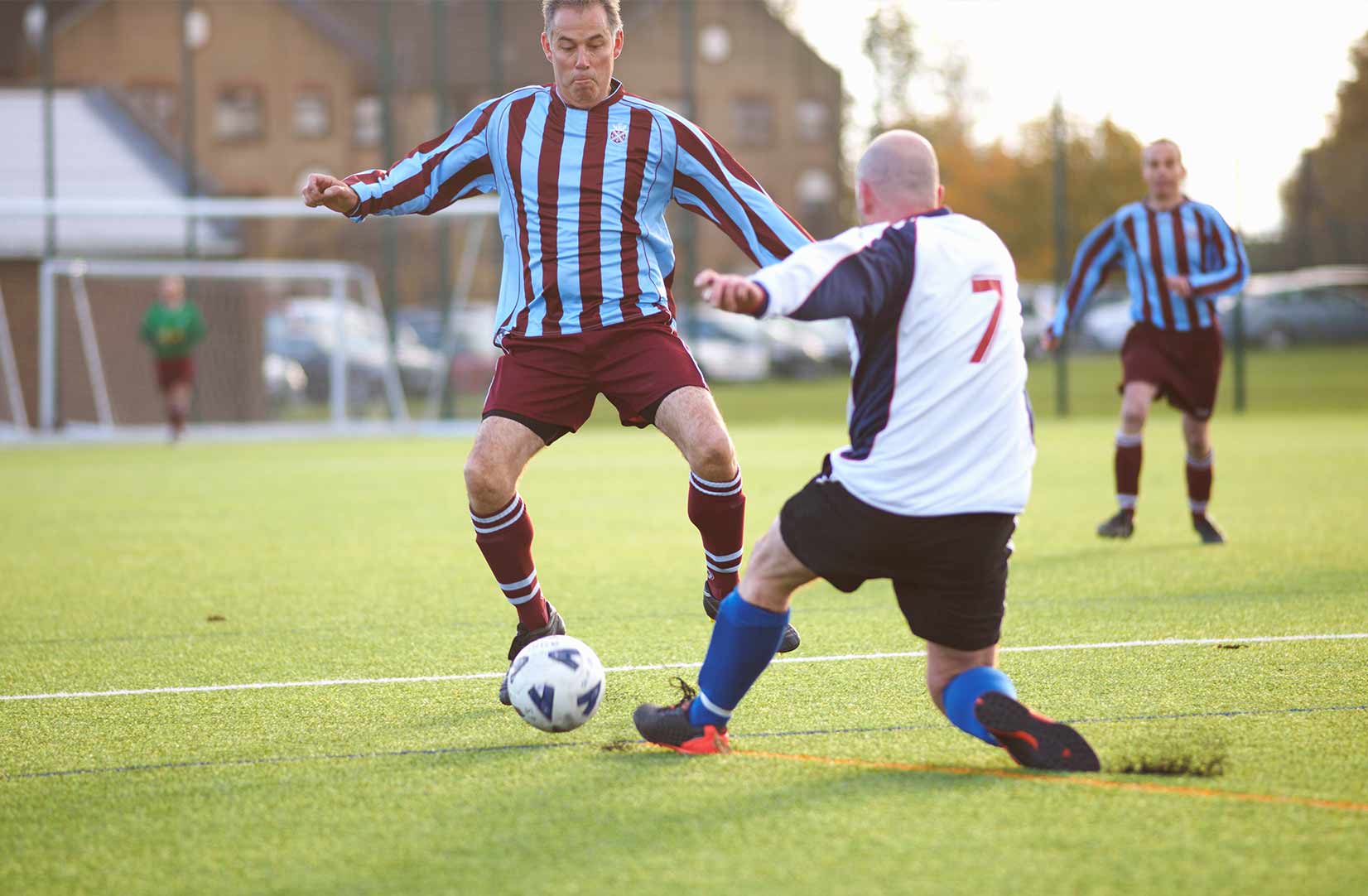
What football demands of the knee — and of the entire lower limb neuromuscular system — is qualitatively different from what other sports demand, and different again from what standard gym-based ACL rehabilitation delivers. The sport involves repeated high-speed deceleration, 180-degree direction changes, single-leg landings from aerial challenges, and the execution of all of these under fatigue, in congested spaces, with unpredictable opponents. Preparing a knee for that environment requires a rehabilitation programme specifically built around those demands.This page explains what that looks like, why it matters, and how Atherapy approaches football-specific ACL rehabilitation.
Why Football Is a Distinct Rehabilitation Challenge
Most ACL rehabilitation protocols are built around generic functional milestones: extension and flexion range, strength symmetry thresholds, hop test performance. These are necessary. They are not sufficient for football. The problem is that the physical demands of competitive football sit substantially above what any of these standard milestones actually assess.
A professional footballer in competitive play will routinely reach sprint speeds above 30 km/h, perform rapid decelerations from high speed to near-standstill, execute 180-degree cuts with a planted foot and full bodyweight transfer, receive the ball while facing away from goal under physical pressure, and execute all of these movements after 60 minutes of sustained aerobic effort at intensities that induce meaningful neuromuscular fatigue. The ACL injury mechanism in football — documented through systematic video analysis of 134 consecutive cases by Della Villa, Buckthorpe and colleagues (2020) — most commonly occurs during deceleration, change of direction, or landing tasks. These are precisely the movements that standard rehabilitation protocols address last, and least specifically.
The practical consequence is a rehabilitation gap. A footballer who has met every conventional discharge criterion — 90% limb symmetry on hop tests, adequate isokinetic strength ratios, normal single-leg squat mechanics in a clinical setting — is still not necessarily prepared for the movement demands of competitive football. Filling that gap requires a structured on-field rehabilitation programme that progressively re-exposes the knee to football-specific movement patterns under increasing levels of intensity, complexity, and fatigue.
"Meeting standard ACL discharge criteria is the beginning of return to football, not the end. The game demands what the clinic cannot fully replicate."
The Incidence and Outcome Data From Professional Football
ACL rupture accounts for approximately 6–14% of all injuries in professional football and represents the most significant cause of extended player absence. The mean absence following ACL reconstruction in professional footballers is approximately 200–250 days across most published series (Picinini, Della Villa, Buckthorpe et al., 2025; Farinelli et al., 2023). That figure, however, masks the more important question: what proportion return to their pre-injury level of performance, and for how long?
The UEFA Elite Club Injury Study data, representing the largest longitudinal cohort of professional footballers with ACL injuries, reveals a more complicated picture than return-to-play statistics alone. Waldén and colleagues (2016) reported that while approximately 80% of players returned to competitive play within two years, only 65% were still active at the top level three years after injury. Performance data — minutes played per season, match ratings — showed measurable decline that persisted for up to two seasons after return, documented by Forsythe and colleagues (2021) in a matched-cohort analysis of elite UEFA professional soccer players. The second injury rate in male professional footballers is documented at around 15–17% across two-year follow-up in the Della Villa et al. (2021) BJSM analysis — a figure that is substantially higher than the general ACL reconstruction population and that has remained stubbornly elevated despite advances in surgical technique.
The Isokinetic Medical Group data from Picinini and colleagues (2025), tracking 100 consecutive competitive male soccer players through their on-field rehabilitation programme with GPS monitoring, reported an 87% return to competitive play rate at mean 227 days post-surgery. Crucially, their programme used structured GPS-guided load progression through all five on-field rehabilitation stages — a level of monitoring and sport-specificity that is absent from most conventional rehabilitation pathways.
A further and underappreciated consequence of ACL reconstruction in professional football, documented in a 2025 UEFA Elite Club Injury Study cohort analysis by Della Villa, Bengtsson, Hägglund and colleagues, is substantially elevated thigh muscle injury risk post-return. Analysing 110 ACLR cases across 74 clubs over 21 seasons, they found that players had a 60% higher thigh muscle injury rate within two years of return compared to uninjured controls. Critically for clinical planning, the graft type mattered: patellar tendon autograft players showed a 3.5-fold increase in quadriceps muscle injury rate post-return, while hamstring tendon autograft players showed no significant increase in hamstring injury rate. This has direct implications for the rehabilitation emphasis placed on quadriceps conditioning in patellar tendon graft cases — and for the conversations Andrew has with players and their surgical teams about graft choice before reconstruction.
The Physical Demands That Define the Target
Effective football-specific ACL rehabilitation requires a clear understanding of what the sport actually asks of the body. GPS and accelerometry data from professional football training and match play provide a specific physical target for return-to-performance planning. Elite players routinely cover 10–13 km per match, with high-intensity running (above 19.8 km/h) accounting for 1–3 km of that distance and sprint efforts (above 25 km/h) representing approximately 200–400 m. Explosive accelerations and decelerations occur 150–200 times per match, with the most demanding efforts generating forces through the knee that substantially exceed those captured in standard clinical testing.
What makes football mechanically distinct for the ACL is not the volume of running but the nature of the direction-change and deceleration tasks performed throughout. The Della Villa and Buckthorpe video analysis (2020) identified the deceleration-to-cut movement as the most common injury mechanism in professional male football — a movement that is neuromotor in nature, dependent on high-speed eccentric quadriceps loading, and extraordinarily difficult to prepare for in a gym or on a treatment plinth. The control-chaos continuum, described by Taberner and colleagues and expanded by the Isokinetic group, provides the conceptual framework: rehabilitation must progress from controlled, predictable movements in safe environments through to reactive, unpredictable, football-specific movements under competitive pressure.
The Five-Stage On-Field Rehabilitation Framework
The on-field rehabilitation (OFR) framework developed by Buckthorpe, Della Villa, Della Villa, and Roi at the Isokinetic Medical Group (JOSPT 2019, Parts 1 and 2) represents the most widely adopted and evidence-referenced structure for transitioning a footballer from clinical rehabilitation back to competitive play. Built on four pillars — movement quality restoration, physical conditioning, sport-specific skill restoration, and progressive chronic training load development — it organises the on-field phase into five sequential stages, each with specific movement characteristics, intensity benchmarks, and progression criteria.
At Atherapy, Andrew Balderston uses this framework as the structural backbone for football-specific ACL rehabilitation, adapted from his direct experience managing this process with professional players at Hull City and Nottingham Forest. The five stages are not arbitrary time milestones — they are criterion-based progressions that require the player to demonstrate competence in each stage before advancing to the next.
Stage 1: Linear Movement
Straight-line running progression from jogging to submaximal sprint. Acceleration and deceleration in predictable, controlled conditions. No change of direction. No ball.
Target: Asymptote-free straight-line running at 75–80% maximum speed. Absence of compensatory gait patterns or pain-avoidance behaviour.
Stage 2: Multidirectional Movement
Pre-planned changes of direction, lateral movement, backward running, 45- and 90-degree cuts at submaximal speed. Still controlled and predictable — the player knows which direction is coming.
Target: Fluid, symmetrical cutting mechanics at increasing speeds. No evidence of protective avoidance on the reconstructed side under direction change load.
Stage 3: Football-Specific Technical Skills
Ball introduction in isolated technical contexts — passing, receiving, shooting, crossing. Movement patterns begin to replicate football mechanics, but tasks remain pre-planned and low in reactive demand.
Target: Technical quality and movement confidence with ball under non-pressured conditions. Player begins re-engaging football identity. Critical period for psychological readiness assessment.
Stage 4: Football-Specific Movements Under Reactive Demand
Reactive direction changes, defensive and offensive positioning tasks, 1v1 and 2v2 drills. External unpredictability introduced for the first time. The player must respond to stimuli rather than execute planned movements.
Target: Appropriate reactive movement quality under time pressure. ACL-RSI scores reviewed at this stage. GPS data used to quantify high-intensity running and acceleration exposure against pre-defined thresholds.
Stage 5: Practice Simulation
Small-sided games, modified practice, progressive integration into team training. Full movement repertoire of the sport introduced under fatigue and physical contact conditions. The final bridge between rehabilitation and competitive play.
Target: Completion of full training sessions at team intensity with GPS metrics approaching pre-injury or positional norms. Clearance decision incorporates force plate data, ACL-RSI, and clinical assessment alongside OFR completion.
The Control-Chaos Continuum: What It Means in Practice
The concept of the control-chaos continuum, originated by Taberner and colleagues from their work at Everton FC and subsequently developed by the Isokinetic group, provides the most useful clinical framework for structuring the on-field rehabilitation of any player. It addresses the fundamental problem of football rehabilitation: standard rehab is done in controlled environments, but injuries happen in chaotic ones.
In practical terms, this means that every on-field rehabilitation session should have an identifiable position on the control-chaos spectrum, and that progression should be deliberate and tracked rather than assumed. A player who can execute a pre-planned 45-degree cut at 80% sprint speed is not necessarily prepared for an unplanned 90-degree cut at full speed with a defender closing. The gap between those two tasks is neuromotor, not just physical — it requires reactive decision-making, dual-task processing, and the ability to manage unexpected joint loads. Getting a player comfortably through that gap is what makes the difference between a player who returns to competitive football and one who sustains a second ACL injury within 18 months.
Neurocognitive Rehabilitation: The Missing Component
One of the most important and least-implemented advances in football ACL rehabilitation is the recognition that physical and neuromuscular recovery are not sufficient on their own. ACL injuries in professional football are also neurocognitive events. Gokeler, Tosarelli, Buckthorpe and Della Villa (Journal of Athletic Training, 2024), analysing video footage of non-contact ACL injuries in professional male soccer players, identified neurocognitive errors — lapses in attentional focus, failures of anticipatory movement control, compromised perceptual processing — as a consistent feature in the injury scenarios. In other words, the player was not cognitively present in the moment of injury in the way that a fully prepared neuromuscular system requires.
This has a direct rehabilitation implication. A patient whose knee is structurally healed and physically strong, but whose neurocognitive system has not been trained to manage the information processing demands of competitive football, is still at elevated injury risk. The brain's ability to prepare the limb for unpredictable ground contact — what researchers term the feedforward mechanism — can be compromised by injury and does not automatically recover with physical rehabilitation. Piskin, Benjaminse, Gokeler and colleagues (Sports Health, 2022) established a framework for neurocognitive approaches in ACL rehabilitation and return-to-sport testing, demonstrating that current protocols systematically underserve this domain. The practical application is integrating dual-task training — where the player must simultaneously execute a physical task and a cognitive demand — from Stage 4 of the on-field rehabilitation framework onwards, progressively increasing the cognitive load alongside the physical and movement demands. This is standard practice in elite football club medical departments and is an explicit component of the Atherapy football rehabilitation programme.
"The injury does not happen in controlled conditions. The rehabilitation cannot end there either."
Return to Training vs Return to Performance
One of the most important distinctions in football ACL rehabilitation is the difference between return to training and return to performance. They are not the same, and conflating them is one of the most common sources of reinjury in professional football. Return to training means a player can participate in modified or full team training sessions without adverse symptoms. Return to performance means the player is executing at their pre-injury level of physical and technical output — capable of being selected and performing in competitive match play for 90 minutes across a congested fixture schedule.
The UEFA data and the Isokinetic series both document a meaningful decline in performance metrics — minutes played, match ratings, sprint distances — that persists for one to two full seasons after initial return to play in professional footballers. For the amateur or recreational footballer, the equivalent degradation is a persistent feeling of not quite being back to normal — hesitancy in 50/50 challenges, avoidance of full-speed direction changes, inability to maintain intensity in the final quarter of a match. This is not a lack of effort. It is the predictable consequence of a rehabilitation that delivered clinical recovery without full sport-specific reconditioning.
Bridging the gap between return to training and return to performance requires specific attention to physical conditioning benchmarks that go beyond standard rehabilitation targets. High-speed running volume, sprint acceleration exposure, change-of-direction frequency, and multi-sprint bout capacity all need to be progressively developed — and ideally quantified using GPS or accelerometry — across the final stages of rehabilitation. This is the principle that underpins the Isokinetic Medical Group's GPS-monitored OFR protocol and what Andrew Balderston applied routinely in the professional football environment at Hull City and Nottingham Forest.
Psychological Readiness in Footballers
Psychological readiness to return to competitive football after ACL reconstruction is a distinct and clinically undervalued component of the rehabilitation process. Footballers face pressure from multiple directions simultaneously — from clubs, from agents, from teammates, from their own sense of identity and career timeline — that bears no relation to what the knee is clinically ready to handle. In professional football, this pressure is explicit and financially consequential. In amateur football, it manifests differently but is no less real: the returning player who forces themselves back into competition before they are mechanically or psychologically ready, driven by a fear of missing the season or losing their place in the squad.
The ACL-RSI (Return to Sport after Injury) scale remains the most validated and clinically practical tool for assessing psychological readiness in this population. Research consistently demonstrates that fear of reinjury, reduced confidence in performance, and negative risk appraisal are independent predictors of ACL reinjury — and that ACL-RSI scores are not reliably correlated with physical testing outcomes. A player with full physical readiness and low ACL-RSI scores is at significantly elevated reinjury risk compared to a player with equivalent physical readiness and high ACL-RSI scores. This makes psychological readiness assessment a non-negotiable component of any football-specific return-to-sport framework, not an optional add-on.
What Atherapy Offers Footballers
Atherapy's ACL rehabilitation service for footballers — amateur, semi-professional, and professional — is designed around the demands of the sport rather than around generic functional milestones. Andrew Balderston leads the football-specific pathway, drawing directly on twenty years of managing ACL injuries in professional football environments at Championship and Premier League level. The same standards of criterion-based progression, on-field rehabilitation structure, and objective testing that were applied to first-team players at Hull City and Nottingham Forest are applied to every footballer who rehabilitates at Atherapy.
For footballers in the later stages of rehabilitation, Atherapy offers a dedicated on-field rehabilitation programme that works through the five stages described above, with sessions delivered at an appropriate outdoor training venue in central London. GPS-based load monitoring is used to quantify high-intensity running and acceleration exposure against positional and pre-injury benchmarks where available. Return-to-sport testing incorporates VALD ForceDecks force plate assessment, VALD DynaMo strength testing, the four hop tests, and the ACL-RSI psychological readiness scale, providing an objective, multi-modal picture of readiness that matches what the best professional football medical departments use as standard.
For footballers specifically, Atherapy also applies the Total Score of Athleticism (TSA) framework developed by Maestroni, Turner, Papadopoulos, Sideris and Read (American Journal of Sports Medicine, 2023). Validated in a cohort of 60 professional soccer players post-ACLR compared to 35 uninjured controls, the TSA is a composite scale combining strength, power, and reactive strength that benchmarks a player against their non-injured counterparts — not just against their own contralateral limb. This matters because limb symmetry index compares a recovering limb to a contralateral limb that is itself deconditioned from the injury and recovery period, systematically underestimating the true deficit. The TSA provides the closest thing available to a football-specific standard for return-to-competition readiness. Return-to-sport assessment at Atherapy follows the broader framework endorsed by the ISAKOS (International Society of Arthroscopy, Knee Surgery and Orthopaedic Sports Medicine) return to soccer consensus (Figueroa et al., 2022), which has become the reference document for surgical and medical teams managing professional players.
For footballers in the early and mid-stages of rehabilitation, Atherapy's clinic sessions at Moorgate, Strand, and Chiswick provide structured criterion-based rehabilitation from the immediate post-operative period through to the start of the on-field phase. Game Ready cold-compression hire is available for managing swelling and analgesic dependency in the early post-operative weeks. The full pathway is designed so that a footballer who begins at Atherapy immediately after surgery exits with the physical preparation and objective testing documentation needed to return to competitive play safely.
Related Pages in the ACL Rehabilitation Series
→ Post-Operative ACL Rehabilitation
→ Return to Running After ACL Surgery
→ Reinjury Risk After ACL Surgery
→ Psychological Recovery After ACL Injury
→ ACL Rehabilitation Timelines
ACL Rehabilitation for Footballers — Atherapy
Whether you are a professional footballer, a semi-professional, or an amateur player who wants to return to competitive football after ACL reconstruction, Atherapy offers a rehabilitation pathway built specifically around the demands of the sport. Led by Andrew Balderston — who spent over twenty years managing ACL injuries in professional football — our programme covers every stage from post-operative recovery through on-field rehabilitation to objective return-to-sport testing.
References
- Waldén M, Hägglund M, Magnusson H, Ekstrand J. ACL injuries in men's professional football: a 15-year prospective study on time trends and return-to-play rates reveals only 65% of players still play at the top level 3 years after ACL rupture. British Journal of Sports Medicine. 2016;50(12):744–750.
- Della Villa F, Hägglund M, Della Villa S, Ekstrand J, Waldén M. High rate of second ACL injury following ACL reconstruction in male professional footballers: an updated longitudinal analysis from 118 players in the UEFA Elite Club Injury Study. British Journal of Sports Medicine. 2021;55(23):1350–1356.
- Della Villa F, Bengtsson H, Hägglund M, Seil R, Hamrin Senorski E, Ekstrand J, Waldén M. A higher thigh muscle injury incidence in professional male soccer players returning to play after anterior cruciate ligament reconstruction: analysis of 110 cases from the UEFA Elite Club Injury Study. American Journal of Sports Medicine. 2025;53(10):2440–2446.
- Della Villa F, Buckthorpe M, Grassi A, et al. Systematic video analysis of ACL injuries in professional male football (soccer): injury mechanisms, situational patterns and biomechanics study on 134 consecutive cases. British Journal of Sports Medicine. 2020;54(23):1423–1432.
- Buckthorpe M, Della Villa F, Della Villa S, Roi GS. On-field rehabilitation Part 1: four pillars of high-quality on-field rehabilitation. Journal of Orthopaedic and Sports Physical Therapy. 2019;49(8):565–569.
- Buckthorpe M, Della Villa F, Della Villa S, Roi GS. On-field rehabilitation Part 2: a five-stage programme for the soccer player. Journal of Orthopaedic and Sports Physical Therapy. 2019;49(8):570–575.
- Picinini F, Della Villa F, Tallent J, Patterson SD, Galassi L, Parigino M, La Rosa G, Nanni G, Olmo J, Stride M, Aggio F, Buckthorpe M. High return to competition rate after on-field rehabilitation in competitive male soccer players after ACL reconstruction: GPS tracking in 100 consecutive cases. Orthopaedic Journal of Sports Medicine. 2025;13(3):23259671251320093.
- Maestroni L, Turner A, Papadopoulos K, Sideris V, Read P. Total score of athleticism: profiling strength and power characteristics in professional soccer players after anterior cruciate ligament reconstruction to assess readiness to return to sport. American Journal of Sports Medicine. 2023;51(12):3121–3130.
- Gokeler A, Tosarelli F, Buckthorpe M, Della Villa F. Neurocognitive errors and noncontact anterior cruciate ligament injuries in professional male soccer players. Journal of Athletic Training. 2024;59(3):262–269.
- Piskin D, Benjaminse A, Dimitrakis P, Gokeler A. Neurocognitive and neurophysiological functions related to ACL injury: a framework for neurocognitive approaches in rehabilitation and return-to-sports tests. Sports Health. 2022;14(4):549–555.
- Forsythe B, Lavoie-Gagne OZ, Forlenza EM, Diaz CC, Mascarenhas R. Return-to-play times and player performance after ACL reconstruction in elite UEFA professional soccer players: a matched-cohort analysis from 1999 to 2019. Orthopaedic Journal of Sports Medicine. 2021;9(5):23259671211008892.
- Figueroa D, Arce G, Espregueira-Mendes J, et al. Return to sport soccer after anterior cruciate ligament reconstruction: ISAKOS consensus. Journal of ISAKOS. 2022;7(6):150–161.
- Farinelli L, Abermann E, Meena A, et al. Return to play and pattern of injury after ACL rupture in a consecutive series of elite UEFA soccer players. Orthopaedic Journal of Sports Medicine. 2023;11(3):23259671231153629.
- Armitage M, McErlain-Naylor SA, Devereux G, Beato M, Buckthorpe M. On-field rehabilitation in football: current knowledge, applications and future directions. Frontiers in Sports and Active Living. 2022;4:970152.
- Kotsifaki R, Korakakis V, King E, et al. Aspetar clinical practice guideline on rehabilitation after anterior cruciate ligament reconstruction. British Journal of Sports Medicine. 2023;57(9):500–514.
London Physiotherapy Team
Welcome to the Atherapy expert clinical team. We are a dedicated group of qualified physiotherapists and sports medicine specialists committed to delivering innovative, evidence-based rehabilitation. Our practice is built on a holistic approach to physical health, firmly believing that injury prevention is just as vital as the cure. From treating acute sports injuries to designing custom performance optimization programs, our clinicians work collaboratively to help you safely reach your goals.
Meet our resident experts below and find the right specialist for your recovery journey.

- With 25+ years of Premier League and Championship experience, Andrew has led Medical, Science, and Performance departments for Hull City, Nottingham Forest, Derby County, and Preston North End, following earlier work at the Manchester United Academy
- Specialist in lower limb rehabilitation
- Post-operative rehabilitation
- Back pain and complex spinal presentations
- Elite athlete management including manual therapy, gym rehabilitation and acupuncture
- Specialises in complex cases and second opinion rehabilitation planning including return to play
- Limited clinical availability due to wider clinical leadership and operational responsibilities
Andrew Balderston
Based at Moorgate
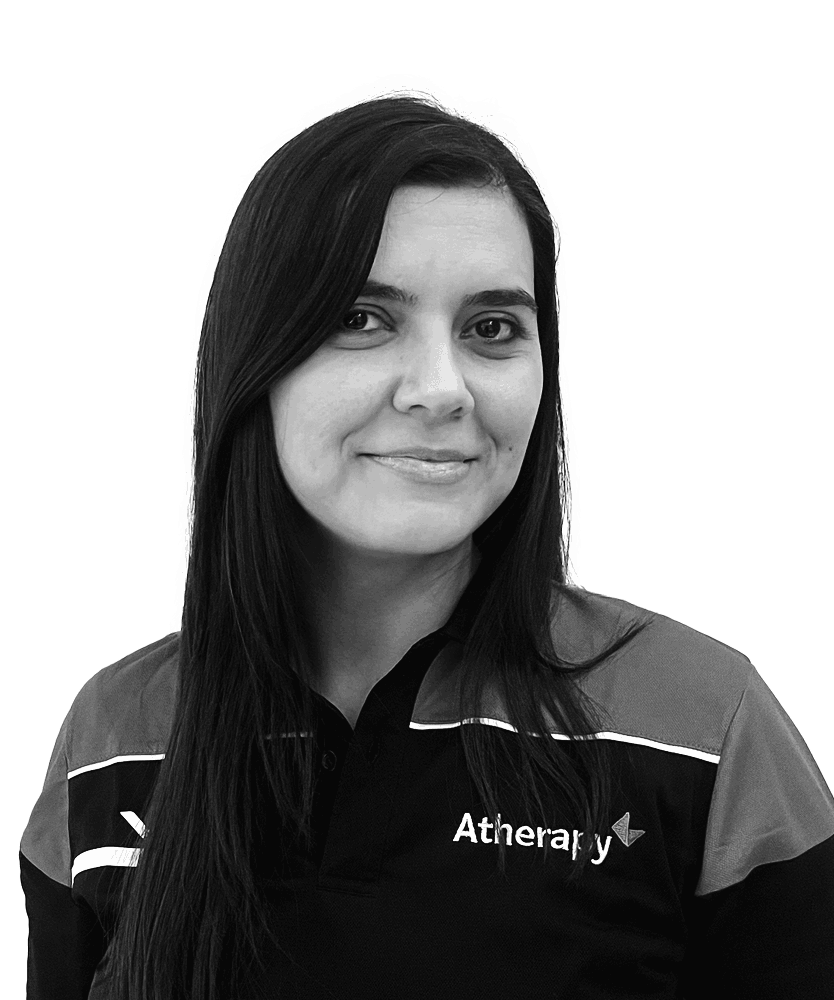
- Specialist in exercise-based rehabilitation, manual therapy and injury prevention
- Experienced in post-operative rehabilitation and progressive return to activity
- Clinical interests include sports injuries, cervical spine and low back dysfunction, shoulder, knee, foot and ankle rehabilitation
- Combines hands-on treatment with targeted strength and rehabilitation programming
- Focused on structured rehabilitation to help patients rebuild strength, movement confidence and function
- Specialist interest in women’s health support including manual lymphatic drainage during pregnancy and pre/post-natal care
- Over 15 years of clinical experience across private practice, sports rehabilitation and women’s health settings
- Fluent in English, Portuguese and Italian
Fernanda Saldanha
Based at Chiswick
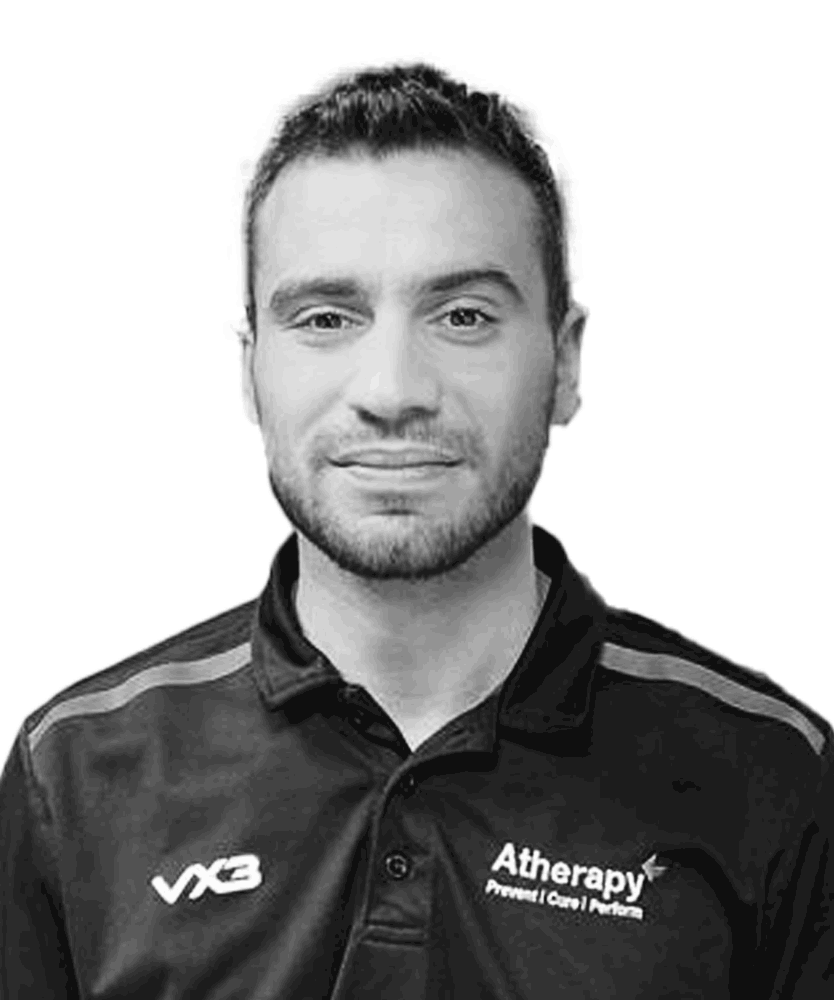
- Extensive experience working within elite professional football and private practice
- Former Tottenham Hotspur Academy physiotherapist specialising in performance rehabilitation and return-to-play management
- Specialist interest in post-operative rehabilitation and upper and lower limb injury management
- Experienced in managing complex and recurrent injuries through structured, evidence-based rehabilitation planning
- Clinical approach combines manual therapy, gym-based rehabilitation, movement analysis and acupuncture
- Focused on restoring movement quality, strength under load and long-term performance outcomes
- Fluent in English and Greek
Dimitrios Michtatidis
Based at Chiswick and Strand

- Level 4 Strength & Conditioning Coach
- Medical Acupuncture & Dry Needling Qualified
- Combines detailed clinical assessment with progressive rehabilitation and strength & conditioning principles
- Specialist interest in gym-based rehabilitation and return-to-sport management
- Clinical interests include acute sporting injuries, post-operative orthopaedic rehabilitation (including ligament reconstructions, meniscal and labral repairs) and hip/groin pain in active populations
- Experience managing both active general population and performance-focused clients
- Adjunct treatment techniques include dry needling and shockwave therapy
Claire Cuffe
Based at Moorgate and Strand
- Over 5 years experience treating orthopaedic injuries, chronic pain and post operative care
- Advanced certifications in dry needling for hands, face, feet, lower limb, upper limb and lumbopelvic region
- Certified pelvic floor physio for both men and women with an interest in treating clients pre and post natal
- Special interest in strength and conditioning programming for clients training for half/full marathons