
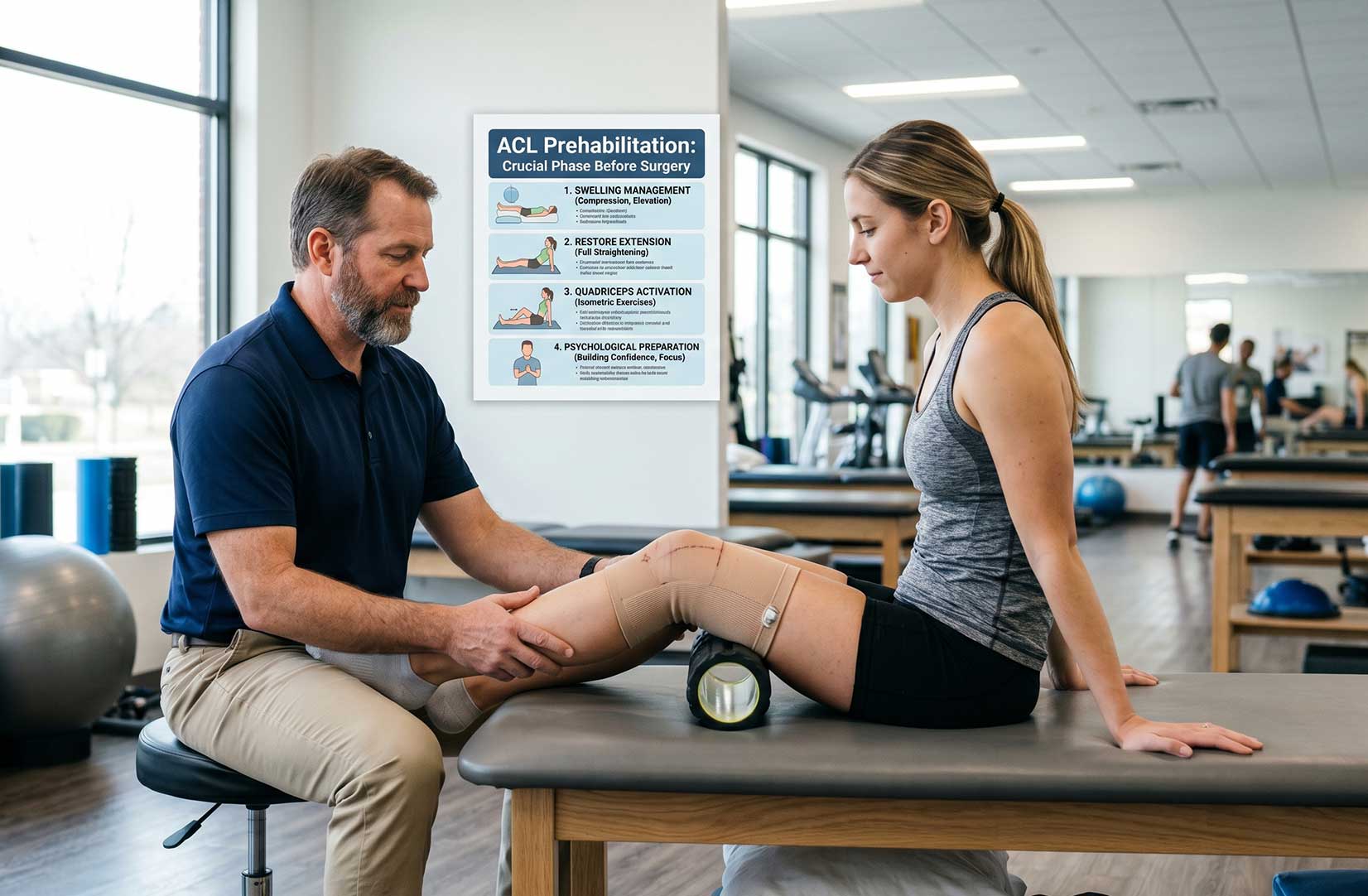
ACL Rehabilitation
Post-Operative ACL Rehabilitation: From Surgery To Full Performance
The complete five-phase framework from surgery to return toperformance. Criterion-based progression, objective testing integration,reinjury risk management, and working with your surgical team.
ACL reconstruction surgery is one part of the recovery process. In many respects, it is the easier part.
The rehabilitation journey that follows is often the most significant determinant of whether someone successfully returns to sport, resumes running or gym training, or regains genuine long-term confidence in the knee. The graft takes time to biologically mature. Strength, movement quality, neuromuscular control, and psychological readiness all need to be progressively rebuilt. None of this happens automatically after surgery.
At Atherapy, our post-operative ACL rehabilitation programmes are built around principles taken from elite sport, contemporary sports medicine, and modern return-to-performance rehabilitation.We work with professional athletes, academy footballers, recreational runners, gym populations, and individuals simply looking to return confidently to the activities they love.
Our aim is not simply to help patients complete rehabilitation. It is to help them return stronger, more resilient, and more confident than before injury.
Surgery Is The Starting Point, Not The Solution
One of the most important things to understand about ACL reconstruction is what surgery actually restores — and what it does not.
Surgery restores structural stability to the knee. It does not restore quadriceps strength, neuromuscular control, athletic movement quality, force production capacity, deceleration mechanics, or psychological confidence. These all require systematic, progressive rehabilitation.
This distinction matters enormously for long-term outcomes. Research by Ardern et al. (2014), published in the BritishJournal of Sports Medicine, found that fewer than half of athletes who underwent ACL reconstruction returned to their pre-injury level of competitive sport — a finding that underscores how comprehensively rehabilitation, not surgery, determines the ultimate outcome. More recent data from Toole et al.(2021) in the American Journal of Sports Medicine confirmed that in adequate neuromuscular recovery, not graft failure alone, remains the primary driver of poor long-term outcomes.
Modern rehabilitation has responded to this evidence by shifting decisively away from purely timeline-based protocols toward criterion-based progression — advancing through rehabilitation phases according to what the knee can actually demonstrate, rather than how many week shave passed since surgery.
Successful ACL rehabilitation is not simply about healing the graft. It is about restoring confidence, athletic movement quality, and long-term resilience.
The Five Phases Of Post-Operative ACL Rehabilitation
ACL rehabilitation does not follow a single linear path. Every individual progresses at a different rate depending on graft type, associated injuries, swelling response, rehabilitation consistency, prior fitness levels, and psychological engagement. The phases below represent the general framework within which rehabilitation is structured — but progression between phases is always determined by criteria, not calendars.
PHASE 1
Restoring The Basics
Weeks 0 — 2: Extension, activation, and early confidence
The first two weeks after surgery are more clinically significant than many patients expect. The immediate priority is not strength — it is restoring full knee extension and reactivating the quadriceps.
Joint swelling following surgery directly inhibits quadriceps activation through arthrogenic muscle inhibition — the same neurological process that causes the quadriceps to switch off after injury. Persistent swelling during these early weeks will impair muscle recruitment, delay gait recovery, and compromise the entire trajectory of rehabilitation if not managed proactively.
Rehabilitation during this phase focuses on swelling management, pain control, careful restoration of extension range, early quadriceps activation, and progressive weight-bearing. Gait retraining begins as soon as it is appropriate, because walking with a normal pattern reinforces the neuromuscular foundations that all subsequent rehabilitation builds upon.
A NOTE ON EXTENSION
Failure to restore full extension in the first two weeks is one of the most significant early rehabilitation errors. Extension loss affects gait mechanics, quadriceps activation, and long-term knee function. It should be addressed actively from the very first session.
PHASE 2
Rebuilding Strength Foundations
Weeks 2 — 6: Load tolerance, single-leg control, and progressive gym work
As swelling reduces and movement improves, the rehabilitation focus shifts toward rebuilding meaningful lower limb strength. This phase is often where patients begin to feel more optimistic — the knee is less painful, movement is improving, and confidence is growing. Biologically, however, the graft is still in its weakest phase of healing during these weeks, which means the emphasis is on building strength foundations progressively rather than aggressively.
Quadriceps strength deficits following ACL reconstruction are well documented and clinically significant. Grindem et al. (2016) demonstrated in the Delaware-Oslo cohort study that a quadriceps symmetry index below 90% at return to sport was associated with dramatically elevated reinjury risk. Buckthorpe et al. (2021), writing in Sports Medicine, reinforced this finding, demonstrating that neuromuscular deficits persisting at return to sport are one of the strongest predictors of both reinjury and reduced long-term athletic performance. Rebuilding strength symmetry is not simply about performance — it is one of the most important injury prevention outcomes of the entire rehabilitation process.
Rehabilitation during this phase typically incorporates bilateral and split squat progressions, posterior chain strengthening, single-leg balance and control work, hip and trunk strengthening, and cardiovascular conditioning. The goal is not simply to get stronger — it is to rebuild movement quality, loading confidence, and neuromuscular control simultaneously.
PHASE 3
Advanced Strength and Athletic Preparation
Weeks 6 — 12: Force production, plyometric foundations, and dynamic control
This is often the phase where patients feel closest to normal — and one of the highest-risk phases of the entire rehabilitation process. Symptom resolution does not equal tissue readiness. The biological process of graft ligamentisation — the remodelling of the graft into functional ligament tissue — continues for 12 to 18 months after surgery. Structurally the knee may feel well while remaining significantly underprepared for the mechanical demands of running, impact, and athletic movement.
Rehabilitation during this phase progressively introduces heavier loading, early plyometric preparation, force absorption drills, controlled deceleration work, and dynamic balance training. The aim is to prepare the neuromuscular system for the higher velocity demands of running and athletic movement — not simply to continue the strengthening programme from the previous phase.
Many athletes feel symptomatically ready months before the knee is physically prepared for elite sporting demands.
PHASE 4
Return to Running and Athletic Movement
3 — 6 months: Running mechanics, plyometrics, and sport-specific preparation
The return to running is one of the most psychologically significant milestones of ACL rehabilitation — and one of the most clinically mismanaged. Running should not be introduced based on a date or time since surgery. It should be introduced when the knee can demonstrate sufficient strength, movement quality, swelling tolerance, and single-leg control to handle the mechanical demands running creates.
Running progression typically begins with walk-to-jog intervals on flat surfaces, progressing to continuous running, acceleration work, deceleration drills, and eventually more demanding multi-directional movement patterns as the athlete’s capacity develops. Throughout this progression, movement quality is monitored carefully — compensatory patterns such as reduced knee flexion on landing, hip-dominant mechanics, or offloading onto the opposite limb are addressed before progression continues.
As the phase advances, rehabilitation increasingly resembles athletic preparation rather than traditional physiotherapy. Acceleration mechanics, rotational control, reactive footwork, and higher-speed movement exposure are introduced progressively, particularly for athletes returning to pivoting or cutting sports.
PHASE 5
Return to Sport and Full Performance
6 — 12+ months: Testing, sport-specific conditioning, and performance restoration
Being pain-free does not mean the knee is ready for sport. This is one of the most consistently under appreciated aspects of ACL rehabilitation — and one of the most clinically important.
Return to sport decisions are increasingly guided by objective testing rather than clinical impression alone. Testing may include quadriceps strength assessment and limb symmetry indexing, single-leg hop testing, force plate analysis of landing mechanics and vertical force production, running gait evaluation, and reactive movement profiling. The aim is to combine objective data with movement quality assessment and sport-specific demands to guide safer, more confident progression back into competition.
Beyond simply returning to sport, modern rehabilitation increasingly focuses on restoring genuine performance capacity — acceleration, deceleration, reactive movement, fatigue tolerance, and confidence under competitive pressure. Some athletes may technically return to training while still demonstrating residual movement asymmetries or hesitation under fatigue. These deficits, if unaddressed, both limit performance and elevate reinjury risk.
Criterion-Based Progression: Why Timelines Alone Are Not Enough
One of the most significant shifts in modern ACL rehabilitation is the move away from purely time-based protocols toward criterion-based progression. Rather than advancing through phases based on how many weeks have passed, criterion-based rehabilitation advances based on what the knee can actually demonstrate — strength targets, movement quality standards, swelling response, and functional testing performance.
This matters because biological healing and functional recovery do not always proceed at the same rate. An athlete at eight weeks post-surgery may have quadriceps strength at 60% of the opposite limb and demonstrate significant landing asymmetries — yet a purely timeline-based protocol would schedule their return to running regardless. Equally, a patient at five months may be biologically ready for higher demands but neuromuscularly and psychologically underprepared for them.
Buckthorpe et al. (2021) outlined a comprehensive criterion-based framework in Sports Medicine that has become widely adopted as a template for contemporary ACL rehabilitation practice. The framework emphasises that each phase transition should be governed by demonstrable physical criteria rather than elapsed time — a principle that is now considered best practice across elite sport and private sports medicine environments alike.
Objective Testing In ACL Rehabilitation
Modern ACL rehabilitation increasingly uses objective testing throughout the process — not simply as a gatekeeping tool at return to sport, but as an ongoing source of clinical information that shapes how rehabilitation is progressed at every stage.
Testing may include quadriceps strength and limb symmetry assessment, single-leg hop testing in multiple directions, force plate analysis of landing mechanics and vertical force production, running gait assessment, and reactive movement profiling. Together, these measures provide a far more accurate picture of rehabilitation status than clinical impression or symptom reporting alone.
Losciale et al. (2022), in a large-scale systematic review published in the British Journal of Sports Medicine, found that passing a comprehensive return-to-sport test battery was associated with a significant reduction in reinjury risk — confirming that objective testing is not simply a quality improvement tool but a meaningful protective intervention in its own right.
Why Re-Injury Risk Shapes Every Decision In ACL Rehabilitation
The risk of sustaining a second ACL injury is one of the most important clinical realities shaping modern rehabilitation practice. Research consistently demonstrates elevated rates of re-injury to the reconstructed ACL, contralateral ACL injury, persistent movement deficits, and reduced long-term athletic performance in athletes who return prematurely or without adequately restoring the physical capacities the knee requires.
Grindem et al. (2016) demonstrated that athletes returning before achieving a 90% quadriceps symmetry index were at dramatically elevated reinjury risk. Losciale et al. (2022) confirmed in a more recent systematic review that athletes who passed objective return-to-sport criteria were significantly protected against second injury compared to those who returned on time alone. Critically, Toole et al. (2021) highlighted that the greatest reinjury risk occurs in the period immediately following return to sport — underscoring the importance of continued loading, monitoring, and graduated re-exposure even after competition has resumed.
At Atherapy, reducing reinjury risk is not a secondary consideration — it is a primary clinical objective woven into every phase of the programme. This means building sufficient strength before progressing to running, achieving adequate movement quality before introducing plyometrics, completing thorough objective testing before return to sport, and continuing to monitor load and response after competitive return.
The Psychological Reality of ACL Rehabilitation
The physical demands of ACL rehabilitation are well understood. The psychological demands are often underestimated — both by patients and by clinicians.
Progress through ACL rehabilitation is rarely perfectly linear. Setbacks, plateaus, confidence dips, and anxiety around returning to the movements and environments where the injury occurred are extremely common, particularly during the middle and later phases of recovery. Many patients find the period between regaining physical function and feeling genuinely confident in competition to be the most difficult part of the entire journey.
This is well supported by evidence. Ardern et al. (2013) identified fear of reinjury as one of the most commonly cited reasons athletes did not return to their pre-injury level of sport — not physical limitation, but psychological readiness. More recently, Sonesson et al. (2021), in the American Journal of Sports Medicine, found that psychological readiness at return to sport was an independent predictor of successful long-term outcomes, and that athletes who reported lower psychological readiness scores were significantly more likely to report ongoing functional limitations at two-year follow-up regardless of their physical test results.
At Atherapy, addressing the psychological dimension of rehabilitation is a clinical priority throughout the programme. This involves progressive exposure to the movements that feel threatening, building confidence under load, preparing athletes psychologically for the physical demands of their sport, and normalising the non-linear nature of recovery. Patients who enter competition environments feeling genuinely prepared — not just physically capable — are more protected, more resilient, and more likely to sustain their return.
RECOGNISING WHEN TO ADJUST PROGRESSION
ACL rehabilitation should progressively challenge the knee. Temporary symptom fluctuations — mild soreness after a harder session, some stiffness the following morning — are a normal part of the adaptive process. However, persistent or escalating swelling, loss of extension, significant pain, or worsening movement quality are signals that loading needs to be adjusted before progressing further. These responses are clinical information, not setbacks. Interpreting them correctly is one of the defining skills of high-quality ACL rehabilitation.
Working With Your Surgical Team
The best ACL rehabilitation outcomes are achieved when physiotherapy, orthopaedic surgery, and sports medicine work in close communication throughout recovery. Progression decisions, return-to-running timelines, graft-specific considerations, and any concerns about healing response all benefit from joined-up clinical thinking across disciplines.
At Atherapy, we regularly work alongside London-based orthopaedic consultants, sports medicine doctors, and performance practitioners to coordinate rehabilitation pathways, share objective testing data, and ensure progression decisions are made collectively and safely. If you have undergone surgery elsewhere — in the UK or internationally — we are equally equipped to take on your rehabilitation from any stage of recovery.
How Long Does Post-Operative ACL Rehabilitation Take?
Recovery timelines vary considerably depending on graft type, associated injuries, swelling response, rehabilitation consistency, sporting demands, and psychological readiness. The following gives a general framework, but rehabilitation should always be paced according to individual criteria rather than calendar dates.
These timelines assume uncomplicated ACL reconstruction without significant associated injuries. Revision surgery, combined ACL and meniscal procedures, or complex multi-ligament injuries typically require longer rehabilitation periods.
Related ACL Rehabilitation Resources
This page forms part of Atherapy’s interconnected ACL rehabilitation content ecosystem. Each resource below covers a distinct aspect of the rehabilitation journey.
→ ACL Prehabilitation Before Surgery
→ Swelling After ACL Reconstruction
→ Quadriceps Weakness After ACL Injury
→ Return to Running After ACL Surgery
→ Force Plate Testing in ACL Rehabilitation
→ Football-Specific ACL Rehabilitation
→ Gym-Based ACL Rehabilitation
→ Reinjury Risk After ACL Surgery
→ Psychological Recovery After ACL Injury
→ ACL Rehabilitation Timelines
→ Return-to-Performance Principles
Book at your nearest clinic: Moorgate | Strand | Chiswick
Evidence & Research References
This page reflects contemporary evidence-based ACL rehabilitation practice. Key research informing the content includes:
- Ardern CL et al. (2014). Return to sport following ACL reconstruction: a systematic review and meta-analysis. British Journal of Sports Medicine.
- Ardern CL et al. (2013). Psychological responses matter in returning to preinjury level of sport after ACL reconstruction. American Journal of Sports Medicine.
- Grindem H et al. (2016). Simple decision rules can reduce reinjury risk by 84% after ACL reconstruction: the Delaware-Oslo ACL cohort study. British Journal of Sports Medicine.
- Buckthorpe M et al. (2021). Recommendations for assessment and progressive return to sport and physical activity after lower limb muscle injury. Sports Medicine.
- Losciale JM et al. (2022). The association between passing return-to-sport criteria and second ACL injury risk: a systematic review with meta-analysis. British Journal of Sports Medicine.
- Toole AR et al. (2021). Neuromuscular and biomechanical deficits at return to sport after ACL reconstruction. American Journal of Sports Medicine.
- Sonesson S et al. (2021). Psychological readiness to return to sport is associated with outcome in athletes two years after ACL reconstruction. American Journal of Sports Medicine.
- Melbourne ACL Rehabilitation Guide — contemporary evidence-based rehabilitation principles.
- Aspetar Return-to-Sport Guidelines — criterion-based and return-to-performance frameworks.
Our rehabilitation approach is further informed by the clinical work of Enda King, Mick Hughes, Claire Robertson, Phil Glasgow, Adam Culvenor, Tim Gabbett, Seth O’Neill, Ebonie Rio, and the Fortius Clinic ACL rehabilitation frameworks. Rehabilitation should always remain individualised — frameworks inform clinical reasoning, they do not replace it.
London Physiotherapy Team
Welcome to the Atherapy expert clinical team. We are a dedicated group of qualified physiotherapists and sports medicine specialists committed to delivering innovative, evidence-based rehabilitation. Our practice is built on a holistic approach to physical health, firmly believing that injury prevention is just as vital as the cure. From treating acute sports injuries to designing custom performance optimization programs, our clinicians work collaboratively to help you safely reach your goals.
Meet our resident experts below and find the right specialist for your recovery journey.

- With 25+ years of Premier League and Championship experience, Andrew has led Medical, Science, and Performance departments for Hull City, Nottingham Forest, Derby County, and Preston North End, following earlier work at the Manchester United Academy
- Specialist in lower limb rehabilitation
- Post-operative rehabilitation
- Back pain and complex spinal presentations
- Elite athlete management including manual therapy, gym rehabilitation and acupuncture
- Specialises in complex cases and second opinion rehabilitation planning including return to play
- Limited clinical availability due to wider clinical leadership and operational responsibilities
Andrew Balderston
Based at Moorgate
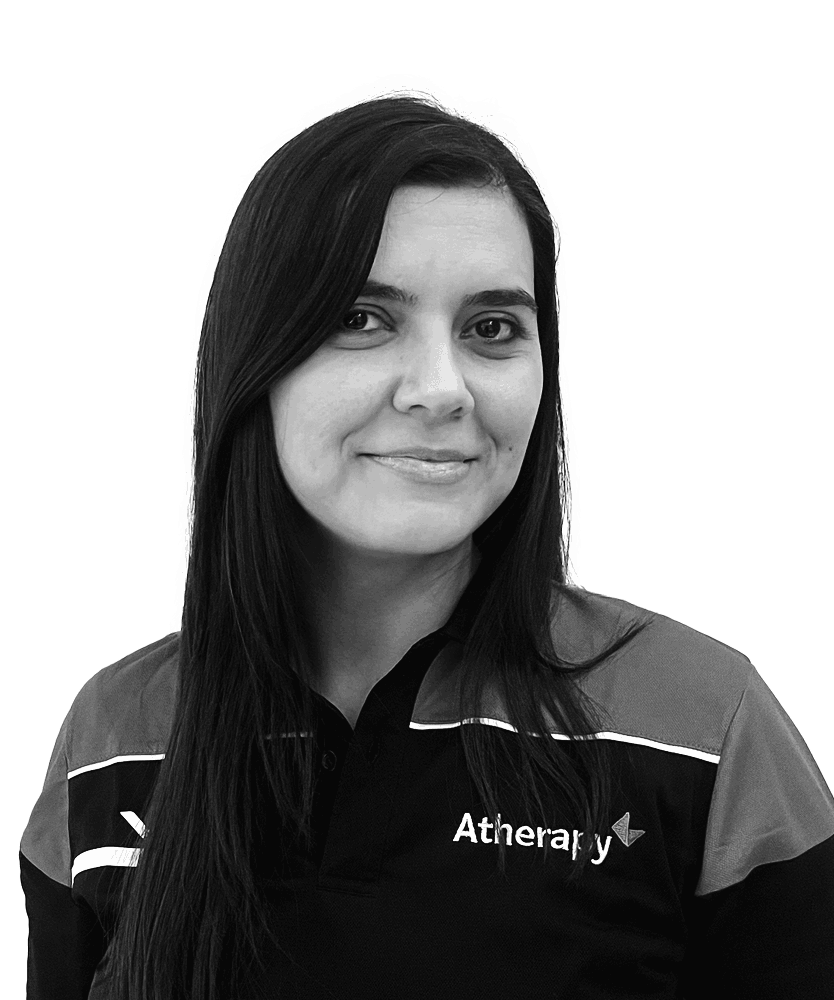
- Specialist in exercise-based rehabilitation, manual therapy and injury prevention
- Experienced in post-operative rehabilitation and progressive return to activity
- Clinical interests include sports injuries, cervical spine and low back dysfunction, shoulder, knee, foot and ankle rehabilitation
- Combines hands-on treatment with targeted strength and rehabilitation programming
- Focused on structured rehabilitation to help patients rebuild strength, movement confidence and function
- Specialist interest in women’s health support including manual lymphatic drainage during pregnancy and pre/post-natal care
- Over 15 years of clinical experience across private practice, sports rehabilitation and women’s health settings
- Fluent in English, Portuguese and Italian
Fernanda Saldanha
Based at Chiswick
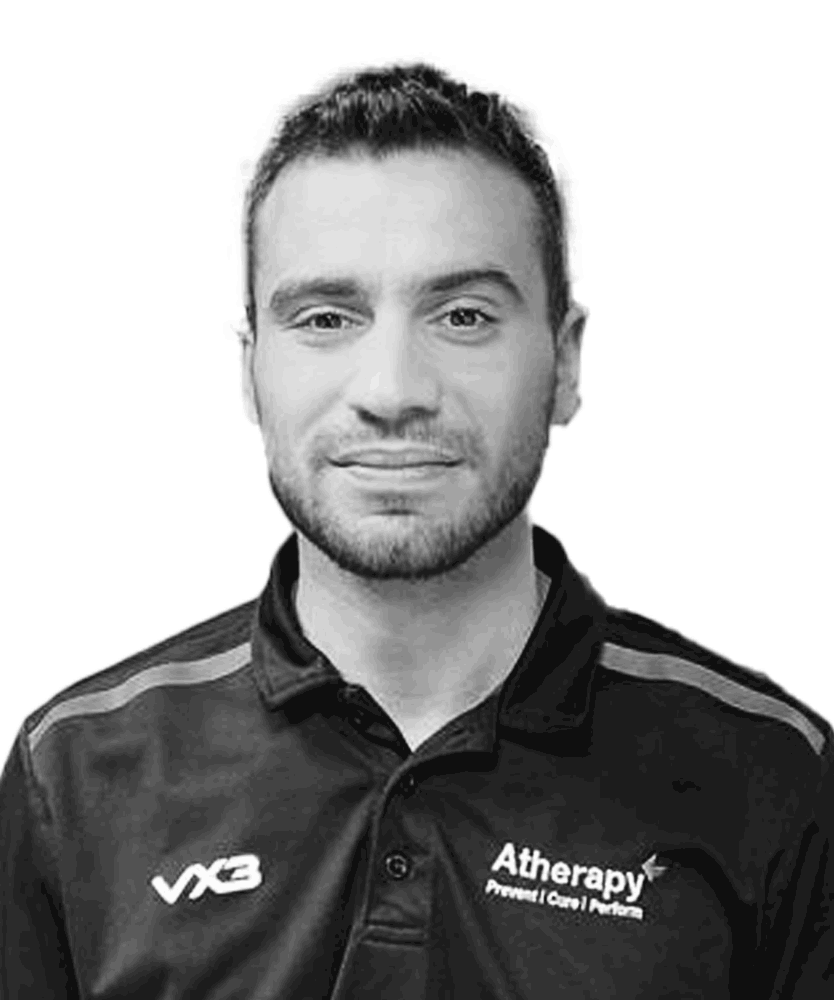
- Extensive experience working within elite professional football and private practice
- Former Tottenham Hotspur Academy physiotherapist specialising in performance rehabilitation and return-to-play management
- Specialist interest in post-operative rehabilitation and upper and lower limb injury management
- Experienced in managing complex and recurrent injuries through structured, evidence-based rehabilitation planning
- Clinical approach combines manual therapy, gym-based rehabilitation, movement analysis and acupuncture
- Focused on restoring movement quality, strength under load and long-term performance outcomes
- Fluent in English and Greek
Dimitrios Michtatidis
Based at Chiswick and Strand

- Level 4 Strength & Conditioning Coach
- Medical Acupuncture & Dry Needling Qualified
- Combines detailed clinical assessment with progressive rehabilitation and strength & conditioning principles
- Specialist interest in gym-based rehabilitation and return-to-sport management
- Clinical interests include acute sporting injuries, post-operative orthopaedic rehabilitation (including ligament reconstructions, meniscal and labral repairs) and hip/groin pain in active populations
- Experience managing both active general population and performance-focused clients
- Adjunct treatment techniques include dry needling and shockwave therapy
Claire Cuffe
Based at Moorgate and Strand
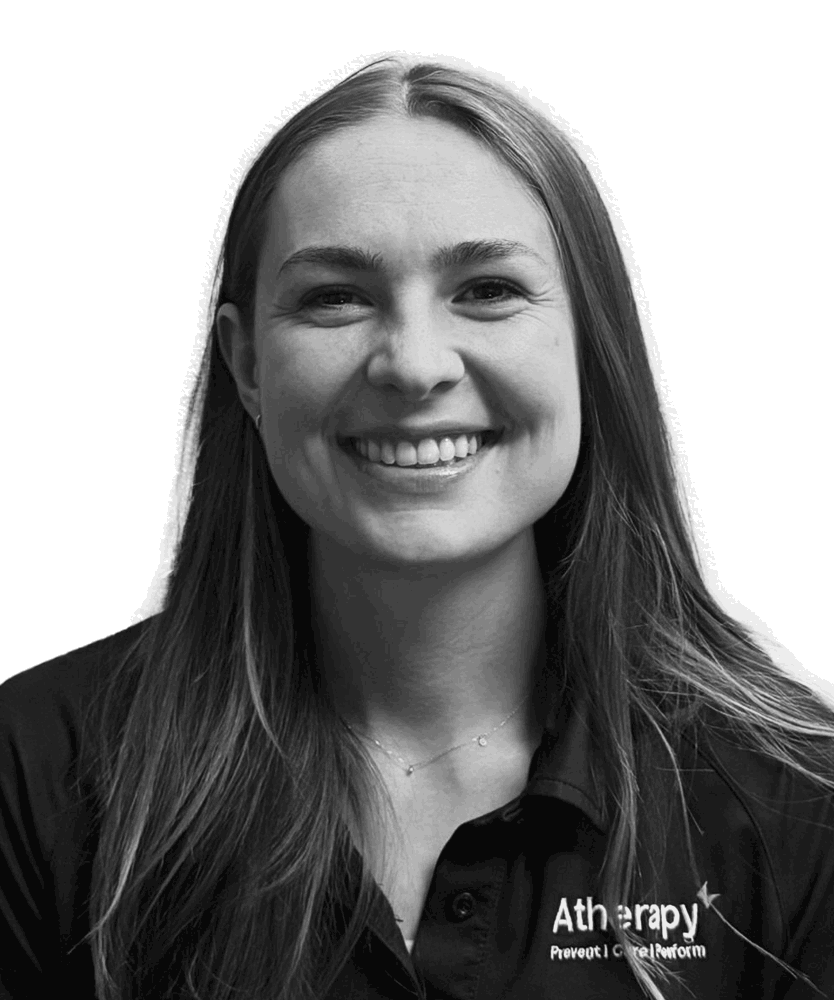
- Over 5 years experience treating orthopaedic injuries, chronic pain and post operative care
- Advanced certifications in dry needling for hands, face, feet, lower limb, upper limb and lumbopelvic region
- Certified pelvic floor physio for both men and women with an interest in treating clients pre and post natal
- Special interest in strength and conditioning programming for clients training for half/full marathons