

ACL Rehabilitation London:
A Complete Evidence-Based Framework
From prehabilitation before surgery to return to performance, the complete Atherapy ACL rehabilitation resource
ACL injury is one of the most demanding rehabilitation journeys in sports medicine. It asks months of structured, progressive work from patients who are often highly motivated, frequently frustrated, and consistently under served by programmes that are too short, too generic, or too focused on surgical outcomes at the expense of functional ones.
This resource exists to change that. Atherapy's ACL rehabilitation framework covers the complete pathway —from the period before surgery through to return to performance — and is built on the same evidence base and criteria-based principles that govern ACL rehabilitation in professional football. Every page in this ecosystem is written to primary sources, reviewed against the most current research, and structured to serve both patients who want to understand their recovery and clinicians who want to understand Atherapy's clinical approach.
The sixteen pages that follow this hub address every distinct phase and topic in the ACL rehabilitation journey. Use the pathway map below to navigate to the area most relevant to where you are — or read the overview sections here first to understand how the complete framework fits together.
"ACL surgery restores structural stability. Rehabilitation restores performance. The distinction matters enormously for long-term outcomes — and it is the foundation everything at Atherapy builds from."
Who We Work With
Atherapy's ACL rehabilitation programme serves a deliberately broad patient population — because ACL injuries do not discriminate by sport, age, or level. Our patients include:
Professional and academy footballers, with established relationships across the London Premier League and Championship medical community. Recreational athletes across football, rugby, basketball, netball, skiing, tennis, and Cross Fit, at every level from social sport to regional competition. Post-operative patients from across the London orthopaedic and sports medicine community, including patients referred by consultants at Fortius Clinic, BUPA, and other private surgical centres. Patients who have had surgery elsewhere — in the UK or internationally — and whose rehabilitation has stalled, plateaued, or not progressed as expected. Non-operative ACL injury patients managing conservatively, for whom prehabilitation, strength restoration, neuromuscular rehabilitation, and long-term knee function optimisation are the clinical goals.
The ACL Rehabilitation Pathway: 16 Clinical Topics
Each topic below represents adistinct clinical area within the ACL rehabilitation journey. The pathway runs broadly from injury through surgery to return to performance — but every patient enters at a different point, and the clinical priority at any stage is determined by criteria, not calendar.
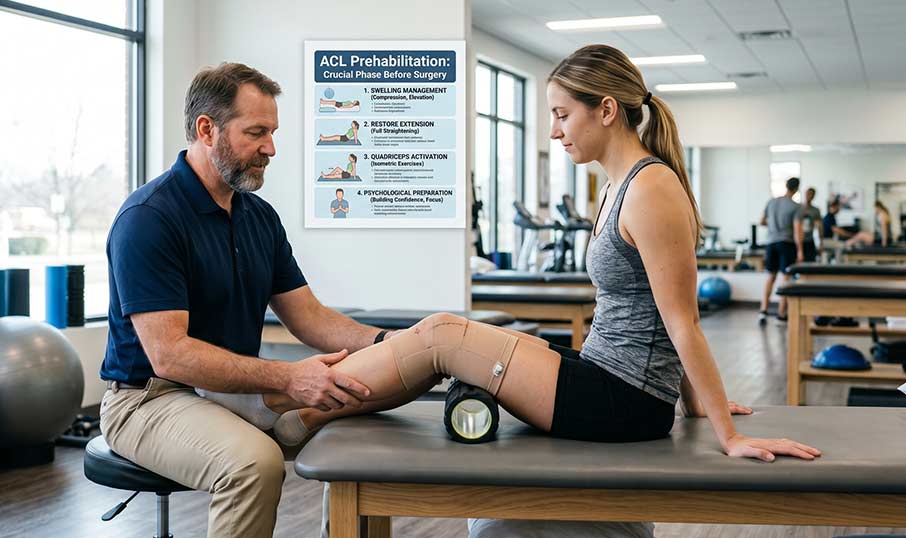
ACL Before Surgery
Why modern ACL rehabilitation starts before the operation. Expert prehabilitation guidance from Atherapy’s clinical team — evidence-informed, elite sport influenced.
Post Op Rehab
From surgery to full return to sport. Expert, criterion-based ACL rehabilitation from Atherapy’s clinical team, evidence-informed and elite sport influenced.
Return to Running
Expert, criteria-based guidance on return to running after ACL reconstruction. Strength testing, movement assessment, and structured progression from Atherapy’s clinical team.
Return To Sport
Objective return to sport testing from Atherapy’s clinical team. Strength assessment, hop testing, force plate analysis and psychological readiness evaluation after ACL reconstruction.
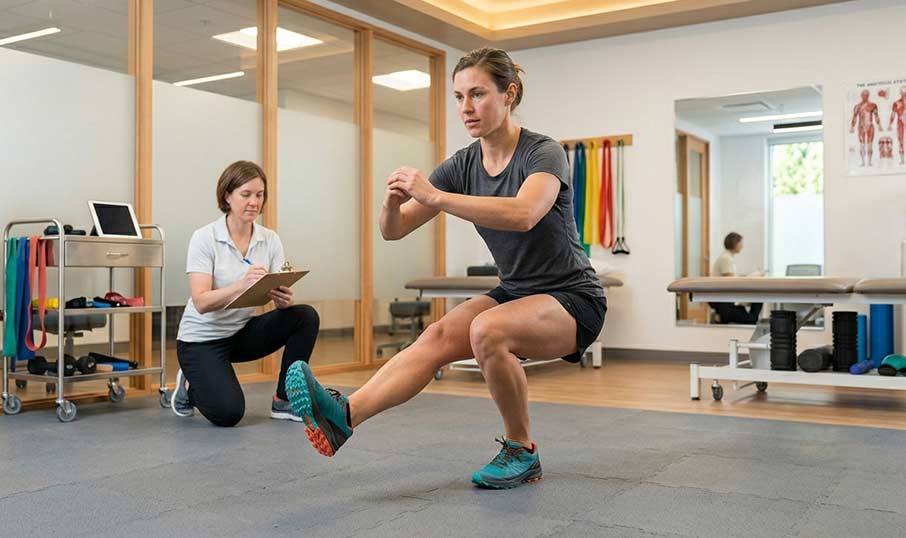
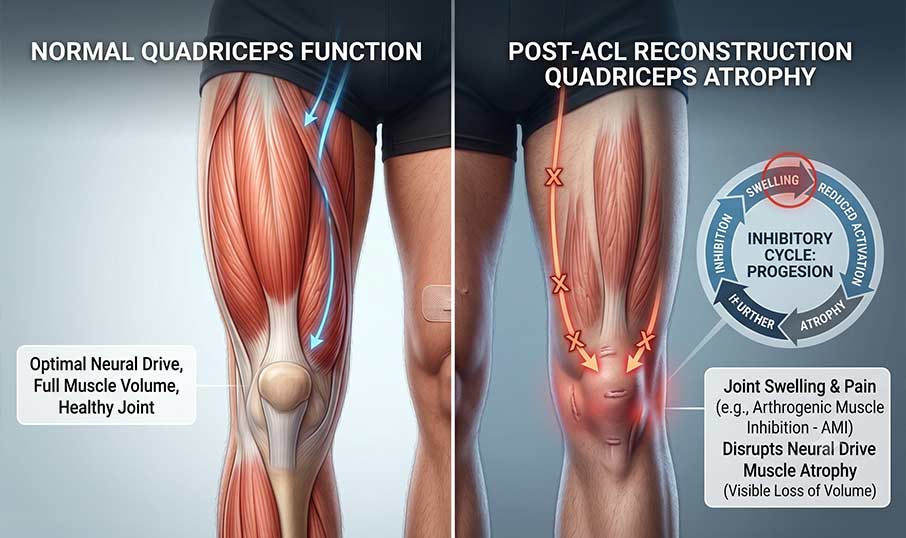
Quadriceps Weakness
Why the quadriceps switches off after ACL injury — and how to restore it. Expert clinical explanation of arthrogenic muscle inhibition, BFR, and Hytro rehabilitation from Atherapy.
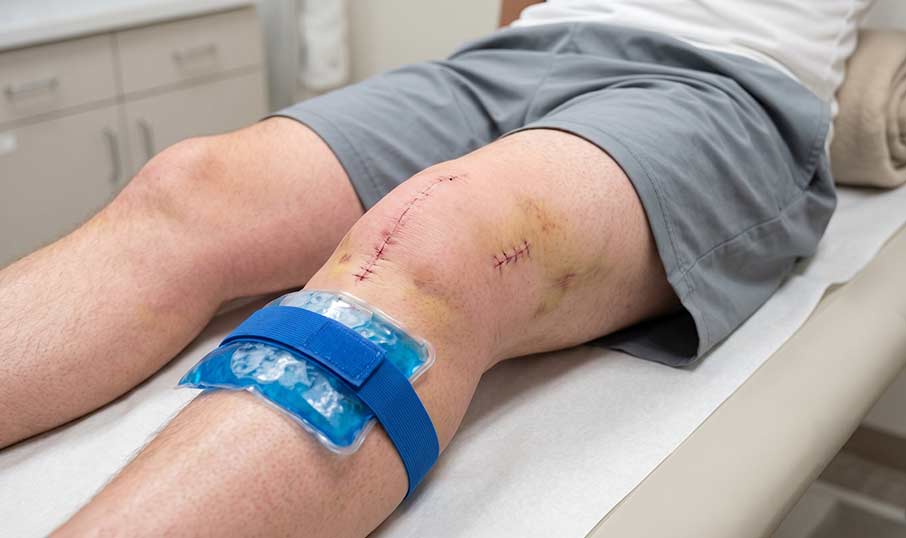
Swelling Management
Post-operative knee swelling explained — and how to manage it effectively. Game Ready cold-compression therapy available to hire at Atherapy London. Expert ACL rehabilitation from a clinical team with Premier League experience.
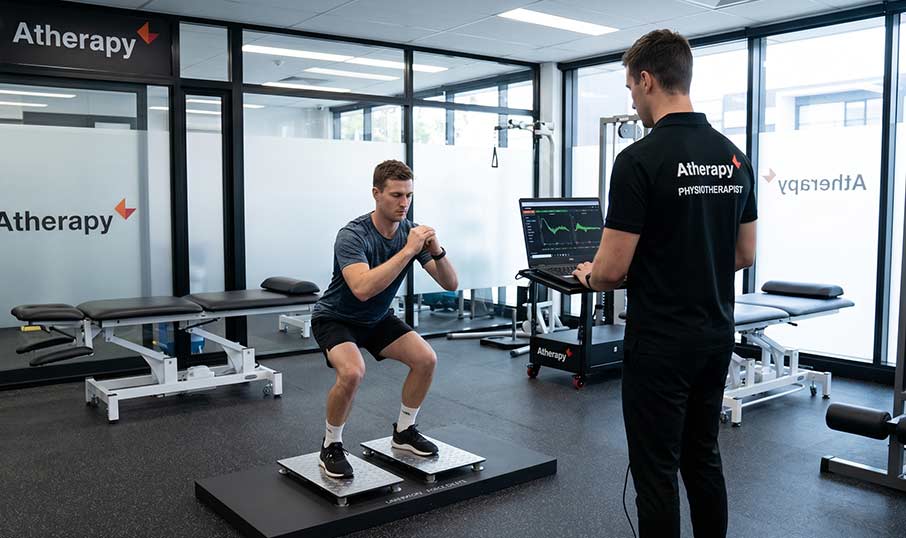
Force Plate Testing
How force plates reveal what hop tests and gym assessments miss — asymmetry, loading strategy, and neuromuscular control after ACL reconstruction.
Football Rehabilitation
What makes ACL rehabilitation different for footballers — the demands, the timelines, the on-field phases, and why return to training is not the same as return to performance.

Graft Choice
Patellar tendon, hamstring, or quadriceps tendon - what your graft choice means for your rehabilitation, your knee, and your return to sport. The right graft for the right patient.
Meniscal Injury Rehabilitation
Meniscal repair or meniscectomy alongside ACL reconstruction changes your rehabilitation substantially. Understand what was done, why, and what it means for your recovery.

Gym Rehabilitation
From early post-operative exercise to plyometrics and return-to-sport preparation - what a properly structured gym programme looks like after ACL reconstruction.
Reinjury Risk
The real numbers on second ACL tears - who is at highest risk, what reduces that risk, and what the 2026 evidence says about criteria versus calendar for return to sport.
Psychological Recovery
Fear of reinjury is the most commonly cited reason for failure to return to sport after ACL reconstruction - accounting for the majority of psychosocial barriers. What the evidence shows about psychological barriers - and what actually helps.

Womens Injury Risk
Women sustain ACL injuries at 3-6 times the rate of men. New research shows biology is only part of the story - environment, equipment, and research bias all contribute. What the evidence shows.

ACL Rehabilitation Timeline
Phase-by-phase criteria for ACL rehabilitation - from week zero to return to competitive sport. What you need to achieve at each stage, not just how long it takes.

Return to Performance
Only 55% of patients return to competitive sport after ACL reconstruction. Return to performance - matching pre-injury output - requires a step beyond standard return-to-sport criteria. What that step looks like.
Testimonial
Patient Experience with ACL Rehabilitation



Truly invaluable
"Claire at Atherapy has been truly invaluable. After rupturing my ACL, I was understandably cautious and unsure about the best path forward to get back to playing football, particularly given the long timeframe of recovery. From the outset, she has combined deep expertise with genuine care and patience. She took the time to explain each stage of the recovery process, tailored the rehab to my goals, and consistently provided reassurance and encouragement. Her knowledge, empathy and attention to detail have given me real confidence that I am progressing safely and effectively. I'm incredibly grateful for the support she's provided throughout, and I would not hesitate to recommend her to anyone going through a similar injury or looking for high-quality physiotherapy."




ACL Reconstruction –
4 Weeks Post-Op
“I couldn’t be happier with the care and support provided throughout my recovery. The Game Ready made a real difference in managing swelling and comfort early on, and I feel ahead of where I expected to be at this stage.”

Using Game Ready in the first few weeks after my ACL reconstruction made a noticeable difference in managing swelling and keeping the knee comfortable
“It helped me stay consistent with my early rehab exercises, particularly in that first month when the knee is most reactive. It became part of my daily routine alongside physio, rather than a standalone treatment.”
The Game Ready ice machine has made a real difference to my recovery speed.
"I couldn’t be happier with the care and support Andrew has provided throughout my ACL reconstruction recovery. He’s calm, patient, considerate, and always available to answer any questions you may have. His approach combines expert guidance with professional tools, like the Game Ready ice machine, which has made a real difference to my recovery speed. At just a month post-op, I’m already well ahead of where I’d expect to be at this stage. If you’re looking for a physio to guide you through injury recovery, Andrew is your guy. You’ll be treated with the same level of attention and professionalism as a Premier League footballer, and my recovery is a testament to that."