

Physiotherapy After Disc Surgery
Surgery has removed the structural problem. The disc is no longer pressing on the nerve. And yet here you are — still in pain, still cautious, still uncertain when things will feel normal again.
This is the experience of most people in the weeks after lumbar disc surgery. It is not a sign the operation failed. Nerve tissue compressed for weeks or months does not recover the moment the pressure is lifted. Muscles that have been guarding the spine do not simply switch off.
Surgery addresses the structural problem. Rehabilitation addresses everything else. This page explains what post-surgical physiotherapy looks like phase by phase, what the evidence says about recovery and return to activity, and — specifically — what getting back to the gym, running, and sport actually requires.
Types of Disc Surgery and What Each Involves
The surgical approach determines what has been disrupted, what needs to recover first, and what constraints apply in the early weeks. Knowing what procedure you had is the starting point for rehabilitation planning.
Microdiscectomy
Microdiscectomy removes the portion of disc material compressing the nerve root, through a small incision under magnification with minimal disruption to the surrounding musculature. Most patients are discharged the same day or the following morning. Peul et al. (NEJM, 2007) found that patients who underwent microdiscectomy had significantly faster relief of leg pain, with equivalent outcomes at one year compared to conservative management.
Lumbar decompression (laminectomy / laminotomy)
Decompression procedures remove bone or soft tissue narrowing the spinal canal or foramen. They are more commonly performed for spinal stenosis. The surgical exposure is typically larger than microdiscectomy and the rehabilitation timeline is correspondingly longer. Return-to-load targets are more conservative in the first three months and the entry point for strength work is lower.
Spinal Fusion
Fusion procedures stabilise one or more spinal segments. They involve a substantially more complex rehabilitation trajectory. The guidance on this page is primarily applicable to microdiscectomy and decompression. Patients who have undergone fusion should receive individualised rehabilitation guidance from their surgical team and physiotherapist — the loading parameters and timeline are meaningfully different.
If you are not clear on what procedure you had and what it involved, ask your surgical team before beginning rehabilitation. Knowing the answer shapes every decision in the weeks that follow.
Why Pain Often Persists After Surgery
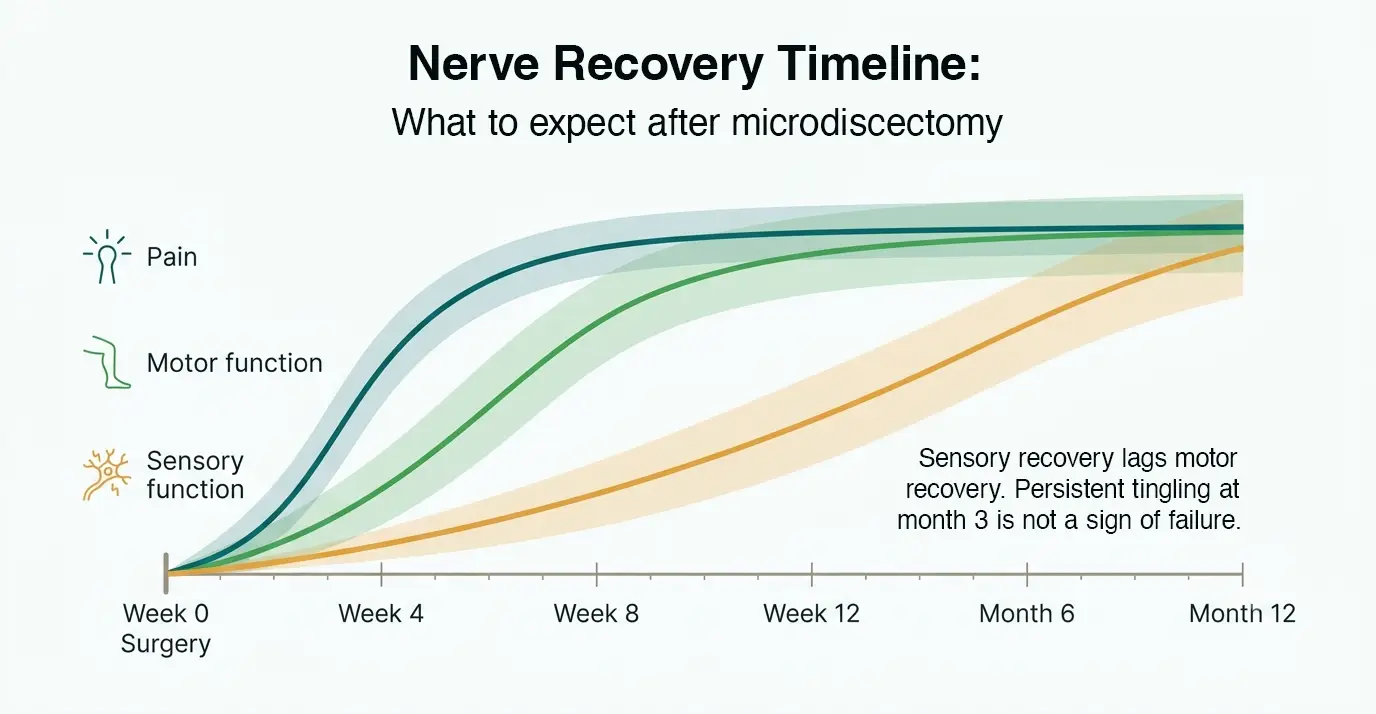
Nerve recovery is not linear and does not track the structural timeline. A nerve root that has been compressed for weeks or months continues to produce symptoms while it heals — the myelin disrupted, the sensitivity elevated — even after the compression is gone. Motor function typically returns before sensory function. Tingling and altered sensation are frequently the last symptoms to resolve, persisting for months in cases where compression was prolonged. This is a property of nerve healing, not evidence of a failed operation.
Post-surgical Neural Tension
After surgery, scar tissue forms around the operative site. If this scar tissue involves the nerve root or the epidural space, it creates a tethering effect: the nerve produces sciatic-type symptoms when stretched through hip flexion under load, sitting with a straight leg, or bending forward. Neural mobilisation, introduced at the appropriate phase, is a specific and effective component of post-surgical rehabilitation that addresses this tethering directly.
Clinical picture:
Phase-by-Phase Rehabilitation
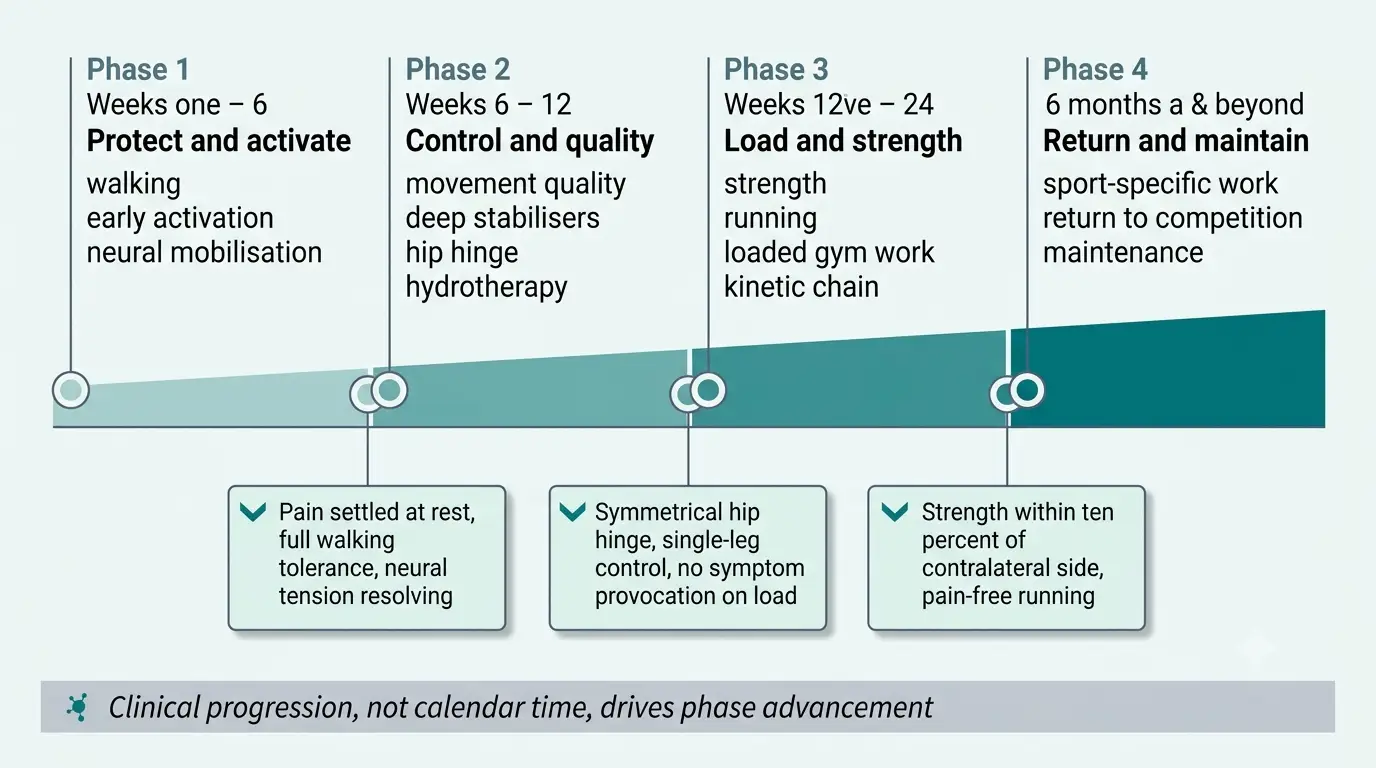
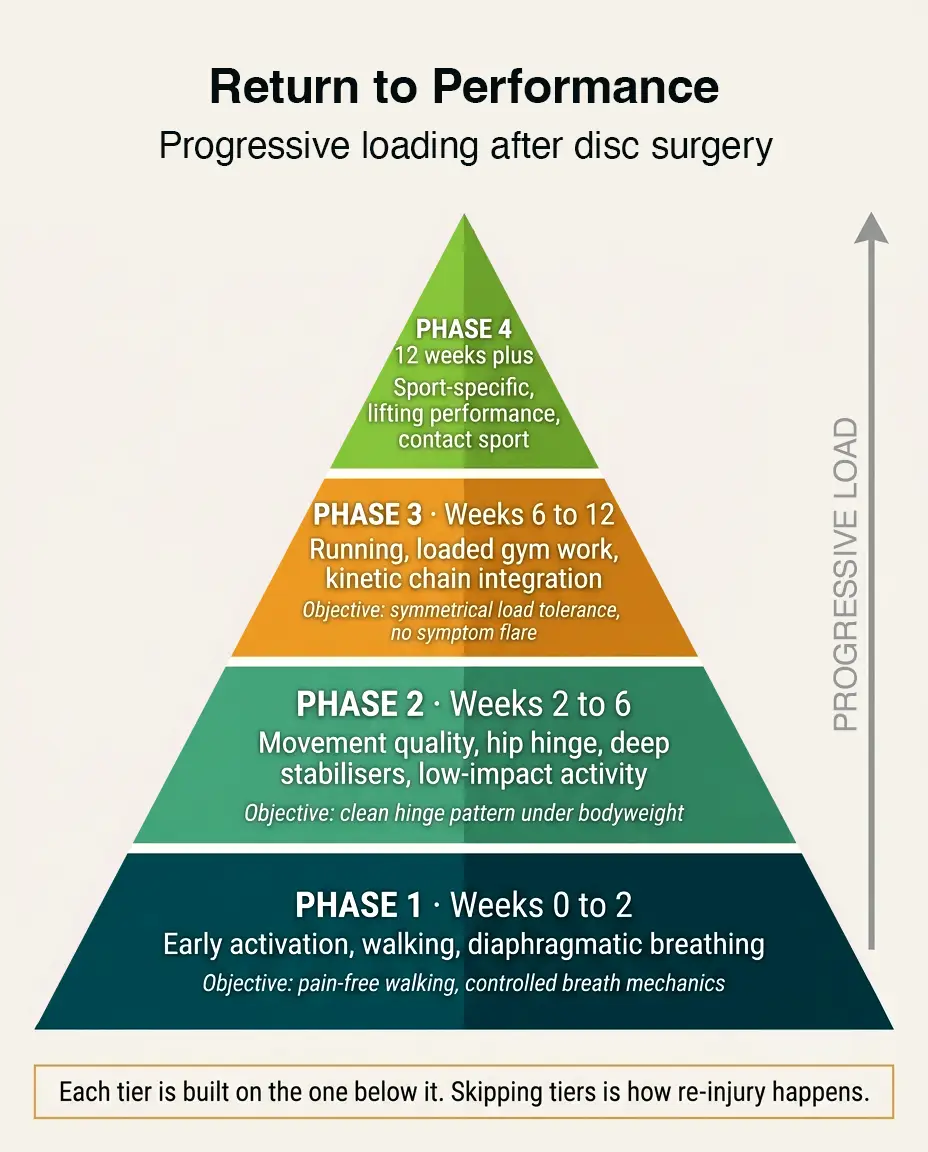
Post-surgical rehabilitation changes phase by phase as healing progresses and the demands on the spine increase. The phases below reflect the standard clinical approach for microdiscectomy. Timelines are approximate — clinical presentation and objective milestones drive progression, not calendar dates.
Phase 1: Early recovery — weeks 1 to 6
✓ Goal: protect healing tissue, restore basic movement, prevent deconditioning
✓ Walking programme: short, frequent walks from day 2-3 post-surgery, progressively increasing in duration
✓ Avoid: sustained sitting beyond 20-30 minutes, lifting over approximately 5kg, bending and twisting under load
✓ Physiotherapy begins: typically at 2-4 weeks, subject to surgical guidance
✓ Early exercises: diaphragmatic breathing, deep stabiliser activation (transversus abdominis, pelvic floor), lower limb circulation
✓ Neurodynamic mobilisation (if neural tension present): very gentle, range-limited sciatic nerve mobilisation
✓ Completion marker: walking 20-30 minutes comfortably, sitting 30+ minutes without provocation
Phase 2: Active rehabilitation — weeks 6 to 12
✓ Goal: restore normal movement patterns, begin progressive spinal loading, address neural tension
✓ Deep stabiliser foundation: confirmed activation of transversus abdominis and multifidus before progressing to loaded exercise
✓ Movement quality before load: hip hinge, squat pattern, bending mechanics established before adding resistance
✓ Neurodynamic mobilisation: progressed in range and load as neural irritability reduces
✓ Hydrotherapy: particularly useful where land-based loading remains provocative
✓ Readiness marker: pain-free hip hinge with bodyweight, single-leg balance >20 seconds, neural tension resolved or minimal
Phase 3: Load progression — weeks 12 to 24
✓ Goal: progressive return to full loading, sport-specific movement, occupational demands
✓ Strength foundation: graduated loading of lumbar extensors, gluteal complex, posterior chain
✓ Kinetic chain integration: movement patterns that recruit the full lower extremity chain — not isolated lumbar work
✓ Trunk endurance criteria: McGill Big Three (curl-up, side plank, bird-dog) with appropriate duration targets before returning to loaded gym exercises
✓ Running reintroduction: walk-run protocol beginning at weeks 12-16 depending on tissue tolerance and lower limb capacity
✓ Return to loaded gym exercises: goblet squat, Romanian deadlift, hip thrust — progressed from bodyweight to loaded using tolerance markers
✓ Performance readiness: single-leg squat to 90 degrees controlled, trunk endurance within 20% of population norms, pain-free running 20+ minutes
Phase 4: Performance restoration and maintenance — 6 months onwards
✓ Goal: full return to sport, heavy training, manual work; durable recurrence prevention
✓ Sport-specific loading: rotational control, deceleration mechanics, sport-relevant force production patterns
✓ Return-to-competition criteria: full training capacity for 4+ weeks without provocation before return to competition
✓ Maintenance programme: continued deep stabiliser and posterior chain work — the evidence consistently supports ongoing exercise as recurrence prevention
✓ Annual physiotherapy review recommended for those returning to high-demand sport or manual occupation
The Most Common Post-Surgical Mistakes
Avoid in the first six weeks
✗ Lifting more than approximately 5kg (a full kettle)
✗ Sustained sitting beyond 30 minutes without a movement break
✗ Bending and rotating under load — dishwasher, laundry, gardening, car boot
✗ Driving for extended periods in the first 2-4 weeks (check with your surgical team)
✗ Returning to gym training, running, or sport without physiotherapy clearance
✗ Sleeping prone: sustained lumbar extension through the night is an unnecessary load
Returning to the Gym, Running, and Sport After Disc Surgery
This is what most patients want to know and what most rehabilitation resources barely address. The questions are specific: Can I squat again? Can I deadlift? Can I run? Can I play football, golf, tennis? Will loading the spine cause a re-herniation?
The short answer to most of these is yes — with the right progression and the right timing. The longer answer requires understanding that return to performance is not a permission granted at a fixed calendar date. It is an objective assessment of whether the physical capacity required for that activity has been rebuilt. That distinction matters enormously.
The Fear of Spinal Flexion
The most common performance-limiting belief after disc surgery is that spinal flexion is permanently dangerous. It is not. In the early weeks, minimising end-range loaded flexion is a sensible precaution while healing tissue is vulnerable. Beyond weeks six to eight, progressive exposure to flexion under clinical guidance is not only safe but necessary — a spine that permanently avoids flexion loses range of movement, develops compensatory patterns, and is paradoxically more vulnerable to injury during unplanned loading. The goal is to build the capacity that makes those movements safe, not to avoid them indefinitely.
“The spine is not fragile. It is a load-bearing structure designed for movement in every plane. Our goal after surgery is to rebuild the strength and neuromuscular control that allows it to be loaded fully again.”
Dr Emma Collier PT, DPT
Progression Criteria: The Framework
At Atherapy, return to gym and sport after disc surgery is governed by clinical readiness criteria rather than fixed timelines. The criteria change by activity level. Meeting the criteria for Phase 2 does not grant access to Phase 3 activities — it confirms that the physical foundation is there for Phase 3 to begin.
Commonly used capacity markers for return to full gym training
✓ Pain-free hip hinge with bodyweight confirmed before adding load
✓ Single-leg squat to approximately 70 degrees controlled, no pelvic drop or trunk shift
✓ Trunk endurance: McGill Big Three performance within approximately 20% of population norms for age and sex
✓ Walking 45+ minutes without provocation
✓ Neural tension fully resolved or clinically managed
✓ Lower limb strength broadly symmetric side-to-side on functional testing
✓ Several weeks of progressive gym training without provocation before returning to sport
Note: these are commonly used clinical progression markers, not universal thresholds. Individual assessment by your physiotherapist determines what applies to your presentation.
Want to get back to training, running, lifting, or sport?
Return to Performance Requires a Performance-Level Plan
Getting back to the gym or sport after disc surgery is not a matter of waiting long enough and hoping. It requires objective progression criteria, graduated load management, and clinical clearance. At Atherapy we build performance-specific return-to-activity programmes that get you back to full capacity — safely and durably.
Moorgate EC2 | Strand WC2 | Chiswick W4
Book an Assessment to Get Your Performance-Level Plan
Reducing the Risk of Re-Herniation
Re-herniation after microdiscectomy is reported at approximately 5-15% at five years. This risk is partly modifiable. The factors most consistently associated with lower rates are: completion of a structured rehabilitation programme with progressive spinal loading, graduated return to activity, and ongoing maintenance of the strength habits built during rehabilitation. The disc that herniated once has a structural vulnerability — the appropriate clinical response is to build the system around it, not restrict indefinitely.
Recurrence prevention: the key habits
✓ Maintain a structured strength programme — posterior chain and deep stabilisers — beyond symptom resolution
✓ Apply hip hinge mechanics in daily life: loading through the hips rather than the lumbar spine for all bending tasks
✓ Avoid prolonged static postures — movement variation throughout the working and training day
✓ Return to high-load activities progressively through a graduated programme, not all at once after time off
✓ Annual physiotherapy review if returning to heavy manual work, high-demand sport, or Olympic lifting
The Atherapy Load Restoration Framework
Post-surgical rehabilitation at Atherapy follows a named clinical model called the Load Restoration Framework — three non-negotiable components that govern every decision from week one through return to full performance.
The Atherapy Load Restoration Framework
Component 1 — Tissue-stage appropriate loading: the programme at week two is different from the programme at week twelve. Every exercise decision is made in the context of where healing is. Early excess is as clinically harmful as early deficiency.
Component 2 — Movement quality before movement quantity: clean hip hinge mechanics, deep stabiliser activation, and neuromuscular control are established before load is added. A technically sound movement under low load is the foundation for everything that follows.
Component 3 — Performance readiness criteria: the programme advances when the clinical markers say the system is ready — not on a calendar date. This applies at every transition: from early recovery into active rehabilitation, from rehabilitation into performance, from training into competition.
“Surgery removes the obstruction. We rebuild what it leaves behind: the strength, the control, and the capacity to move fully again. That is what good post-surgical rehabilitation does — and it is a meaningfully different thing from managing pain until it fades.”
Dr Emma Collier PT, DPT
Not Progressing As Expected After Surgery?
Post-Surgical Plateaus Are Almost Always Reversible
Recovery after disc surgery is rarely linear. If you have stalled, there is almost always a specific clinical reason — and almost always a specific clinical response. A reassessment at Atherapy will identify what has changed, what the current picture requires, and what the realistic next steps are.
Moorgate EC2 | Strand WC2 | Chiswick W4
Psychological Recovery After Surgery
It is common to feel cautious about movement for a significant period after disc surgery — sometimes long after the physical healing has progressed. The spine was painful, compromised, operated on. The sense that it might still be vulnerable is understandable.
A good post-surgical programme builds confidence through accumulated movement experience — each session demonstrating that the spine can do more than the fear suggested. This is graded exposure: not pushing through fear, but making it unnecessary through carefully calibrated progress.
Surgery removes a structural problem. Rehabilitation rebuilds the capacity and confidence to move fully again. Both are necessary. Neither happens on its own.
Key Evidence
This page draws on the following peer-reviewed sources and clinical guidelines:
- Peul WC, et al. Surgery versus prolonged conservative treatment for sciatica. New England Journal of Medicine. 2007;356(22):2245-2256.
- Fernandez M, et al. Rehabilitation following first-time lumbar disc surgery: a systematic review and meta-analysis. British Journal of Sports Medicine. 2022;56(22):1281-1291.
- National Institute for Health and Care Excellence. Low back pain and sciatica in over 16s: assessment and management. NICE guideline NG59. 2016, updated 2020.
- Chiu CC, et al. The probability of spontaneous regression of lumbar herniated disc: a systematic review. Clinical Rehabilitation. 2015;29(2):184-195.
- Vlaeyen JW, Linton SJ. Fear-avoidance and its consequences in chronic musculoskeletal pain: a state of the art. Pain. 2000;85(3):317-332.
- Ostelo RW, et al. Rehabilitation after lumbar disc surgery. Cochrane Database of Systematic Reviews. 2008;(4):CD003007.
- McGill SM. Low Back Disorders: Evidence-Based Prevention and Rehabilitation. 3rd ed. Human Kinetics. 2015.
- Carragee EJ, et al. Re-herniation after lumbar discectomy: a prospective analysis. Spine. 2003;28(23):2582-2586.
Evidence cited reflects peer-reviewed literature available at time of authorship. Clinical guidelines are those of NICE NG59 (2020 revision). Post-surgical rehabilitation guidance is general in nature and does not substitute for individual advice from your surgical team and physiotherapist. Return-to-sport timelines are indicative and should be confirmed through physiotherapy assessment.
Not progressing as expected after surgery?
Post-Surgical Plateaus Are Almost Always Reversible
Recovery after disc surgery is rarely linear. If you have stalled, there is almost always a specific clinical reason — and almost always a specific clinical response. A reassessment at Atherapy will identify what has changed, what the current picture requires, and what the realistic next steps are.
Moorgate EC2 | Strand WC2 | Chiswick W4
London Physiotherapy Team
Welcome to the Atherapy expert clinical team. We are a dedicated group of qualified physiotherapists and sports medicine specialists committed to delivering innovative, evidence-based rehabilitation. Our practice is built on a holistic approach to physical health, firmly believing that injury prevention is just as vital as the cure. From treating acute sports injuries to designing custom performance optimization programs, our clinicians work collaboratively to help you safely reach your goals.
Meet our resident experts below and find the right specialist for your recovery journey.

- With 25+ years of Premier League and Championship experience, Andrew has led Medical, Science, and Performance departments for Hull City, Nottingham Forest, Derby County, and Preston North End, following earlier work at the Manchester United Academy
- Specialist in lower limb rehabilitation
- Post-operative rehabilitation
- Back pain and complex spinal presentations
- Elite athlete management including manual therapy, gym rehabilitation and acupuncture
- Specialises in complex cases and second opinion rehabilitation planning including return to play
- Limited clinical availability due to wider clinical leadership and operational responsibilities
Andrew Balderston
Based at Moorgate
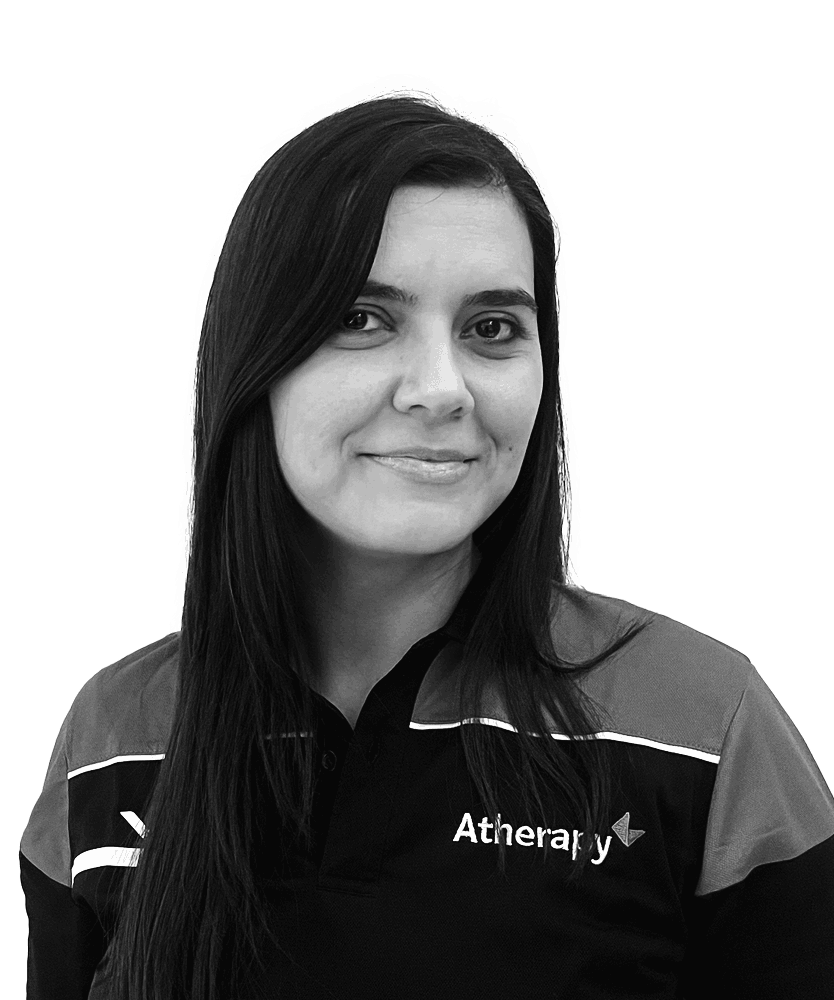
- Specialist in exercise-based rehabilitation, manual therapy and injury prevention
- Experienced in post-operative rehabilitation and progressive return to activity
- Clinical interests include sports injuries, cervical spine and low back dysfunction, shoulder, knee, foot and ankle rehabilitation
- Combines hands-on treatment with targeted strength and rehabilitation programming
- Focused on structured rehabilitation to help patients rebuild strength, movement confidence and function
- Specialist interest in women’s health support including manual lymphatic drainage during pregnancy and pre/post-natal care
- Over 15 years of clinical experience across private practice, sports rehabilitation and women’s health settings
- Fluent in English, Portuguese and Italian
Fernanda Saldanha
Based at Chiswick
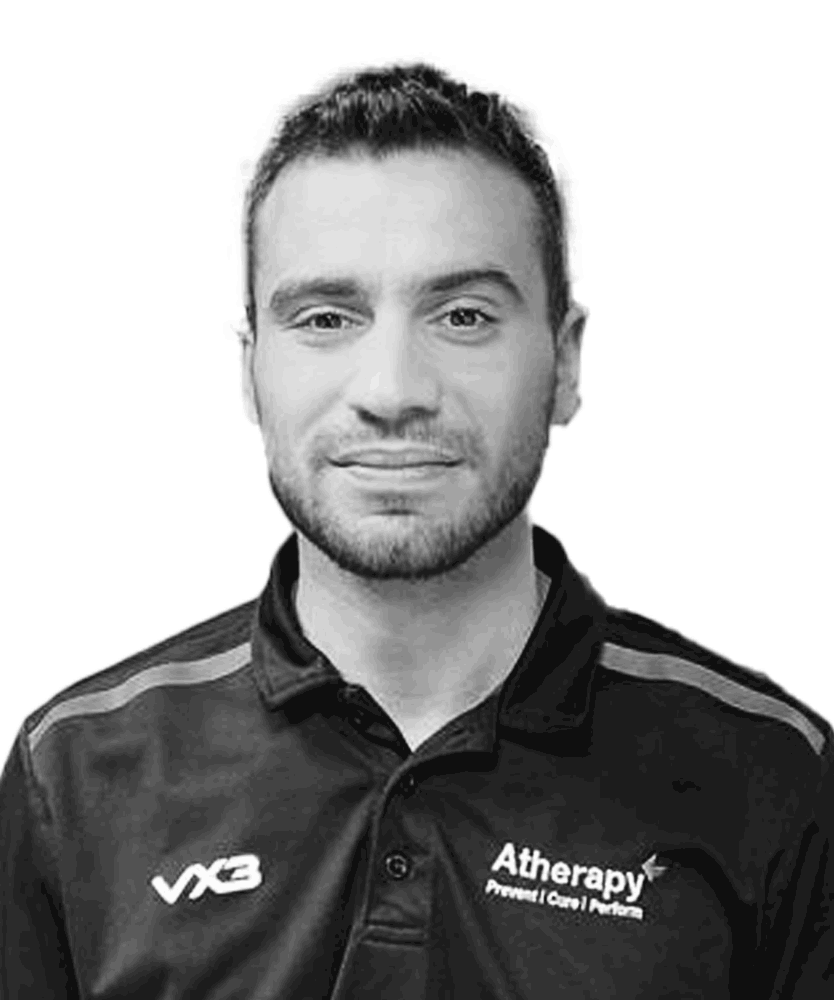
- Extensive experience working within elite professional football and private practice
- Former Tottenham Hotspur Academy physiotherapist specialising in performance rehabilitation and return-to-play management
- Specialist interest in post-operative rehabilitation and upper and lower limb injury management
- Experienced in managing complex and recurrent injuries through structured, evidence-based rehabilitation planning
- Clinical approach combines manual therapy, gym-based rehabilitation, movement analysis and acupuncture
- Focused on restoring movement quality, strength under load and long-term performance outcomes
- Fluent in English and Greek
Dimitrios Michtatidis
Based at Chiswick and Strand

- Level 4 Strength & Conditioning Coach
- Medical Acupuncture & Dry Needling Qualified
- Combines detailed clinical assessment with progressive rehabilitation and strength & conditioning principles
- Specialist interest in gym-based rehabilitation and return-to-sport management
- Clinical interests include acute sporting injuries, post-operative orthopaedic rehabilitation (including ligament reconstructions, meniscal and labral repairs) and hip/groin pain in active populations
- Experience managing both active general population and performance-focused clients
- Adjunct treatment techniques include dry needling and shockwave therapy
Claire Cuffe
Based at Moorgate and Strand

- Over 5 years experience treating orthopaedic injuries, chronic pain and post operative care
- Advanced certifications in dry needling for hands, face, feet, lower limb, upper limb and lumbopelvic region
- Certified pelvic floor physio for both men and women with an interest in treating clients pre and post natal
- Special interest in strength and conditioning programming for clients training for half/full marathons