
ACL Prehabilitation Before Surgery
Andrew Balderston
MSc, HCPC, MCSP, AACP
Clinical Director and COO, Atherapy
FIFA Diploma in Football Medicine
Hull City FC — Head of Medical Services 2018–2025
Nottingham Forest FC — 2009–2018
This resource hub represents Atherapy's clinical framework for ACL rehabilitation — built on twenty years of managing ACL injuries at Championship and Premier League level and translated into a structured, evidence-based programme available to every patient regardless of sport, background, or level. Every page in this ecosystem is written to the same standard Andrew applies in professional football: criteria-based, primary-source-cited, and built around the objective that every ACL patient should get the best possible rehabilitation, not just rehabilitation.
For many people, an ACL injury feels like thebeginning of a countdown towards surgery. The MRI confirms the rupture,discussions quickly move towards graft choices and surgical dates, andrehabilitation is often viewed as something that truly begins afterreconstruction has taken place.
Modern ACL rehabilitation has evolved wellbeyond that model.
At Atherapy, we view the period betweeninjury and reconstruction as one of the most clinically influential phases ofthe entire rehabilitation journey. In many cases, the quality of rehabilitationcompleted before surgery has a profound effect on how effectively someoneprogresses afterwards — physically, psychologically, and functionally.
This period is not simply waiting time. It isa structured opportunity to reduce swelling, restore movement, rebuildstrength, improve loading tolerance, regain confidence, and prepare the kneefor the significant demands that surgery and post-operative rehabilitationultimately create.
→ Relatedreading: Post-Operative ACL Rehabilitation — what happensafter reconstruction and how prehab shapes your starting point
Within elite sport and contemporaryhigh-performance environments, it would now be unusual for an athlete to waitpassively for surgery without first aggressively restoring:
- Full or near-full knee extension
- Quadriceps activation and voluntary control
- Lower limb strength and force production
- Gait mechanics and walking symmetry
- Loading tolerance and movement confidence
Modern rehabilitation frameworks — including the Melbourne ACLRehabilitation Guide, Aspetar return-to-sport recommendations, criterion-based rehabilitation models, and current sports medicine literature — increasingly recognise that patients entering surgery with persistent swelling, quadriceps inhibition, poor extension, significant asymmetry, and altered movement strategies often face a more difficult early post-operative rehabilitation period.
Surgery Changes Stability.
Rehabilitation Restores Performance.
Perhaps the most important misconception surrounding ACL injury is the belief that surgery itself is the solution.Long-term outcomes are frequently determined far more by the quality of rehabilitation surrounding surgery than by the operation itself.
ACL reconstruction does not restore neuromuscular control, force absorption capacity, movement efficiency under fatigue, athletic confidence, or reactive strength. Surgery changes structural stability. Rehabilitation restores performance.
This is especially true in active individuals and athletes. Research by Ardern et al. (2014) found that fewer than half of athletes who underwent ACL reconstruction returned to their pre-injury level of competitive sport — a finding that underscores how much more rehabilitation determines long-term outcomes than surgery alone. In younger athletic populations, reinjury rates remain stubbornly high, with Grindem et al. (2016) demonstrating that a quadriceps strength symmetry index below 90% at return to sport was associated with significantly elevated reinjury risk.
→ Related reading: Reinjury Risk After ACL Surgery — understanding why structural recovery and functional recovery are not the same thing
ACL Prehabilitation Is No Longer Passive Rehabilitation
Historically, rehabilitation before ACL reconstruction was often conservative. Patients were commonly advised to rest, avoid loading, and simply maintain enough function to cope until surgery. Over the past decade, that philosophy has changed substantially.
Modern rehabilitation increasingly recognises that prolonged unloading following injury may contribute to worsening quadriceps inhibition, rapid muscle atrophy, declining tendon capacity, altered gait mechanics, persistent asymmetry, and reduced force production. Many of the deficits individuals struggle with after surgery are already developing before reconstruction even takes place.
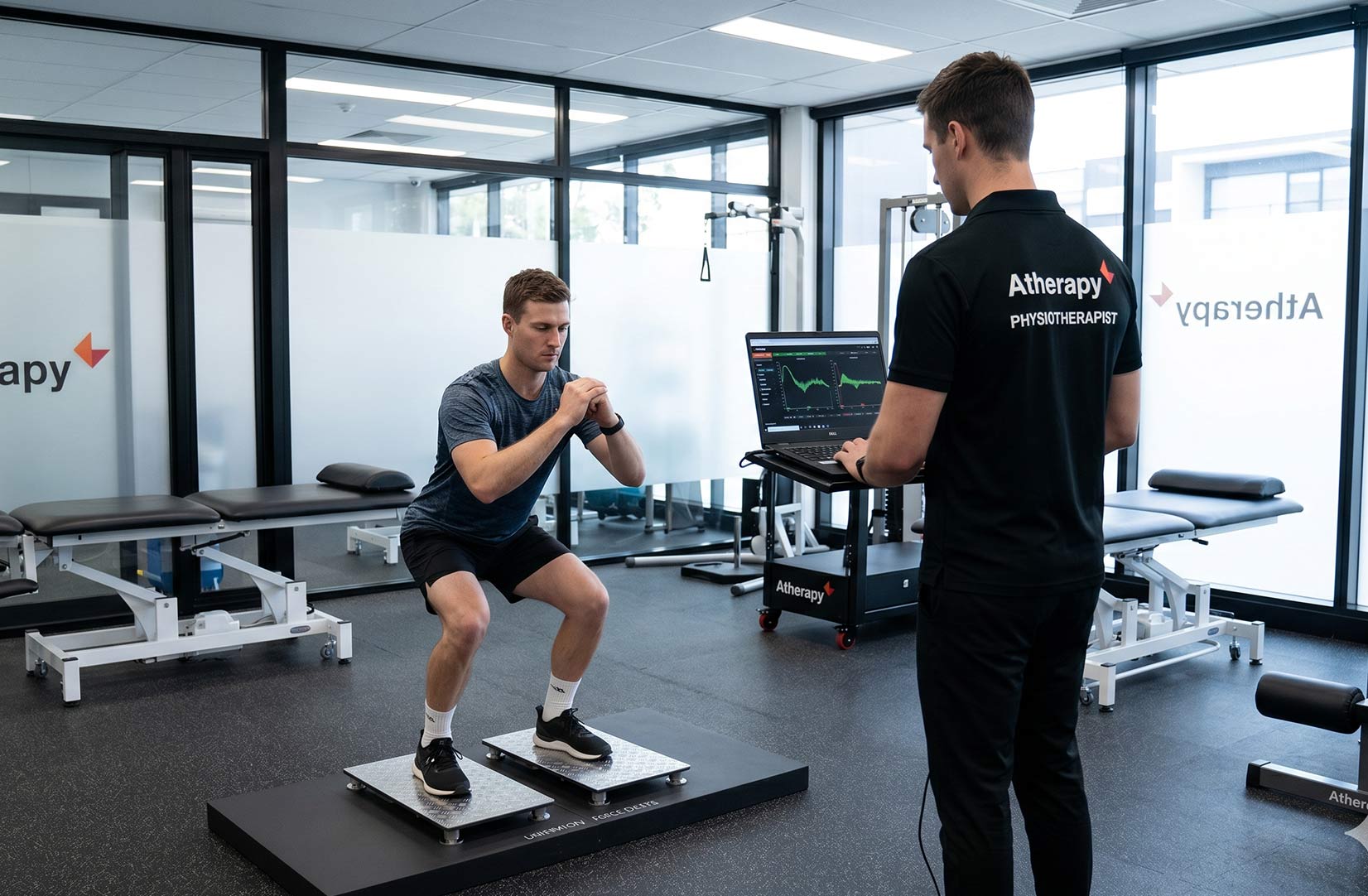
At Atherapy, prehabilitation is viewed as the first stage of return-to-performance rehabilitation. Rather than simply protecting the knee, the focus is on progressively rebuilding the ability to tolerate load, produce force, absorb force, control deceleration, and manage asymmetrical stress — before surgery occurs.
Finding The Right Balance: The Biggest Technical Challenge In ACL Prehab
One of the most common errors in ACL rehabilitation is drifting too far towards either excessive protection or excessive irritation. Underloading worsens weakness, stiffness, inhibition, and movement apprehension. Over-irritation drives swelling, quadriceps shutdown, and pain sensitisation.
The skill lies in progressively exposing the knee to enough stimulus to create meaningful adaptation without repeatedly pushing into excessive reactivity — and in adapting rehabilitation constantly according to swelling response, movement quality, strength recovery, tissue irritability, fatigue, confidence, and loading tolerance.
→ Related reading: Quadriceps Weakness After ACL Injury — the physiology of inhibition and how to rebuild force production effectively
Why Swelling Matters More Than Most People Realise
Swelling inside the knee joint is not simply a symptom. It directly influences how effectively the nervous system can recruit surrounding musculature — particularly the quadriceps.
Arthrogenic Muscle Inhibition: Why The Quadriceps Switch Off
Arthrogenic muscle inhibition is a neurological protective response in which joint effusion inhibits normal muscular activation. Research by Rice et al. (2014) has demonstrated that even relatively small volumes of intra-articular fluid can significantly impair quadriceps activation — explaining why many individuals describe their quadriceps switching off, difficulty fully straightening the knee, instability during walking, weakness descending stairs, and a feeling that the leg no longer responds normally.
The quadriceps are often not simply weak from deconditioning. They are neurologically inhibited. Persistent swelling continues driving altered gait mechanics, asymmetrical loading, reduced force production, and compensatory movement strategies long before surgery.
→ Related reading: Swelling After ACL Reconstruction — managing effusion across the rehabilitation journey, including Game Ready integration
At Atherapy, swelling management is approached as an active rehabilitation target. Management may involve progressive loading strategies, movement restoration, compression, cardiovascular conditioning, rehabilitation dosage modification, recovery education, and where clinically beneficial, integration of modalities such as Game Ready cold-compression therapy.
Swelling As Clinical Information
Modern rehabilitation increasingly recognises that persistent or recurring swelling often reflects a mismatch between the knee’s current capacity and the demands being placed upon it. Swelling frequently becomes valuable clinical information — not simply something to suppress. Understanding how to interpret the knee’s response to load is one of the most important skills within successful ACL rehabilitation.
Restoring Full Knee Extension: One Of The Most Important Early Priorities
One of the strongest predictors of difficult early rehabilitation following ACL reconstruction is entering surgery without full knee extension — and it remains one of the most consistently underestimated aspects of ACL management.
Loss of extension affects walking mechanics, quadriceps recruitment, force absorption, running efficiency, terminal knee control, and overall movement symmetry. Persistent extension loss may also increase the risk of post-operative stiffness, ongoing pain, compensatory movement patterns, and delayed rehabilitation progression after surgery.
At Atherapy, restoration of extension may involve gait retraining, quadriceps activation work, movement re-education, manual therapy, hamstring relaxation strategies, and carefully progressed loading. It is often one of the first major milestones in helping the knee begin to feel physically and psychologically more normal again.
→ Related reading: Return to Running After ACL Surgery — why extension restoration and gait mechanics are foundational before any running progression begins
The Psychological Dimension of ACL Prehabilitation
One dimension of ACL prehabilitation that is often underestimated is its psychological value. The period between injury and surgery can be profoundly disorienting for active individuals — particularly those whose identity, routine, and social life are closely connected to sport or physical activity.
Structured prehabilitation gives that period purpose and forward momentum. Rather than passively waiting for a surgical date, individuals are actively progressing — rebuilding strength, restoring movement, regaining confidence, and developing a clear understanding of the rehabilitation journey ahead.
Contemporary evidence increasingly recognises that psychological readiness is a meaningful predictor of return-to-sport outcomes. Ardern et al. (2013) found that fear of reinjury was one of the most commonly cited reasons athletes did not return to their pre-injury level of sport — highlighting that physical recovery alone is insufficient and that psychological preparation should begin as early as possible in the rehabilitation process.
→ Related reading: Psychological Recovery After ACL Injury — fear of reinjury, kinesiophobia, and building psychological readiness across the rehabilitation journey
Evidence & Research References
Our ACL rehabilitation content is developed by clinicians with specialist experience across elite sport, high-performance rehabilitation, and return-to-performance physiotherapy. The approach is informed by the following evidence base:
- Ardern CL et al. (2014). Return to sport following anterior cruciate ligament reconstruction surgery: a systematic review and meta-analysis. British Journal of Sports Medicine.
- Ardern CL et al. (2013). Psychological responses matter in returning to preinjury level of sport after anterior cruciate ligament reconstruction surgery. American Journal of Sports Medicine.
- Grindem H et al. (2016). Simple decision rules can reduce reinjury risk by 84% after ACL reconstruction: the Delaware-Oslo ACL cohort study. British Journal of Sports Medicine.
- Rice DA, McNair PJ (2014). Quadriceps arthrogenic muscle inhibition: neural mechanisms and treatment perspectives. Seminars in Arthritis and Rheumatism.
- Melbourne ACL Rehabilitation Guide — Heckmann N et al. Contemporary evidence-based rehabilitation principles.
- Aspetar Return-to-Sport Guidelines — Isokinetic and criterion-based return-to-performance frameworks.
Rehabilitation should always remain individualised. No two ACL injuries, sporting demands, surgical pathways, or recovery journeys are identical. The frameworks above inform our clinical reasoning — they do not replace it.
Related Articles Within Our ACL Rehabilitation Resource
This page forms part of Atherapy’sinterconnected ACL rehabilitation content ecosystem. Each article is linked toprovide a complete, evidence-informed resource across the full rehabilitationjourney.
- ACL Rehabilitation — Main Resource Hub
- Post-Operative ACL Rehabilitation
- Swelling After ACL Reconstruction
- Quadriceps Weakness After ACL Injury
- Return to Running After ACL Surgery
- Return to Sport Testing
- Force Plate Testing in ACL Rehabilitation
- Football-Specific ACL Rehabilitation
- Gym-Based ACL Rehabilitation
- Reinjury Risk After ACL Surgery
- Psychological Recovery After ACL Injury
- Graft Choice Considerations
- ACL Rehabilitation Timelines
- Return-to-Performance Principles
Speak To A Clinician About Your ACL Prehabilitation Programme
If you have recently sustained an ACL injury, are awaiting surgical opinion, or want expert guidance on preparing for reconstruction, our clinical team will design a structured programme tailored to your injury, sport, surgical pathway, and long-term performance goals.
Clinics available at Moorgate | Strand | Chiswick
London Physiotherapy Team
Welcome to the Atherapy expert clinical team. We are a dedicated group of qualified physiotherapists and sports medicine specialists committed to delivering innovative, evidence-based rehabilitation. Our practice is built on a holistic approach to physical health, firmly believing that injury prevention is just as vital as the cure. From treating acute sports injuries to designing custom performance optimization programs, our clinicians work collaboratively to help you safely reach your goals.
Meet our resident experts below and find the right specialist for your recovery journey.

- With 25+ years of Premier League and Championship experience, Andrew has led Medical, Science, and Performance departments for Hull City, Nottingham Forest, Derby County, and Preston North End, following earlier work at the Manchester United Academy
- Specialist in lower limb rehabilitation
- Post-operative rehabilitation
- Back pain and complex spinal presentations
- Elite athlete management including manual therapy, gym rehabilitation and acupuncture
- Specialises in complex cases and second opinion rehabilitation planning including return to play
- Limited clinical availability due to wider clinical leadership and operational responsibilities
Andrew Balderston
Based at Moorgate
- Specialist in exercise-based rehabilitation, manual therapy and injury prevention
- Experienced in post-operative rehabilitation and progressive return to activity
- Clinical interests include sports injuries, cervical spine and low back dysfunction, shoulder, knee, foot and ankle rehabilitation
- Combines hands-on treatment with targeted strength and rehabilitation programming
- Focused on structured rehabilitation to help patients rebuild strength, movement confidence and function
- Specialist interest in women’s health support including manual lymphatic drainage during pregnancy and pre/post-natal care
- Over 15 years of clinical experience across private practice, sports rehabilitation and women’s health settings
- Fluent in English, Portuguese and Italian
Fernanda Saldanha
Based at Chiswick
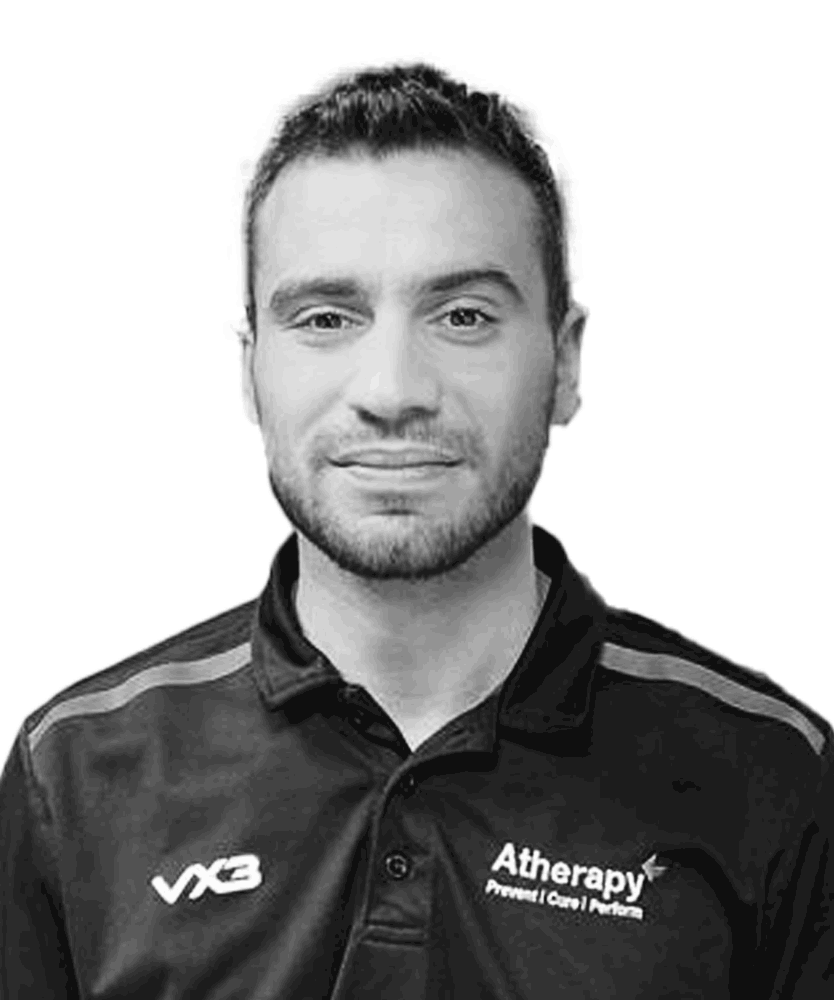
- Extensive experience working within elite professional football and private practice
- Former Tottenham Hotspur Academy physiotherapist specialising in performance rehabilitation and return-to-play management
- Specialist interest in post-operative rehabilitation and upper and lower limb injury management
- Experienced in managing complex and recurrent injuries through structured, evidence-based rehabilitation planning
- Clinical approach combines manual therapy, gym-based rehabilitation, movement analysis and acupuncture
- Focused on restoring movement quality, strength under load and long-term performance outcomes
- Fluent in English and Greek
Dimitrios Michtatidis
Based at Chiswick and Strand

- Level 4 Strength & Conditioning Coach
- Medical Acupuncture & Dry Needling Qualified
- Combines detailed clinical assessment with progressive rehabilitation and strength & conditioning principles
- Specialist interest in gym-based rehabilitation and return-to-sport management
- Clinical interests include acute sporting injuries, post-operative orthopaedic rehabilitation (including ligament reconstructions, meniscal and labral repairs) and hip/groin pain in active populations
- Experience managing both active general population and performance-focused clients
- Adjunct treatment techniques include dry needling and shockwave therapy
Claire Cuffe
Based at Moorgate and Strand
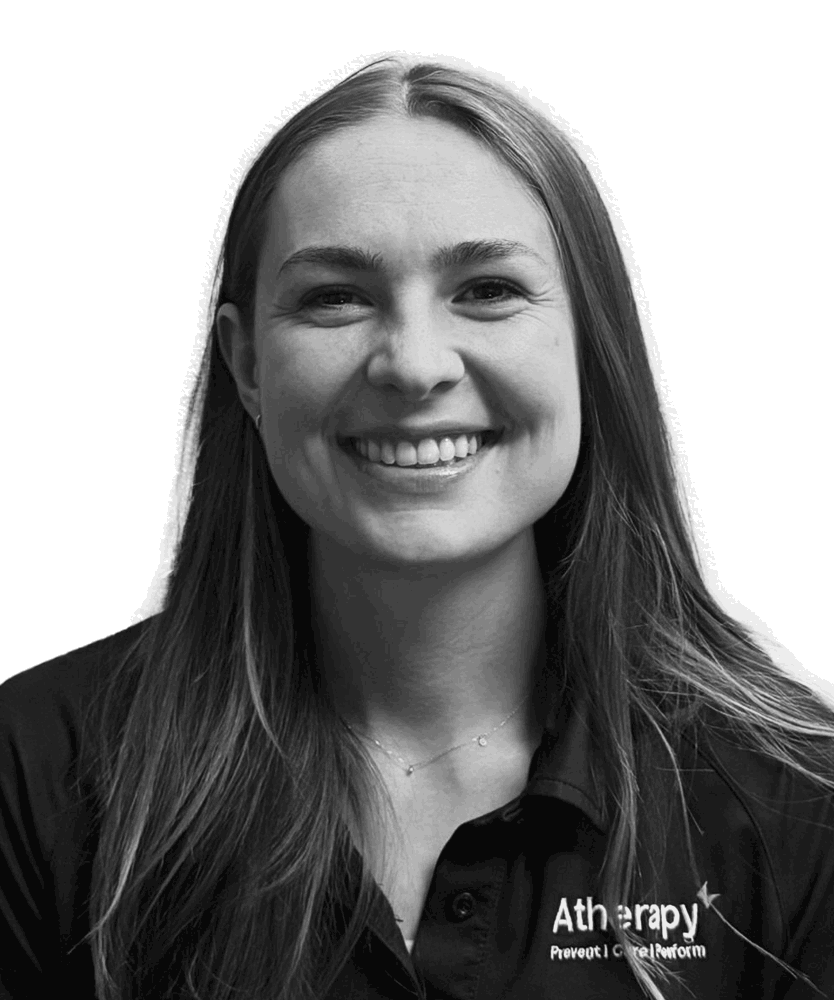
- Over 5 years experience treating orthopaedic injuries, chronic pain and post operative care
- Advanced certifications in dry needling for hands, face, feet, lower limb, upper limb and lumbopelvic region
- Certified pelvic floor physio for both men and women with an interest in treating clients pre and post natal
- Special interest in strength and conditioning programming for clients training for half/full marathons